Money · Long-term Thailand
How Do You Receive and Transfer Money While Living in Thailand?
A dependable transfer arrives on time, leaves the right paper trail, and still works next month. The smallest advertised fee tells only part of that story.
Reviewed July 31, 2026 · Later factual updates are dated within the guide
In this guide
Long-term life in Thailand requires a dependable method for routine payments, a separate plan for large transactions, records that document the source and purpose of funds, and backup access that does not depend on the same bank, phone, card, or provider.
Transfer services, bank wires, cards, ATMs, and local transfers have different costs, limits, delivery times, and documentation. Use the method appropriate to the transaction.
This article expands Question 8 from 14 Questions to Ask Before Retiring or Living Long Term in Thailand.
The short answer
Keep a dependable home-country account for home-country income and obligations. Use a Thai operating account for local life. Maintain at least two tested ways to move money between them.
Compare total baht received—not merely the visible fee. Preserve transfer records. Plan large transactions before sending them. Keep emergency access that does not depend on the same bank, card, app, phone number, or network.
No single provider is suitable for every transaction.
Map every source and destination
Begin with money that must reach you:
- Social Security and pensions
- retirement-plan withdrawals
- brokerage distributions
- salary or consulting income
- rental income
- property-sale proceeds
- family support
- emergency reserves.
Then list where it must go:
- Thai rent, utilities, insurance, and healthcare
- U.S. cards, taxes, subscriptions, and insurance
- family support, travel, and major purchases.
This reveals something important: sending every dollar directly to Thailand may create as much inconvenience as keeping every dollar in the United States.
Give each account one job
| Layer | Primary job |
|---|---|
| U.S. hub account | Receive U.S. income and pay U.S. obligations |
| Thai operating account | Pay rent, bills, local transfers, cash, and QR purchases |
| Transfer route A | Planned monthly funding |
| Transfer route B | Backup when Route A fails or limits change |
| Emergency reserve | Immediate access independent of the operating system |
This is a framework, not a universal prescription. Someone with Thai employment has different cash flow from someone receiving Social Security. Someone buying property needs a different evidence trail from someone sending monthly expenses.
Ways money can reach Thailand
Common channels include:
- international bank wire
- regulated money-transfer service
- direct deposit supported by a payer
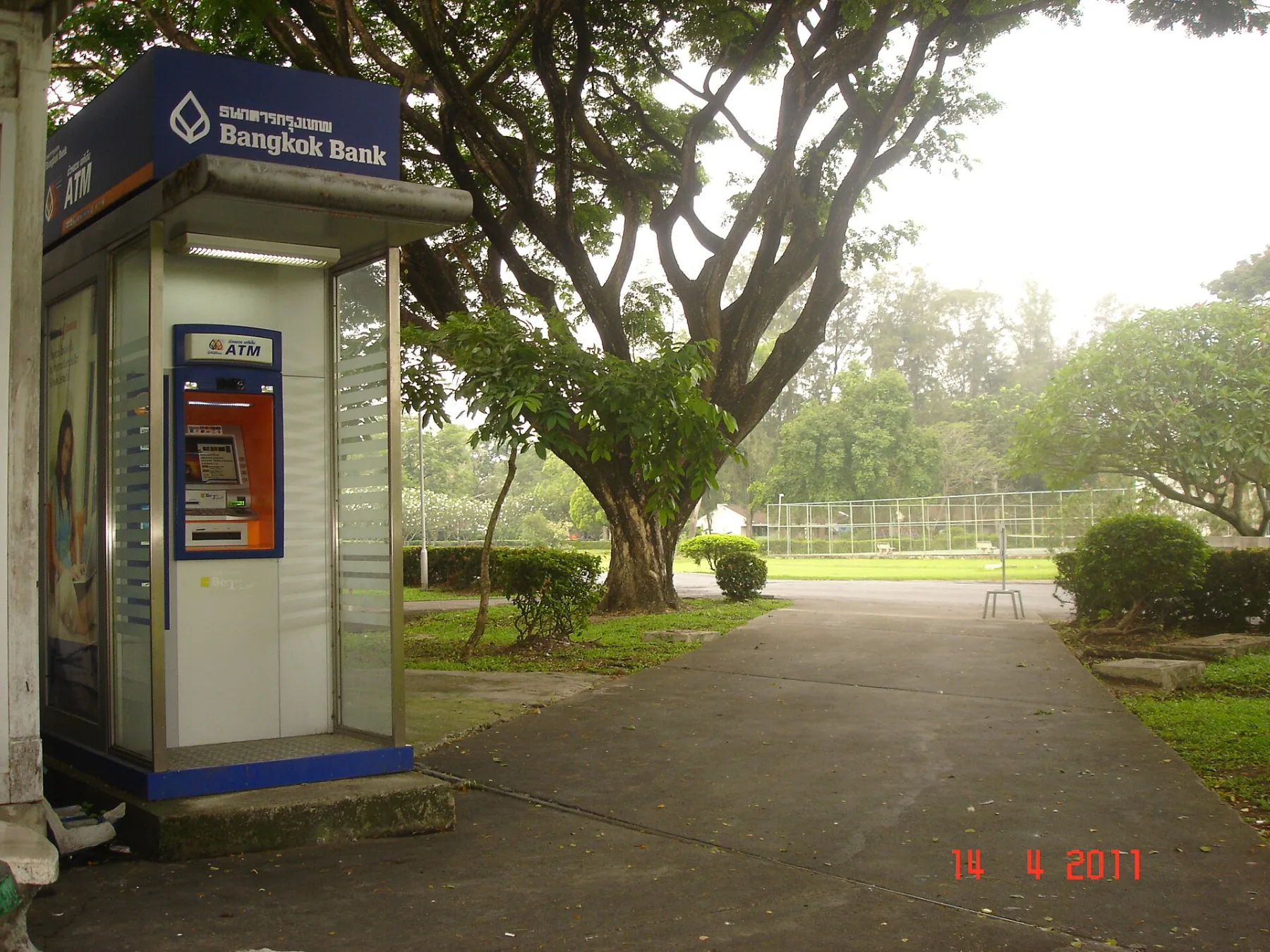
- ATM withdrawal from a foreign account
- card purchase
- supported cross-border payment connection
- domestic transfer after funds are in Thailand.
Each solves a different problem.
An ATM can provide backup cash but may be inefficient for funding a household. A transfer service may be good for routine expenses but unsuitable for property documentation. A wire may preserve a clear trail but include sending, intermediary, and receiving charges.
Do not force one tool to perform every job.
How people actually pay rent
Most private landlords and condominium owners ask for baht in a Thai bank account. The lease should identify the account holder, bank, account number, due date, and any reference the landlord wants. Confirm those details before paying the deposit.
The practical routes are:
| Method | How it works | Best use | Main limitation |
|---|---|---|---|
| Thai bank transfer | Pay from your Thai banking app to the landlord’s account or PromptPay identifier | Routine rent after you have a local account | Requires a usable Thai account and phone |
| Wise to landlord | Send THB directly to the landlord’s supported Thai bank account | Rent without first opening a Thai account | Delivery time and supported banks vary; it is still a third-party transfer |
| Wise to your Thai account | Move money into your own Thai account early, then make a domestic transfer | Separates the international transfer from the rent payment | Requires a Thai account and two transactions |
| International bank wire | Send from your home bank through SWIFT | Large or documentation-sensitive transfers | Often slower and more expensive for ordinary rent |
| Remittance provider | Services such as Remitly or Western Union may offer Thai bank deposit, debit-card deposit, or cash pickup, depending on the sending country | Backup when the main route is unavailable | Corridor, funding method, limits, rate, and delivery options vary |
| Cash deposit or cash payment | Deposit cash into the landlord’s account at the bank, or pay as the lease permits | Backup when digital access fails | Obtain a bank slip or signed receipt; never rely on an undocumented handoff |
| PayPal | Send only if the landlord or management company agrees to accept PayPal | An agreed online payment between two eligible accounts | Not a default Thai rent rail; account-country rules, conversion, commercial-payment treatment, and withdrawals matter |
There is no prize for using the most technologically impressive method. There is a prize for paying the correct person, on time, with evidence.
For every rent payment:
- Verify that the beneficiary name matches the landlord, authorized agent, or company named in the lease.
- Confirm any changed instructions through a second channel. A message saying “new account, urgent” is not enough.
- Send early enough to absorb a compliance review, weekend, bank holiday, or provider delay.
- Put the property, month, and tenant name in the reference field when the service permits it.
- Save the transfer confirmation and the landlord’s receipt or acknowledgment.
- Agree before move-out how the security deposit can be returned if you will no longer have a Thai account.
If you use Wise for rent, decide whether to send directly to the landlord or fund your own Thai account first. Direct payment removes a step. Funding your own account gives you more control over timing and allows the final rent payment to appear as an ordinary domestic transfer.
Direct payment may arrive quickly, but delays can occur. Funding your own Thai account before rent is due provides more control over the final domestic payment and its timing. Do not treat an estimated delivery time as a guarantee.
There is also a paperwork difference. A Wise receipt can document what you instructed Wise to send. A transfer slip from your Thai banking app documents the final domestic payment from your account to the landlord. Either may be acceptable to a reasonable landlord, but they are not identical records. Agree on the payment method before signing the lease, then ask the landlord to acknowledge each payment in writing.
A sensible monthly rent routine
- Keep the next rent payment in your transfer account or Thai account before the due date.
- Check the beneficiary name and account number against the lease.
- If the landlord changes the account, confirm the instruction by phone or in person.
- Send a small test payment before a large deposit or first payment when practical.
- Pay early enough to survive a weekend, holiday, review, or delayed transfer.
- Save the provider receipt, bank slip, and landlord acknowledgment together.
Do not use a credit card to fund rent merely to collect points. A transfer provider may charge more for card funding, and the card issuer may treat some transactions as cash advances. Compare the total fee, interest treatment, and baht delivered before deciding that the points are worth anything. Usually, they are not performing a small financial miracle for you.
Wise can pay a Thai landlord, but check the current rules
Wise’s official THB guide says it can send baht to supported individual and business bank accounts in Thailand. It requires the recipient’s name, address, bank, email, account number, and the purpose of the transfer. Transfer limits and estimated arrival times depend on the recipient bank.
That makes Wise a practical rent route when the landlord agrees to receive a bank transfer. Set the transfer so the landlord receives the exact baht amount due, verify the recipient details carefully, and download the receipt.
Do not assume every Thai bank is supported. Wise’s current guide lists supported recipient banks and warns that transfers to Bangkok Bank may take 24 hours or longer, while transfers to several other listed banks may be instant. The estimate shown for your actual transaction matters more than somebody else’s screenshot.
As verified on July 27, 2026, Wise is changing its Thailand service. Its official help center says new local features are being introduced for personal customers whose registered address is in Thailand, including PromptPay payments. It also says restrictions and account changes apply on different dates depending on when the customer registered, with changes for certain older accounts scheduled for August 3, 2026.
That distinction matters. A Wise account registered in the United States is not necessarily the same product as a Wise account registered to a Thai address. Use your real address, read the agreement for your profile, and confirm which features are live inside your account. Do not build next year’s rent plan from a feature announcement that has not reached your profile.
PromptPay and Thai QR are the local default
Once you have a compatible Thai bank account and app, domestic rent is usually straightforward. Transfer to the landlord’s bank account or use a PromptPay identifier if the landlord provides one.
The Bank of Thailand describes PromptPay as national payment infrastructure that supports transfers through identifiers such as a mobile number, national identification number, corporate registration number, or e-wallet number. Thai QR Payment builds on that infrastructure.
A QR code is convenient, not self-authenticating. Before confirming a large payment, read the recipient name displayed by the app. Do not scan a QR image from an unverified message and assume the destination is correct.
TrueMoney can also help with daily digital payments for eligible foreign users. Its official material allows foreign-customer registration and describes wallet transfers and QR functions, but verification level, transaction type, and limits affect what an account can do. Treat it as a useful wallet or backup, not automatically as the place to send a full month’s rent.
PayPal is possible only when both sides agree
PayPal is common in the United States, but it is not Thailand’s ordinary landlord-payment system.
A payment can work when both parties have eligible PayPal accounts and the landlord agrees to accept it. Before using it, determine:
- whether the payment is personal or commercial under the applicable account terms
- who pays any fee
- which exchange rate and conversion charge apply
- whether the landlord can withdraw to the intended bank
- what name and payment note will appear
- whether the lease or management office will issue a rent receipt.
Thailand-specific PayPal rules are restrictive for some foreigners. PayPal Thailand’s current signup page says a new Thailand personal account requires a Thai National ID. Its help center also says a PayPal account registered in Thailand can link only bank accounts located in Thailand. An existing U.S. or other foreign PayPal account follows the rules for that account’s country, not a generic global rule.
PayPal therefore belongs in the list of possible agreed methods, not at the center of a Thailand rent system.
Compare the amount that arrives
The true cost includes:
- provider fee
- exchange-rate spread
- sending-bank charge
- intermediary deduction
- Thai receiving-bank charge
- card or ATM fee
- timing and limits
- failed-transfer risk
- documentation and support.
Run competing quotes for the same amount at the same time. Compare the baht expected to arrive. Then confirm what actually arrives.
A provider advertising “zero fee” may earn through its exchange-rate spread. Compare the total baht delivered, not only the listed fee.
Use a planned monthly transfer
For routine life:
- Estimate next month’s Thai expenses.
- Include known annual or irregular bills.
- Leave a reasonable local buffer.
- Compare live quotes.
- Transfer through the primary route.
- Save the confirmation.
- Reconcile the amount received.
This reduces clutter and makes cash flow easier to understand.
It does not require predicting a future exchange rate.
Keep a tested backup transfer route
Transfer services and banks can change limits, request verification, reject transactions, delay funds, restrict accounts, or have outages.
Maintain a second route and test it occasionally with a small amount. A backup you have never activated is a theory.
Ideally, the second route does not rely on the same funding account, authentication method, or card network.
Social Security and pension income
The Social Security Administration says eligible U.S. citizens can generally receive payments outside the United States, subject to individual rules and country restrictions.
Receiving a benefit abroad and sending it abroad are separate decisions.
Before changing direct deposit, compare reliability, exchange-rate timing, U.S. bill payment, recovery procedures, temporary moves, and survivor or agent access. For pensions, ask the administrator which accounts and countries it supports.
Use ATMs and cards as supporting options
A foreign debit card at a Thai ATM can stack Thai fees, home-bank fees, exchange-rate markups, daily limits, and dynamic currency conversion.
When an ATM offers to convert the withdrawal into your home currency, inspect the displayed rate and markup. In many cases, choosing the local-currency transaction lets your own network perform the conversion, but verify the economics for your card.
Keep a second card from another institution. Do not store both in the same wallet unless your goal is to lose them with admirable efficiency.
Save records while they exist
For each transfer, retain:
- date and amount sent
- currency and exchange rate
- fees and amount received
- sender and beneficiary
- transaction purpose
- confirmation number
- bank statement
- supporting contract when relevant.
Records can support budgeting, tax work, immigration questions, property documentation, and proof of funds.
“Screenshot 8472” is not a recordkeeping system.
Taxes and source of funds
Moving money is not automatically the same as earning income. But the source, character, timing, and remittance of funds may matter for Thai and U.S. tax analysis.
Do not assume that calling income “savings” changes what it is. Preserve records showing where funds came from and when underlying income arose.
If you may be a Thai tax resident, coordinate the transfer strategy with competent Thai and U.S. advice. The question is not only “Can I send it?” It may also be “What is it, when was it earned, how is it treated, and can I prove that?”
Large transfers need a separate plan
A property purchase or business investment is not a larger rent transfer.
Before sending money, confirm:
- ownership structure and due diligence
- beneficiary name, bank, and account
- currency and transfer purpose
- evidence the receiving bank must issue
- exchange-control and source-of-funds requirements
- limits, timing, and refund mechanics.
The Bank of Thailand says foreign-exchange transactions operate through authorized institutions and supporting documents may be required for certain transactions.
Plan backward from the evidence you will need. Repairing a broken paper trail after closing is an expensive hobby.
Protect accounts and authentication
Threats include fake bank calls, phishing links, one-time-password requests, SIM swaps, replaced QR codes, altered invoices, and urgent “corrected” beneficiary details.
For a large transfer, verify instructions through a second trusted channel. Pause when instructions change at the last minute.
Urgency often prevents people from checking the evidence. Slow the transaction down when the request, recipient, or account details have changed.
Test access after losing a phone and wallet
Imagine your primary phone and wallet disappear together.
Can you access a second card, log in elsewhere, receive authentication, contact both banks, transfer emergency funds, pay for a hotel, block the SIM, and recover the banking app?
If every answer depends on the missing phone, you do not have a backup plan. You have a phone with supporting paperwork.
A durable monthly workflow
- Income enters the account best suited to receive it.
- Home-country obligations are paid there.
- A planned transfer funds the Thai account.
- The amount received is reconciled.
- Confirmations and statements are stored.
- Foreign-account balances are tracked.
- The backup route is tested periodically.
- Major transfers receive a separate written plan.
The system should be predictable and documented.
The bottom line
The cheapest visible fee is not the objective.
The objective is dependable access across two countries, clean records, reasonable total costs, and a backup that does not collapse with the primary system.
Keep a U.S. hub when useful. Use a Thai operating account for local life. Compare baht received. Save evidence. Separate ordinary transfers from major transactions. Protect authentication. Test the backup.
If your strategy can be summarized as “this app has always worked,” you have described the past.
Build for the month when it does not.
Common questions
Which transfer service is best?
There is no permanent winner for every amount, speed, corridor, and documentation need. Compare live quotes and actual baht received.
Should I send all monthly income to Thailand?
Not automatically. Preserve money needed for U.S. obligations, diversification, and emergency access.
Should Social Security be deposited directly in Thailand?
It can work for eligible beneficiaries, but compare recovery, bill payment, currency, and backup access.
Are ATMs a good primary strategy?
They may work as a bridge or backup, but fees, limits, card blocks, and replacement risk make them weak infrastructure.
Can I use the same process to buy a condominium?
Do not assume so. Property transfers may require specific currencies, descriptions, beneficiaries, and bank evidence.
Editorial disclaimer: General educational information, not individualized banking, tax, legal, investment, foreign-exchange, or property advice.
Primary sources
- Bank of Thailand: Exchange-control regulation
- Bank of Thailand: PromptPay
- Bank of Thailand: Cross-border payments
- Wise: Guide to THB transfers
- Wise: Upcoming changes to Thailand accounts
- PayPal Thailand: Account signup requirements
- PayPal Thailand: NDID requirement for personal accounts
- PayPal Thailand: Linking a foreign bank account
- PayPal Thailand: Consumer fees
- TrueMoney: Transfer guide for foreigners
- TrueMoney: Foreign-customer transaction limits
- Remitly: Transfers from the United States to Thailand
- Western Union: Transfers from the United States to Thailand
- SSA: Payments outside the United States
- FinCEN: Purpose of the FBAR