Places · Thailand
How to Compare Places in Thailand
There is no best place in Thailand. There is a place whose costs, climate, healthcare, transport, and ordinary inconveniences fit you better than the alternatives.
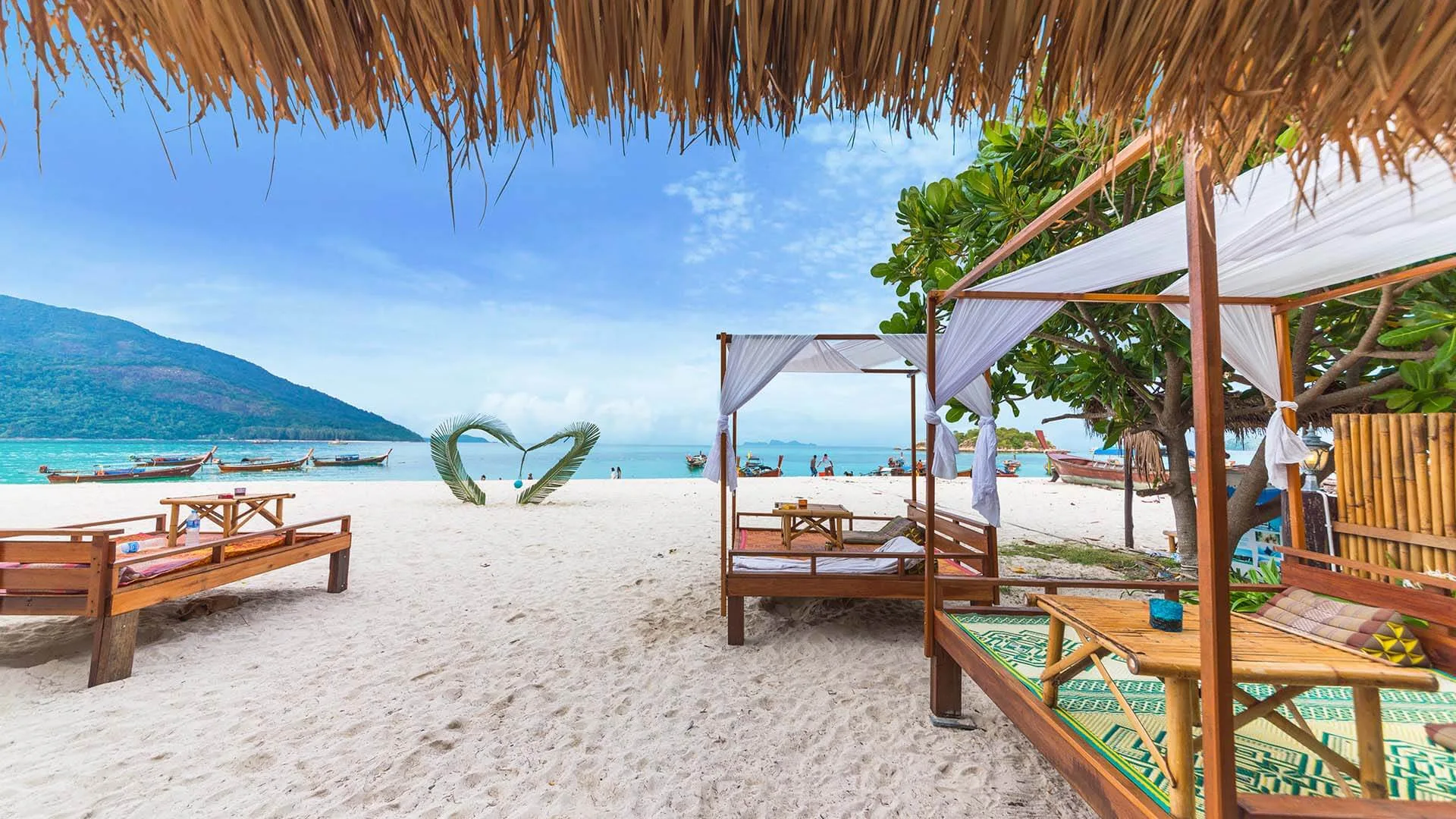
The phrase “best place to live in Thailand” has caused a great deal of confident nonsense.
Best for whom? A healthy 32-year-old remote worker who loves motorcycles? A 71-year-old retiree managing heart disease? A family choosing an international school? A couple who wants a beach but also needs direct flights to the United States?
A city can be appealing and still be wrong for your needs. Compare it using the same criteria you would apply elsewhere.
The useful goal is to compare places with the same criteria, then make the tradeoffs visible. Do not bury air quality, transport, healthcare, or total cost in the final paragraph after spending ten sections discussing cafés.
Take the place-matching questionnaire
Start with the ordinary week you want
Write down a realistic week before opening a property website.
- How often will you visit a hospital, clinic, dentist, gym, coworking space, school, or office?
- Will you walk, use rail, take taxis, ride a motorcycle, or drive?
- How often will you buy imported groceries, eat Western food, drink, or use delivery?
- Do you need nightlife, a large social network, quiet, green space, beach access, or frequent domestic travel?
- How often will you fly internationally or return to the United States?
- Which climate, air-quality, mobility, or medical limitations are not negotiable?
Now compare places against that week. Otherwise, the loudest feature wins. A sea view is loud. A 90-minute trip to your specialist is quiet until the day it stops being quiet.
Use category scores, not one magical number
An overall score suggests that strengths cancel weaknesses. They often do not. Excellent restaurants do not neutralize dangerous air for someone with respiratory disease. Cheap rent does not compensate for needing a car you cannot safely drive.
| Category | What to measure | What people commonly miss |
|---|---|---|
| Healthcare | Relevant specialists, emergency care, hospital depth, insurance billing, transfer options | A hospital exists, but not the care you are likely to need |
| Air quality and climate | Seasonal PM2.5, heat, humidity, rain, flooding, storms, indoor air | Judging a city from its best month |
| Transport | Rail, buses, boats, ride-hailing, traffic, sidewalks, driving, airport route | Cheap rent creates daily transport expense and time |
| Total cost | Housing, utilities, transport, food, insurance, travel, visa, imported needs | Comparing rent instead of complete lifestyles |
| Infrastructure | Electricity, water, internet, mobile data, drainage, roads, deliveries, repairs | National statistics hide building and neighborhood variation |
| Daily convenience | Payments, groceries, delivery, gyms, salons, cleaning, English support | Tourist districts are more convenient than the wider area |
| Housing quality | Space, noise, maintenance, management, mold, sun, pests, construction | New-looking is not the same as well-managed |
| Connectivity | Domestic routes, international flights, travel time to airport, medical transfers | An airport may still require a connection for every important trip |
| Community and fit | Age mix, interests, language, family life, social options, privacy | A large expat scene is not automatically your community |
Score each category from one to ten, then mark any category that can disqualify a place regardless of the total. Those are constraints, not preferences.
Healthcare belongs near the top
Healthcare should be evaluated against your conditions and likely future needs, not the city's reputation.
- Routine care: primary care, medication, dental, imaging, laboratory work, and rehabilitation.
- Specialist care: the physicians and treatment centers relevant to your actual history.
- Emergency care: appropriate hospital, ambulance route, traffic, island or mountain constraints, and cash requirements.
- Fallback care: where you go when the local system is not enough and how you get there.
Bangkok has the country's deepest medical market. Chiang Mai, Phuket, Pattaya, and other large regional centers have substantial care. Smaller cities and islands may handle routine needs well while still requiring travel for complex treatment.
Do not ask only, “Is there a hospital?” Ask, “Would I choose this hospital for the medical problem I am most likely to have?”
Use the hospital-research guide and the full healthcare payment guide for the next step.
Air quality, climate, and flooding can change the decision
Air quality is a location criterion for anyone with respiratory or cardiovascular disease, for families with children, and for people who know pollution materially affects them. It should be assessed before choosing a city, not acknowledged politely after the rental recommendations.
Northern Thailand can experience severe seasonal particulate pollution, particularly during the dry and burning season. Bangkok also has periods of unhealthy PM2.5. Southern and coastal areas have different air patterns but face heavier rain, storms, humidity, corrosion, drainage problems, and localized flooding.
Use historical and seasonal data, not the reading on the day you happen to visit. Check the official Air4Thai monitoring system and the Thai Meteorological Department's climate charts.
Then inspect the building. A city can have acceptable regional data while a unit sits beside traffic, construction, mold, poor drainage, or an air conditioner that smells as though it has developed political opinions.
Transport determines how much of the city you can actually use
Bangkok's rail network can support a car-free life in the right neighborhood. It can also leave you twenty minutes down a soi, sweating beside a road with no useful sidewalk.
Chiang Mai, Hua Hin, Phuket, Samui, Pattaya, and regional cities require different combinations of ride-hailing, songthaews, local buses, motorcycles, and cars. Availability changes by district and time of day.
| Question | Test |
|---|---|
| Can I live without driving? | Complete groceries, healthcare, exercise, and dinner using the transport you would actually rely on |
| Is the home really walkable? | Walk from the building at midday and after rain, not only on a map |
| Will ride-hailing work? | Check supply, pickup points, pricing, and late-night availability in the exact district |
| What does cheap rent require? | Add first-mile rides, rail fares, taxis, vehicle costs, and lost time |
| Can I reach the airport reliably? | Test a weekday trip with luggage and a realistic flight time |
A commute includes heat, crossings, waiting, traffic, rain, luggage, and whether you still want to do it in six months. Distance alone hides all of that.
Compare total lifestyles, not apartment advertisements
A larger home in a smaller city may cost less while requiring a car. A compact Bangkok condo may cost more while eliminating driving and reducing errands. An island rental may look reasonable while groceries, flights, repairs, and healthcare travel add friction.
Build the same budget for every finalist:
- rent, deposit, utilities, internet, and household help
- transport, vehicle, fuel, parking, taxis, and domestic flights
- food, imported products, delivery, alcohol, and social life
- healthcare, dental care, insurance, and emergency travel
- visa administration, banking, transfers, and exchange-rate margin
- trips to Bangkok or the United States
- seasonal escape if air quality or weather makes it necessary.
Use the cost-planning guide and Bangkok budget article. Replace their assumptions with your own habits. A budget becomes personal when the numbers stop describing a stranger with suspiciously inexpensive hobbies.
Infrastructure must be measured locally
Thailand has strong national mobile and electricity coverage, but that does not tell you whether one building has poor wiring, weak water pressure, unreliable elevators, slow repairs, flood-prone access, or no usable mobile signal inside the bedroom.
Test:
- home internet providers and actual installation availability
- mobile reception from two networks inside the unit
- water pressure and hot water
- backup power, elevators, pumps, and building maintenance
- street drainage and access during heavy rain
- delivery addresses, parcel handling, repairs, and waste collection.
Do not award a city an infrastructure score based on a shopping mall and an airport. Infrastructure is the collection of boring systems that work when nobody is filming them.
A practical first shortlist
| Place | Strongest fit | Tradeoffs to investigate |
|---|---|---|
| Bangkok | Maximum healthcare, transport, airports, services, neighborhoods, and social choice | Traffic, noise, heat, PM2.5 periods, flooding, central rent, and urban intensity |
| Chiang Mai | Regional-city convenience, healthcare, food, culture, community, and mountain access | Severe seasonal air pollution, limited rail transit, and fewer direct long-haul flights |
| Hua Hin | Calmer coastal life, practical services, Bangkok access, and retiree community | Smaller specialist and social markets, car dependence in some districts, and seasonal quiet |
| Pattaya and Jomtien | Coastal convenience, healthcare, varied housing, transport, and access to Bangkok | District-by-district atmosphere, traffic, nightlife spillover, and reputation-driven assumptions |
| Phuket | Island setting, airport, private healthcare, international community, and broad services | High housing and transport costs, traffic, tourist pricing, rain, and car or motorcycle dependence |
| Koh Samui | Island pace, beaches, airport, and established foreign-resident services | Medical-transfer limits, island pricing, weather disruption, transport, and narrower specialist choice |
| Chiang Rai | Slower northern city, lower costs, nature, and less urban intensity | Seasonal air pollution, smaller medical market, fewer flights, and limited public transport |
| Rayong and eastern seaboard | Practical local life, industry, beaches, and proximity to Bangkok and U-Tapao | Car dependence, industrial context, smaller foreign community, and uneven neighborhood appeal |
| Khon Kaen or Korat | Regional services, hospitals, universities, lower costs, and less tourism | Language, car dependence, fewer international connections, and a smaller expat ecosystem |
This is a scouting list, not a winner's podium. Bangkok is not one lifestyle. Neither are Phuket, Pattaya, or Chiang Mai. Neighborhood choice can matter as much as city choice.
Test the finalists in the difficult season
Visit two or three finalists and repeat the same routine. Spend at least one ordinary weekday in each. If a risk is seasonal, visit during the season or build a credible escape plan.
- Stay in the neighborhood, not a resort district chosen by a booking algorithm.
- Travel to the hospital, supermarket, gym, airport route, and places you would visit weekly.
- View rentals at your real budget.
- Check noise in the morning, evening, and weekend.
- Use local transport in heat and rain.
- Record air quality, utility terms, phone reception, internet options, and complete monthly cost.
- Talk to residents who like the place and residents who are leaving it.
A month in a place provides more useful information than fifty “Top Five Cities” videos. The videos rarely include the smell from the canal behind the bargain condo.
Sources
- Pollution Control Department: Air4Thai
- Thai Meteorological Department: climate charts
- Thai Meteorological Department: monthly weather summaries
- Thailand Board of Investment: airport network overview
- BTS: current fare information
The bottom line
Choose the tradeoffs you can live with
No city leads every category. Bangkok has extensive services and urban friction. Chiang Mai has regional-city convenience and a damaging air season. Phuket has island infrastructure and island costs. Hua Hin is quieter and has a smaller range of choices.
A beautiful weekend can introduce a place. Healthcare, air, transport, cost, housing, and community determine whether you can build a good week there and keep repeating it.
Do not ask where everyone else should live. Ask what your life requires, then make each place prove it can provide that life.
This guide provides general educational information. Conditions vary by district, building, season, health needs, and personal circumstances. Verify consequential decisions directly with the relevant provider, authority, and qualified professional.