Visas & immigration · Thailand
Where to Verify Thailand Visa Information
The answer depends on which authority controls the decision, where you apply, and what you plan to do.
Thailand visa research becomes confusing when five different questions are treated as one.
Which Thai Visa Fits Your Situation in 2026? compares the major retirement, family, DTV, LTR, Thailand Privilege, employment, education, and SMART Visa routes. This page is the companion source guide for verifying the current process.
An embassy can tell you how it processes a visa application abroad. Immigration controls admission and many procedures inside Thailand. A local immigration office handles particular filings. The Board of Investment manages specialized programs. Work authorization is a separate legal issue.
Advice can sound contradictory because people are describing different offices, dates, nationalities, documents, or stages of the process. Sometimes the advice is simply wrong. A Facebook comment with twelve exclamation marks does not become a regulation.
Match the question to the authority
| Your question | Start with |
|---|---|
| Which visa can I apply for outside Thailand? | The official Thai e-Visa system and the Royal Thai embassy or consulate responsible for your location |
| What happens when I arrive? | Thailand Immigration Bureau and the current entry conditions for your nationality and travel document |
| Can I extend or change my permission inside Thailand? | Immigration Bureau and the office that will process the application |
| Who reports my address? | Immigration Bureau rules, the official TM30 system, and the responsible local office |
| Do I need to report a long stay? | Immigration Bureau guidance and Form TM47 for 90-day reporting where applicable |
| Can I work or operate a business? | Ministry of Labour, Department of Employment, BOI where applicable, and qualified Thai counsel |
| Does a specialized long-stay route fit? | The program authority: BOI for LTR and SMART Visa, or Thailand Privilege for its membership program |
For a full comparison of long-stay routes, see Which Thai Visa Fits Your Situation in 2026? This page is about verifying the answer, not choosing the route for you.
Separate the stages before reading advice
Visa application
A visa is generally permission to travel to a port of entry and request admission under that category. Outside Thailand, the responsible embassy or consulate and the official Thai e-Visa system control the application process.
Admission and permission to stay
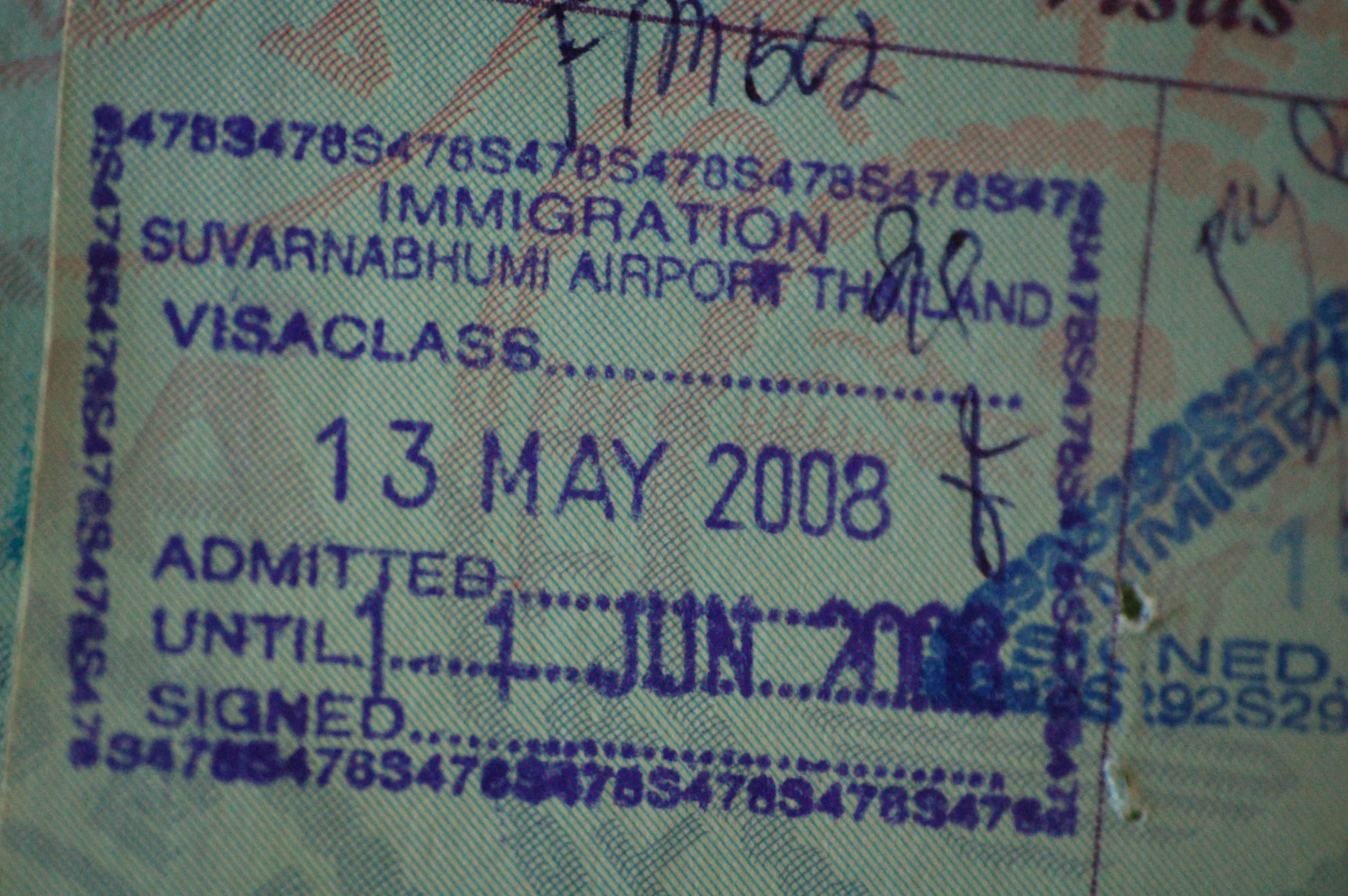
Immigration determines admission and the permitted stay recorded for the entry. Check the date actually granted. Do not substitute the visa's validity date or a stranger's itinerary for the permission in your own record.
Extensions, reporting, and re-entry
Extensions, address notifications, 90-day reporting where required, and re-entry planning are separate procedures. Each has its own timing and evidence.
Work authorization
A visa or permission to stay does not automatically answer whether an activity is lawful work. Verify the visa conditions and work-authorization rules before performing paid or operational work in Thailand.
Use the embassy responsible for your application
The Ministry of Foreign Affairs operates Thai e-Visa, but the embassy or consulate responsible for your location may publish the current document list, local payment instructions, and processing notices.
For Americans applying in the United States, begin with the Royal Thai Embassy in Washington visa-information page and follow its jurisdiction instructions. Do not assume that a checklist from London, Sydney, or an old third-party page governs a U.S. application.
The embassy's current guidance also distinguishes applying outside Thailand from seeking an extension or other immigration service after arrival. That distinction eliminates a surprising amount of internet debate.
How to resolve conflicting instructions
- Identify the decision. Is this about applying for a visa, entering Thailand, extending a stay, reporting an address, working, or leaving and returning?
- Identify the jurisdiction. Which embassy, consulate, program authority, or immigration office will actually process it?
- Check the date. Use the current official page and note any effective date or recent notice.
- Compare the exact facts. Nationality, residence, age, family relationship, financial evidence, work, and location can change the result.
- Ask the processing office. When the official pages remain unclear, request written clarification from the office that will decide the filing.
- Save the answer. Keep the page, email, date, and name or reference number.
Do not solve a conflict by choosing the answer that requires the least paperwork. That is shopping, not verification.
Know the recurring systems
- Thailand Digital Arrival Card: the official TDAC portal and manual explain the pre-arrival submission required for non-Thai nationals entering Thailand.
- Address notification: the official TM30 system explains the duty placed on the house owner, head of household, landlord, or hotel manager under Section 38 and provides the online notification service.
- 90-day reporting: Immigration publishes Form TM47. Confirm whether, when, and how the requirement applies to your stay with Immigration.
- Special programs: use the official LTR, SMART Visa, and Thailand Privilege portals rather than a reseller's summary.
Obtain proof when another person completes a required step. If a landlord files an address notification, request the receipt or acknowledgement. “The agent handled it” is not evidence you can produce later.
Build one immigration calendar
| Track | Why it matters |
|---|---|
| Passport expiry | Eligibility and travel can depend on remaining validity |
| Visa issue and validity dates | These control when the visa may be used; they are not automatically the permitted-stay date |
| Permission-to-stay date | This is the date that controls the current authorized stay |
| Extension window | Document collection and appointments should begin before the last practical filing date |
| 90-day reporting | Track the applicable reporting cycle and proof of submission |
| Address-notification evidence | Keep the TM30 receipt or electronic acknowledgement when required |
| Re-entry planning | Leaving Thailand can affect an existing permission; verify before departure |
| Insurance and financial evidence | Some routes require current evidence at application or renewal |
| TDAC | Complete the official arrival-card process for each entry when required |
Use reminders well before the deadline. Immigration is an unusually poor setting for discovering that your password manager, bank statement, and passport scanner have all decided to take the afternoon off.
Keep a source record
- the question you were trying to answer
- the responsible authority and office
- the official URL and page title
- the date the page was updated, if shown
- the date you checked it
- the official fee and currency, if applicable
- the required documents and format
- the email, receipt, application number, or screenshot proving what you submitted
- any unresolved question and who must answer it.
Save PDFs or screenshots immediately before applying. Websites change. Your application history should not depend on recreating last month's version from memory.
Use agents for assistance, not reality
A reputable agent may help organize documents, communicate with offices, schedule appointments, and reduce administrative friction. The agent does not become the legal authority because you paid a service fee.
Walk away from anyone who:
- guarantees approval
- asks you to sign blank forms
- suggests false employment, residence, income, or relationship evidence
- will not separate government fees from service fees
- cannot identify the official route being used
- refuses to provide receipts, copies, or application references.
Check the domain before entering passport or payment information. Sponsored search results, convincing logos, and a Thai flag do not make a website official.
Official sources
- Thailand Ministry of Foreign Affairs: Thai e-Visa
- Thailand Immigration Bureau
- Royal Thai Embassy, Washington: visa information
- Thailand Digital Arrival Card official manual
- Immigration Bureau: TM30 notification system
- Thailand Board of Investment: Long-Term Resident Visa
- Thailand Board of Investment: SMART Visa
- Thailand Privilege
The bottom line
Verify the office, the stage, and the date
Start with the authority that controls your specific decision. Separate visa issuance from admission, extensions, reporting, re-entry, and work. Keep the official source and evidence behind every consequential step.
Build a process that catches immigration changes before they become your problem. Memorizing today's rules will never be enough.
This article provides general educational information, not individualized immigration or legal advice. Requirements, fees, procedures, and interpretations can change and may vary by nationality, location, and case. Confirm consequential decisions with the responsible Thai authority and qualified counsel where appropriate.