Bangkok daily life · Tipping
How Does Tipping Work in Bangkok?
Tips are generally discretionary and vary by setting. Check the bill for a service charge before adding one.
Reviewed July 31, 2026 · Later factual updates are dated within the guide
In this guide
Tipping in Bangkok is generally discretionary and less standardized than in the United States. Check whether the bill already includes a service charge.
A practical approach:
- check whether a service charge is already on the bill;
- understand whether the setting commonly receives tips;
- use a modest amount that fits the service;
- give cash directly when you want a particular person to receive it;
- never let a payment screen invent a social rule for you.
Bangkok tipping guide
These are practical ranges, not fixed tariffs.
| Setting | A reasonable approach |
|---|---|
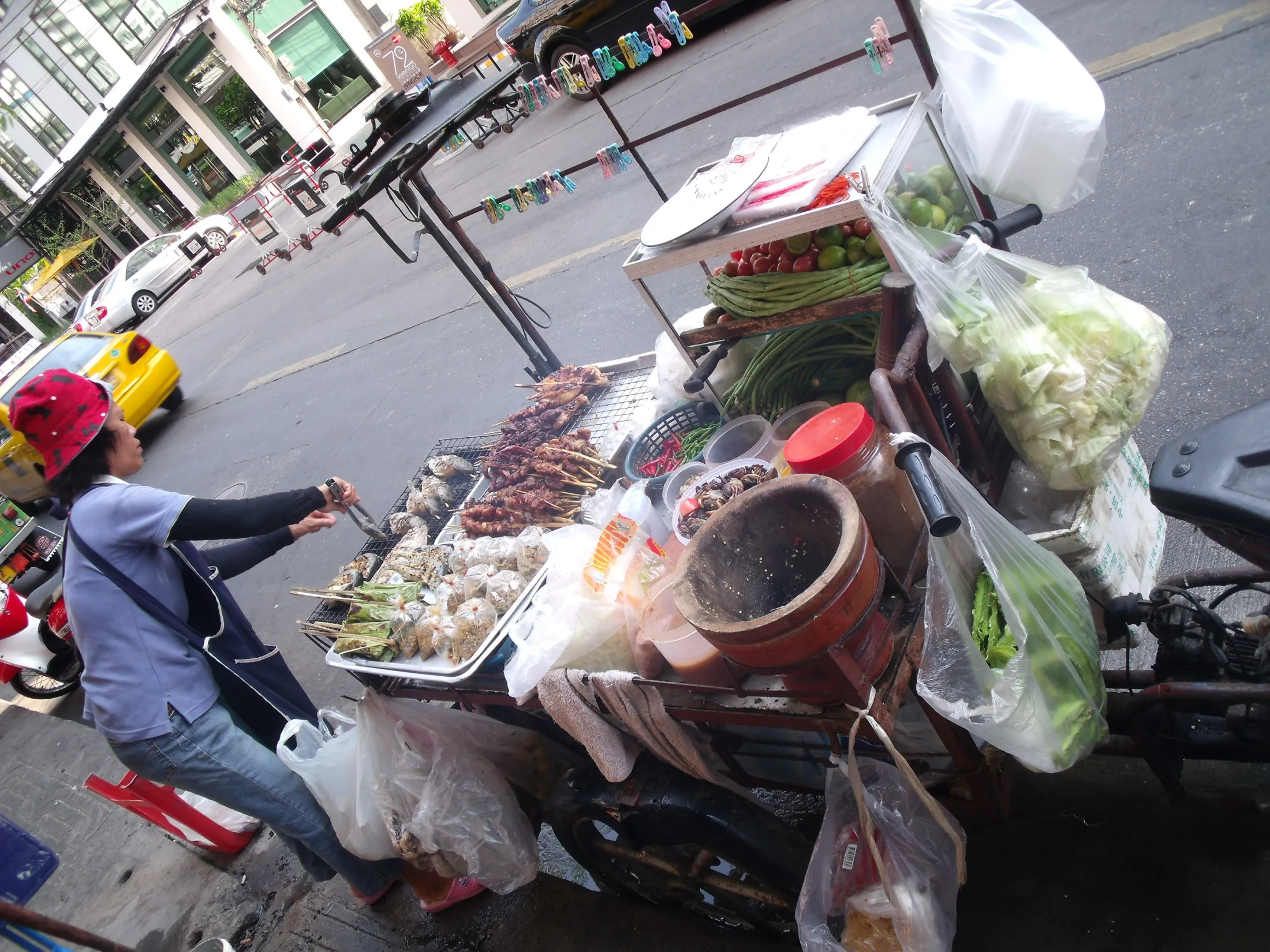
| Street food, market stall, or food court | No tip normally expected |
| Casual sit-down restaurant without service charge | Round up or leave about ฿20–฿50 for good service |
| Restaurant with a service charge | Extra tip is optional; leave a modest cash amount for unusually attentive service |
| Fine dining or hotel restaurant | Check the bill first; service charge is common |
| Metered taxi | Pay the fare or round up a small amount |
| Ride-hailing trip | Tip in the app or cash when you choose; no fixed percentage is required |
| Food or grocery delivery | A small tip is appreciated, especially in heavy rain, for a long wait, or with a difficult order |
| Neighborhood massage | About ฿50–฿100 is a common practical range for good service |
| High-end spa | Check for service charge; any additional tip remains discretionary |
| Haircut, salon, or nail service | Modest cash for good work is appreciated but not universally expected |
| Hotel bell service or housekeeping | Small cash tips are useful for direct personal service |
| Private guide or driver | Agree on inclusions, then consider the length and quality of the day rather than using one universal amount |
Thailand’s official tourism guidance published by the Tourism Authority of Thailand’s Japan office gives similar examples: small change at restaurants when service is pleasant, rounding a taxi fare, roughly ฿50–฿100 for massage, and modest cash for bell staff or housekeeping. Those figures describe common practice. They do not create an obligation.
Read the restaurant bill before deciding
Bangkok restaurants vary enormously.
A bowl of noodles from a market counter, a neighborhood shophouse restaurant, a chef-led dining room, and a five-star hotel restaurant do not use the same payment customs.
At street stalls and food courts, pay the stated price. A tip is generally unnecessary. If there is a small change tray or tip jar and you want to use it, do so without turning the moment into a ceremony.
At a casual table-service restaurant without a service charge, rounding the bill or leaving ฿20–฿50 for attentive service is a reasonable gesture. A larger party, a long meal, complicated requests, or unusually thoughtful help may justify more.
Upscale restaurants and hotels frequently add a service charge, commonly 10%. It should appear on the menu or bill. VAT may also appear separately, so read the full receipt rather than calculating from the menu price alone.
A service charge means the restaurant has already added a mandatory charge connected to service. It does not require another American-size gratuity.
You may still leave cash for a server who handled a difficult allergy conversation, recovered a reservation problem, helped an older guest, or made an important evening run smoothly. That is appreciation, not a second compulsory fee.
Ask how the service charge is handled
The words “service charge” do not tell you the complete employee-compensation policy.
Some businesses distribute service-charge revenue among employees. The Thai Revenue Department has addressed a factual case involving hotel and restaurant operators collecting service charges, often 10%, for distribution to staff. That ruling is evidence that this arrangement exists. It is not proof that every restaurant follows the same policy or that the server at your table receives your charge directly.
If this matters to you, ask the restaurant politely.
When you want to recognize one person, a small cash tip handed discreetly to that person is clearer. Avoid making a public performance of generosity. Bangkok service culture is usually more comfortable with a quiet thank-you.
Massage tipping is common, but the setting matters
Massage is one of the Bangkok services where a tip is more common.
For a straightforward one-hour neighborhood Thai or foot massage, ฿50–฿100 is a useful range when the treatment was good. A longer session, outstanding therapist, demanding treatment, or repeated relationship may lead you to leave more.
Pay attention to the business model.
A simple neighborhood shop charging a few hundred baht does not operate like a luxury hotel spa charging several thousand. The hotel spa may already add a service charge. The local therapist may receive a different share of the treatment price. You will rarely have complete visibility into either arrangement.
Use the service, price, duration, and care you received as your guide. Hand the tip to the therapist after the treatment rather than placing it anonymously at reception when your intention is personal.
A tip does not excuse poor boundaries, unsanitary conditions, unexplained substitutions, or an unsafe treatment. Raise a real problem with the manager and pay what is properly owed.
Taxis, motorcycle taxis, and tuk-tuks
For a metered taxi, paying the exact fare is acceptable. Rounding ฿93 to ฿100 is also normal and convenient. A driver who helps with heavy luggage, handles a difficult destination, or waits during a genuine delay may deserve more.
Confirm that a street taxi will use the meter before the trip. A tip does not repair an inflated flat fare negotiated badly at the curb.
Ride-hailing apps may offer an in-app tip after the ride. Use it when you want. Cash can be more immediate, while the app creates a record. Neither method requires a fixed percentage.
Motorcycle-taxi fares are often based on a posted local board or an agreed fare. Pay the quoted amount unless you decide to add a small tip for unusual help. Wear a helmet and use a legal, appropriate service; tipping has nothing to do with the safety decision.
Tuk-tuks generally involve an agreed fare before departure. Negotiate the ride clearly, confirm the destination, and avoid commissions disguised as “stops.” Once the fare is agreed, an additional tip is optional.
Delivery during a Bangkok storm
Food and grocery delivery apps are widely used in Bangkok. Riders may work in heat, traffic, and heavy rain.
A small cash or in-app tip can make sense when:
- the rain is heavy;
- the building is difficult to reach;
- the rider waited for the restaurant;
- the order includes heavy water or groceries;
- the distance was long;
- the rider solved a delivery problem professionally.
The delivery fee, small-order fee, platform promotion, restaurant markup, and rider compensation are separate parts of the transaction. Customers usually cannot see how every baht is allocated.
Tip because the service merited it and the amount fits your budget. Avoid using an unusually large tip to pressure a rider into speeding, carrying an unsafe load, or violating building rules.
Hotels
Bangkok hotels range from small family-run properties to elaborate international resorts. Direct personal service is where a small cash tip is most useful.
The Tourism Authority of Thailand’s Japan office currently suggests roughly ฿20–฿40 per bag for bell service and ฿20–฿40 per bed for housekeeping. Treat those as reference points, then adjust for the hotel, length of stay, amount of work, and service.
Practical hotel situations include:
- Bell staff: tip when someone handles several heavy bags or provides direct help.
- Housekeeping: leave cash daily in an obvious place with a short note, because the same person may not service the room every day.
- Concierge: routine directions do not require a tip; difficult reservations, extensive coordination, or exceptional help may.
- Room service: check the bill for service charge and delivery fees before adding cash.
- Airport transfer driver: consider luggage help, waiting, and the length of the transfer.
Reception staff do not need a tip for checking you in or performing an ordinary hotel function.
Haircuts, salons, nails, and personal care
Tipping practices in Bangkok salons are inconsistent.
A neighborhood barber may quote one all-in price. A premium salon may separate stylist, colorist, shampoo, and treatment services. Some shops use tip envelopes or a counter box. Others simply return your change.
A modest cash tip is appropriate when:
- the stylist took time to understand what you wanted;
- the service required extra care;
- someone corrected a problem well;
- you are building a regular relationship;
- the price did not include a service charge.
There is no need to distribute a percentage to every employee who briefly touched the appointment. Ask reception how tips are normally handled when several professionals performed substantial work.
Private guides, drivers, and tours need context
A half-day group tour, a private day with a licensed guide, a multi-day driver, and an airport van are different products.
Before deciding on a tip, determine:
- whether gratuity is included;
- whether the guide and driver are separate people;
- whether meals, tolls, parking, and waiting time were included;
- whether the day ran longer because of your request;
- whether the guide solved a genuine problem;
- whether the operator provided a suggested range.
For a private full-day service, a few hundred baht may be a reasonable starting point for good work, adjusted for the group size, length, and service level. Ask the tour company for current guidance when the booking is expensive or spans several days.
Do not use a tip to request access that violates site rules, animal-welfare standards, licensing requirements, or local law.
Where a tip is unnecessary or inappropriate
Do not tip simply because a payment terminal displays a button.
Routine retail transactions, convenience-store purchases, pharmacy counters, supermarket checkouts, rail tickets, immigration processing, government services, and ordinary medical billing are not tipping situations.
Pay official fees through official channels. Never offer extra cash to police, immigration officers, government staff, hospital professionals, or anyone who can influence a formal decision. A gratuity is not a shortcut through a rule.
At temples, donations belong in official donation boxes or documented channels. They are not tips for access, photography, or preferential treatment.
Keep small notes
A few ฿20, ฿50, and ฿100 notes are more useful for tipping in Bangkok than a calculator.
Small notes let you:
- leave a direct tip without asking for change;
- round a taxi fare cleanly;
- recognize housekeeping;
- tip a therapist;
- help a delivery rider without opening another app.
Do not wave the money around. Hand it over naturally, say “khop khun,” and move on.
A simple personal policy
You do not need a spreadsheet for every bowl of noodles.
Use this policy:
- Check the bill for service charge.
- Pay the stated fare or price.
- Add a modest amount for good personal service.
- Give cash directly when the recipient matters.
- Increase the amount for unusual effort, difficult conditions, or a longer service.
- Skip the tip when no personal service occurred.
- Keep official transactions completely separate.
Generosity travels well. Anxiety about performing somebody else’s tipping culture does not.
Bangkok gives you room to be appreciative without making every interaction transactional. That is a good system once you learn to trust it.
Verify current guidance
- Tourism Authority of Thailand, Japan: Thailand FAQ and tipping examples
- Thai Revenue Department: ruling involving restaurant and hotel service charges
Published guidance, business policies, and digital payment options can change. Check the bill and ask the business when the treatment of a service charge matters to you.