Housing · Long-term Thailand
Should You Rent or Buy a Condominium in Thailand?
Compare ownership eligibility, title, building finances, recurring costs, resale, and expected length of stay before buying.
Reviewed July 31, 2026 · Later factual updates are dated within the guide
In this guide
Buying a condominium in Thailand requires more than comparing the purchase price with rent. The building, foreign-ownership eligibility, title, payment trail, management, ongoing costs, resale market, and expected length of stay all affect the decision.
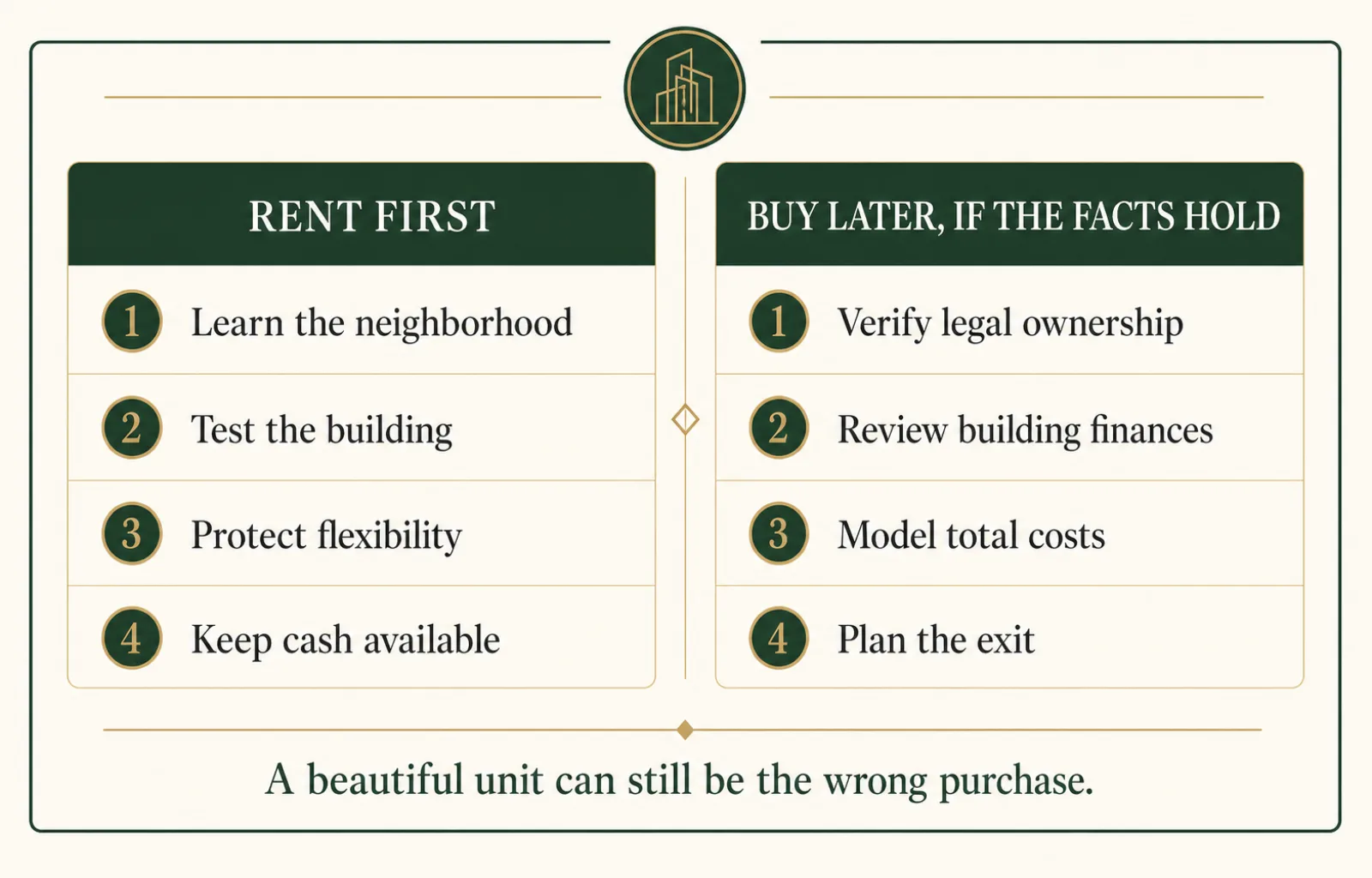
Renting first provides time to inspect the neighborhood and building under ordinary conditions before making a long-term commitment.
This article expands Question 9 from 14 Questions to Ask Before Retiring or Living Long Term in Thailand. The mechanics of moving purchase funds are covered separately in How Should You Transfer Money for a Property Purchase in Thailand?.
Renting first gives you better information
Renting for six to twelve months can provide information that a viewing cannot.
You learn:
- whether the neighborhood works at 8 a.m. and 10 p.m.
- how traffic, heat, rain, and air quality shape daily life
- whether the building is quiet
- how management handles repairs
- whether elevators, water, electricity, internet, and drainage are reliable
- how far you really are from hospitals, transit, groceries, and friends
- whether your preferred city is still your preferred city after the vacation ends.
Compare the cost of renting first with the transaction costs and potential loss from reselling an unsuitable unit.
Understand what foreigners can commonly own
Thai law generally restricts foreign ownership of land. Condominium ownership is a more established path. Section 19 bis of the Condominium Act caps qualifying foreign ownership at 49% of the aggregate area of all units in the registered condominium.
That does not mean every foreign buyer can purchase every condominium. The buyer must fall within a legal eligibility category, the transaction must satisfy the funding and documentation rules that apply, and the building must have enough foreign quota available when ownership is registered.
The phrase “foreign freehold” in an advertisement does not establish eligibility, title, or available foreign quota. Have the legal position verified independently.
Before paying a nonrefundable deposit, have an independent Thai lawyer verify:
- the condominium title and registered owner
- the seller’s authority to complete the sale
- the current foreign-ownership proportion
- the juristic person’s ability to issue the required foreign-quota affidavit
- the debt-free certificate required for transfer
- registered mortgages, encumbrances, or other title issues
- your eligibility, source-of-funds evidence, and transfer documents
- the deposit, refund, default, and completion terms in the contract.
Hire an independent Thai lawyer. The seller’s agent and developer’s sales office represent interests that differ from the buyer’s.
Nominee ownership can create serious legal trouble
Do not rely on an arrangement in which the registered owner and the real economic deal appear to be different without independent Thai legal advice. An informal promise or social-media explanation is not equivalent to ownership registered in your name.
If land, a house, a lease, a superficies right, usufruct, a company, or a Thai spouse is involved, the analysis becomes more complex. This article focuses on condominiums because that is the most common direct ownership route discussed with foreign buyers.
Calculate the full cost of ownership
The listing price is not the full cost of ownership.
Include the full cost
- transfer taxes and fees and how the contract allocates them
- legal review and due diligence
- foreign-exchange and transfer costs
- furnishing and appliances
- common-area fees
- sinking-fund contributions and special assessments
- insurance
- repairs inside the unit
- taxes that may apply
- vacancy and management if you rent it out
- agent commission and transfer costs when selling
- currency gains or losses from the perspective of your U.S. finances.
Then compare the total with the rent for a similar unit—not with the rent for a cheaper, older, or less convenient property.
Inspect the building as carefully as the unit
An attractive unit does not offset weak building finances, failing common systems, or poor management.
Review the building records
These are due-diligence requests, not a promise that every document will be available or that a buyer has an automatic right to all of them. Ask your lawyer and the condominium juristic person what can be obtained, authenticated, and meaningfully reviewed.
- juristic-person financial statements
- current common fees and sinking fund
- unpaid fees and collection practices
- planned major work
- recent special assessments
- insurance arrangements
- meeting minutes
- rules concerning pets, rentals, renovations, parking, and guests
- developer control and transition to co-owner governance
- litigation or material disputes.
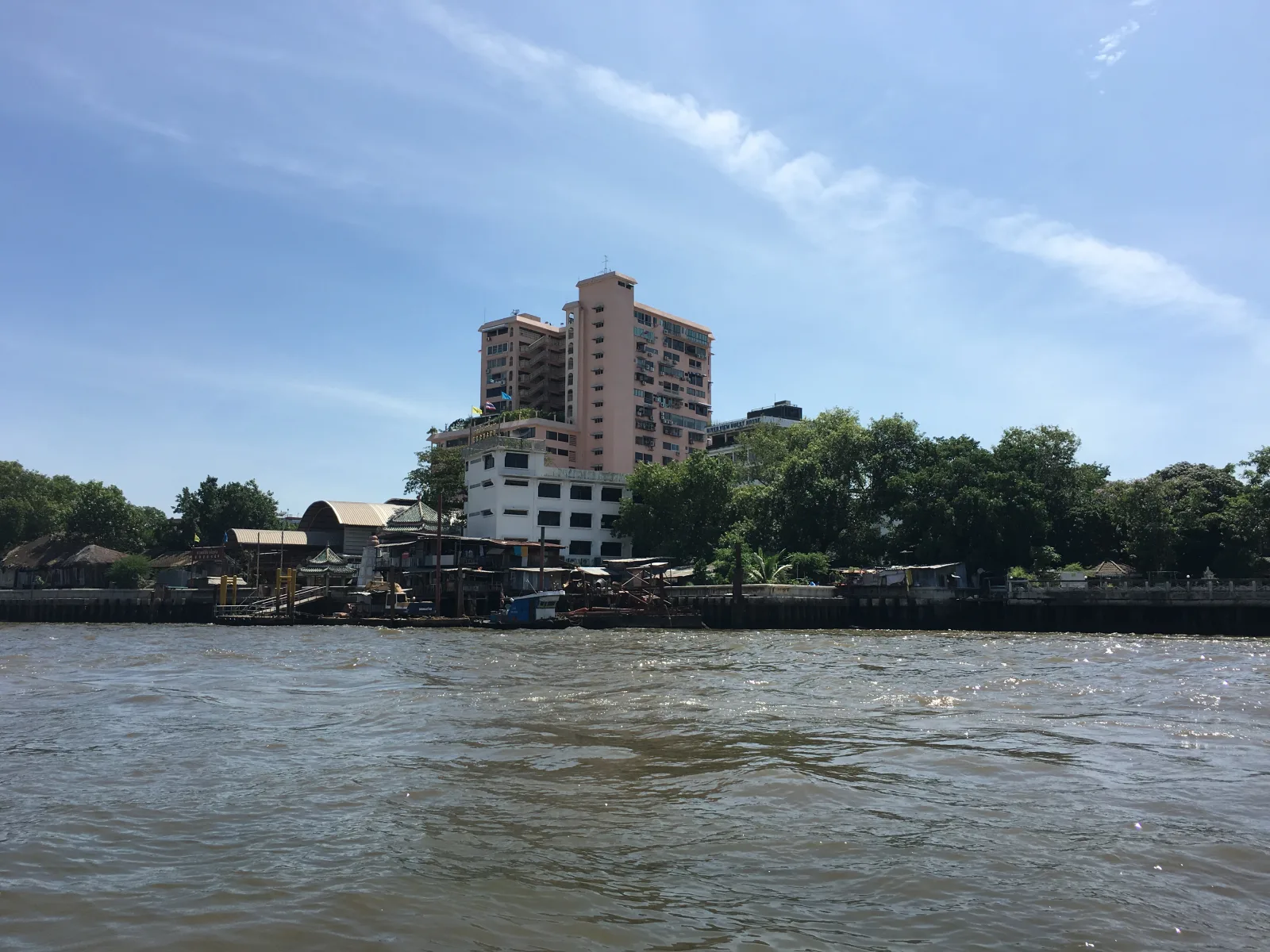
Walk the common areas. Look at fire exits, pumps, elevators, parking, drainage, exterior maintenance, and empty commercial space. Visit after rain. Speak with owners who are not part of the sales process.
Confirm that reserves and planned contributions are adequate for major common-system repairs.
Resale is part of the purchase
Foreign buyers often compare Thailand’s purchase price with U.S. real estate and assume that a lower price means lower risk.
Liquidity is not measured by price alone.
Test the resale market
- Who is the likely next buyer?
- Can the unit be resold within the foreign quota?
- How many similar units are listed?
- How long have they been for sale?
- Is the building still attractive when a newer project opens next door?
- Does the layout appeal to long-term residents or only short-stay visitors?
- What price would produce a realistic sale, not an optimistic listing?
A property can rise in baht and still disappoint after selling costs and currency conversion. It can also provide years of enjoyable use without producing an impressive investment return.
Separate expected personal use from expected investment return. A suitable home may still produce a weak financial return.
Financing changes the comparison
Foreign buyers may have fewer mortgage choices and less favorable terms than Thai borrowers. Some transactions are effectively cash purchases.
Cash eliminates mortgage interest but creates opportunity cost. Money placed in one illiquid unit cannot simultaneously fund healthcare, emergencies, travel, or a diversified portfolio.
Do not use reserves needed for healthcare, emergencies, or travel to complete the purchase.
Plan the foreign-currency transfer before sending it
Bank of Thailand rules govern foreign-exchange transactions and documentation. Department of Lands procedures require supporting records for a qualifying foreign condominium transfer.
Before moving a large amount:
- obtain written instructions from the receiving bank and your Thai lawyer
- confirm what transaction evidence the bank will issue
- confirm the currency, payment route, and transfer description for your case
- make sure the buyer name, contract, unit, and beneficiary details match
- preserve the source-of-funds trail
- understand the refund process if transfer cannot occur
- coordinate the transfer with independent legal review and the Land Office process.
Do not divide a large payment into smaller transfers in an attempt to avoid documentation requirements. Confirm the required transfer evidence before sending funds.
Model the life changes
A good purchase today can become a burden after:
- a serious health diagnosis
- loss of a spouse
- a new relationship
- a visa change
- family responsibilities in the United States
- a decision to move from an island to Bangkok for healthcare
- reduced mobility
- an inability to manage the unit from abroad.
Ask who can sell, manage, inherit, or access the property if you cannot.
Coordinate the purchase with Thai and U.S. estate planning. A U.S. will, beneficiary designation, or power of attorney may not solve every Thailand property issue automatically.
A practical buy-or-rent test
Buying becomes more defensible when:
- you have lived in the city and building through ordinary seasons
- you expect to stay for many years
- the purchase does not consume emergency or healthcare reserves
- ownership and foreign quota are independently verified
- the building’s finances and management are credible
- you understand total carrying and exit costs
- the unit fits even if it never produces a strong investment return
- the estate and incapacity plan is documented.
Renting remains attractive when:
- you are still choosing a city or neighborhood
- visa, work, relationship, or health plans may change
- you value mobility
- the rental yield is low relative to the purchase price
- you do not want building-management or resale risk
- buying would concentrate too much of your wealth in Thailand.
Buy only after completing due diligence
Rent long enough to understand the ordinary week. Buy only after the legal ownership, building, cash flow, exit, and estate plan all make sense.
A condominium can be a suitable home and a weak investment. Evaluate those outcomes separately.
Live in the area. Learn the building. Verify the ownership. Read the finances. Price the exit. Protect your reserves.
Buy only if the facts remain acceptable after independent review.
Common questions
Can a foreigner own a condominium in Thailand?
Qualifying foreign buyers may own a unit in a registered condominium, subject to the statutory eligibility rules and the building’s 49% foreign-ownership ceiling measured by aggregate unit area. Verify the buyer, unit, funding route, and current quota independently.
Can a foreigner own Thai land?
Foreign land ownership is generally restricted, with narrow exceptions. Do not assume that buying a house includes direct foreign ownership of the land.
How long should I rent first?
There is no universal period, but living through ordinary routines and at least one less-comfortable season provides information a short visit cannot.
Is a condo a good investment?
It may be, but analyze rental demand, building finances, supply, resale liquidity, costs, currency, and the next buyer. A good home is not automatically a good investment.
Editorial disclaimer: General educational information, not individualized Thai legal, real-estate, tax, investment, foreign-exchange, or estate-planning advice.