Bangkok daily life · Transportation costs
What Does It Cost to Get Around Bangkok?
Budget for the full route, including transfers, last-mile rides, tolls, surcharges, weather, traffic, and late travel.
Reviewed July 31, 2026 · Later factual updates are dated within the guide
In this guide
Budget for the complete trip, including:
- the main ride;
- the trip to and from the station;
- transfers between systems;
- tolls, booking charges, and airport surcharges;
- rainy-season price spikes;
- the ride home after the trains stop;
- the time and physical effort required by the cheaper option.
Bangkok has BTS, MRT, Airport Rail Link, buses, boats, metered taxis, app-booked cars, motorcycle taxis, and tuk-tuks. Costs and usefulness depend on the route and time.
The practical cost picture
| Mode | How the price works | Best use | Common budget mistake |
|---|---|---|---|
| BTS Skytrain | Distance-based fare; calculate the actual route | Predictable trips along Sukhumvit and Silom corridors | Ignoring two daily last-mile rides |
| MRT | Distance-based fare; separate operator and payment rules | Cross-city trips, Asok interchange, Old Town, Rama IV | Assuming every rail system shares one fare or card |
| Metered taxi | Regulated meter plus certain lawful charges | Door-to-door travel, groups, luggage, late nights | Quoting the moving fare while ignoring traffic time and tolls |
| Ride-hailing car | App quote changes with demand, vehicle, and time | Price visibility, pickup record, cashless convenience | Treating one quiet-afternoon quote as a permanent fare |
| Motorcycle taxi | Stand fare board, negotiated longer trip, or app quote | Short final kilometer and traffic bottlenecks | Building a home commute that requires four rides a day |
| Tuk-tuk | Agreed price before departure | Short, deliberate trips and occasional visitors | Expecting a meter or assuming it is the cheapest option |
| Bus | Route, operator, and vehicle class determine fare | Low-cost trips when time and route knowledge allow | Boarding the right number in the wrong direction or service variant |
| Chao Phraya boat | Published flat or zone fare by flag service | Riverside travel and some commutes | Confusing commuter boats with tourist services |
| Canal boat | Route-based fare | Fast east-west movement along the canal corridor | Underestimating access, boarding difficulty, and limited luggage space |
Prices and payment systems change. Use this guide to build the budget, then check the linked operator before relying on an exact fare.
BTS and MRT: predictable until the transfers begin
Rail is usually Bangkok’s easiest transport cost to model because the operator calculates the trip before you enter. It is also where newcomers make a quiet budgeting error: they price the train and forget everything attached to it.
The BTS fare is distance based. The official BTS fare calculator should be used for the exact origin and destination. Under the operator’s current 2026 promotion and fare information, the maximum fare across the extended network reaches 65 baht. Many ordinary central trips cost less.
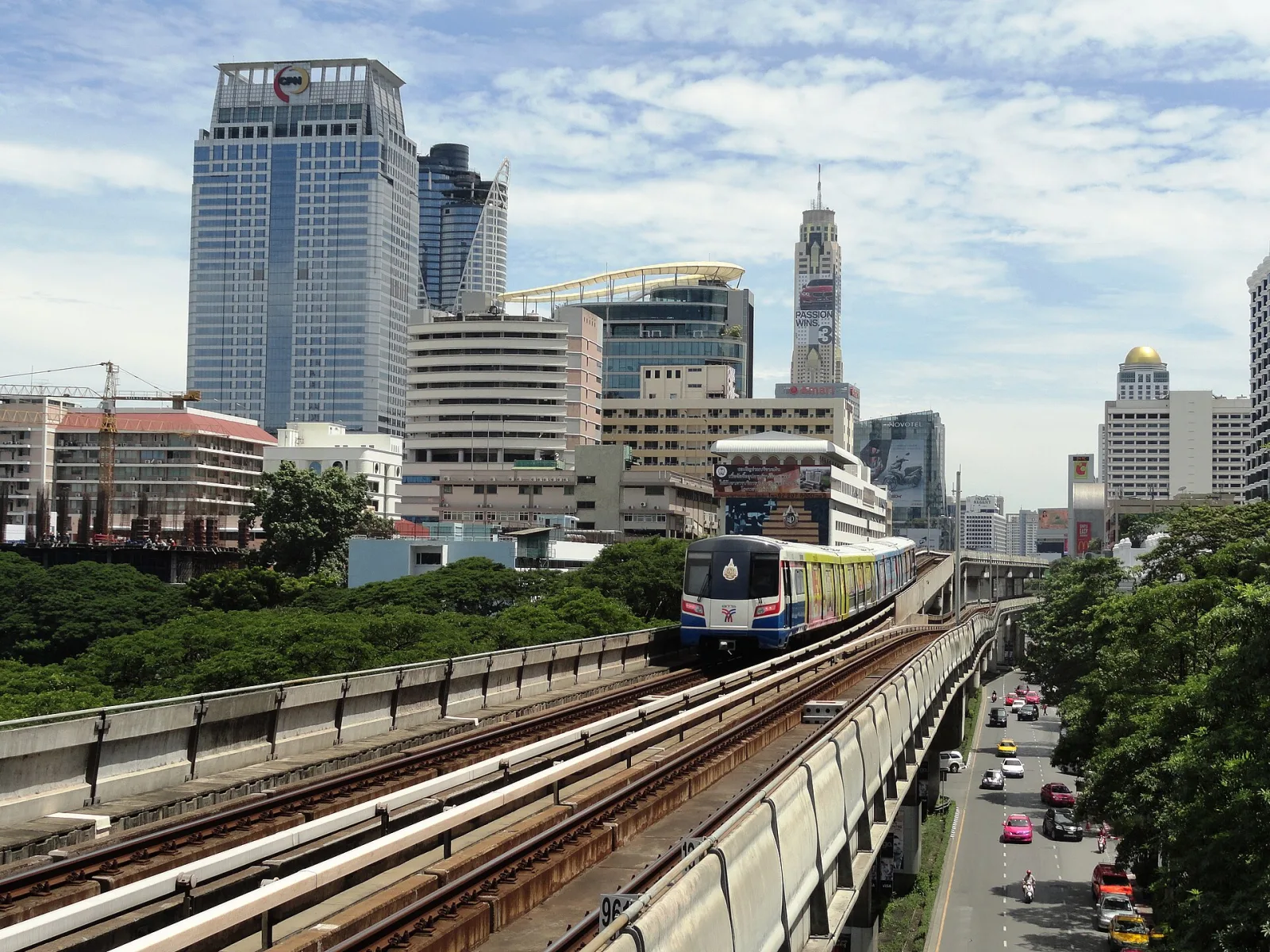
BTS ticket machines now support QR payment, although a foreign visitor should not assume every QR option will work without a compatible Thai or supported mobile-payment account. Rabbit stored-value cards remain useful for frequent BTS travel. The operator lists a 100-baht issuance fee for a new Rabbit card.
The MRT has its own fare calculator and payment rules. BEM began retiring legacy MRT and MRT Plus cards on June 1, 2026 as it moved passengers toward EMV contactless payment and other accepted methods. That change is a useful warning: advice written even one year ago may already describe a payment product that no longer exists.
The BTS and MRT meet at useful interchanges, including Asok and Sukhumvit, Sala Daeng and Silom, and Mo Chit and Chatuchak Park. A transfer between separate systems usually means leaving one paid area and paying again. Confirm current tickets and passes for each operator.
Before signing a lease, calculate four complete journeys:
- home to work;
- home to the preferred hospital;
- home to the airport connection;
- home after the last train.
Then multiply the normal round trip by the number of days you will actually make it. A cheap apartment becomes less cheap when every rail journey begins and ends with a paid motorcycle ride.
Metered taxis: good value when the meter is used
Bangkok’s regulated taxi meter remains one of the city’s best transport values, particularly for two or more people, heavy shopping, luggage, limited mobility, or a late-night trip.
The official 2023 fare schedule distinguishes vehicle types. A standard smaller taxi begins at 35 baht for the first kilometer, while specified larger taxis begin at 40 baht. The distance rate rises in steps. When the vehicle is stopped or moving no faster than 6 kilometers per hour, the regulated schedule adds 3 baht per minute.
That last sentence explains why a ten-kilometer ride does not have one reliable price. Ten kilometers at 11 a.m. and ten kilometers during a flooded Friday rush hour are different financial and emotional events.
Lawful extra charges can also apply:
- an electronic-booking service charge of 20 baht under the regulated schedule;
- a 50-baht surcharge when using the official taxi queue at Suvarnabhumi or Don Mueang;
- expressway tolls, paid by the passenger.
At Suvarnabhumi, the official airport taxi queue is on Level 1 near Gates 4–7. Use the dispatch system, keep the printed ticket information, and confirm whether the route will use toll roads.
For an ordinary street taxi, ask for the meter. A fixed quote may be reasonable only in circumstances where the service legally permits it or both parties knowingly choose a different licensed service. Refusing the taxi meter and demanding an invented tourist price is not the standard you need to accept.
Taxi availability is uneven. Drivers may decline a trip because of shift changes, severe traffic, distance from their preferred area, or the difficulty of finding a return passenger. That is frustrating. It does not justify turning every interaction into a cultural referendum. Try another taxi or use an app.
Grab, Bolt, and app cars: you are paying for a clearer transaction
Ride-hailing prices move. Demand, rain, pickup location, vehicle type, time, promotions, and driver supply all affect the quote. Any article promising that “Grab costs exactly this much” is manufacturing certainty.
The app’s advantage is different:
- the destination is recorded;
- the estimated or fixed price appears before confirmation;
- the pickup and driver are documented;
- in-app payment may be available;
- language friction is reduced;
- you can compare a car, taxi, or motorcycle option where offered.
Grab and Bolt do not always produce the same quote or pickup time. Compare both when practical. During heavy rain, concert departures, closing time, or a transit disruption, the app price can rise sharply and drivers may cancel.
Tolls require attention. Read the booking screen and receipt instead of assuming they are included. Airport pickup points and access rules also change, so follow the app’s current directions rather than waiting wherever you happen to exit.
For budgeting, record ten real trips during a scouting stay:
- two quiet daytime rides;
- two weekday rush-hour rides;
- two late-evening rides;
- two rainy-period quotes;
- two airport or long-distance quotes.
The average will be far more useful than a stranger’s screenshot.
Motorcycle taxis: the small fare that changes the housing budget
Motorcycle taxis make Bangkok work. They connect deep sois to trains, cross short gaps that are miserable on foot, and move through traffic that can trap a car.
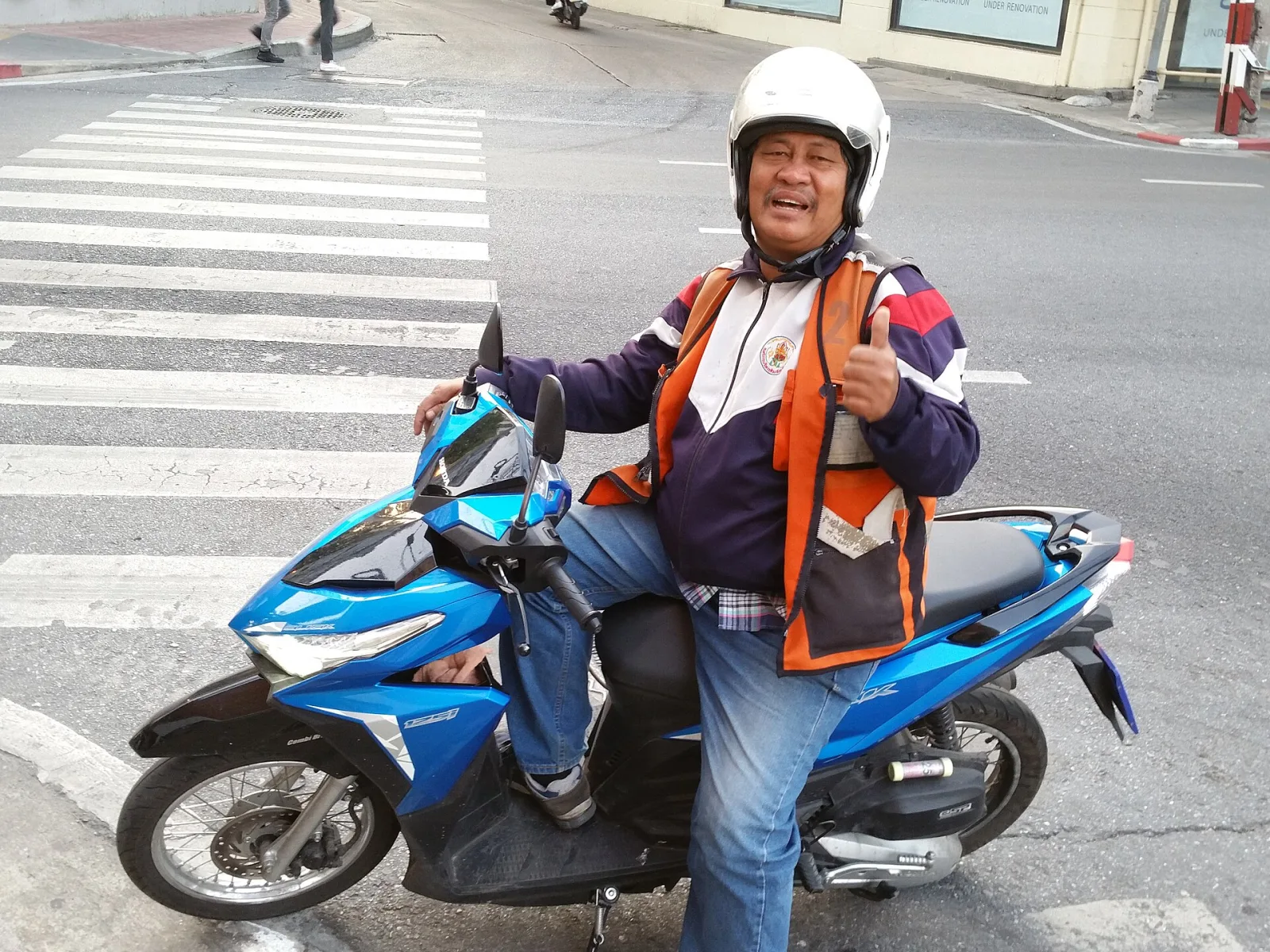
At established stands, look for drivers in regulated vests and a posted fare board. Government guidance caps the first two kilometers at no more than 25 baht under the referenced schedule, with additional distance priced under the applicable rules. Real routes, stand practices, and app quotes vary, especially for longer trips.
For a route you will repeat, ask the fare before riding and observe what regular passengers pay. An app motorcycle can provide a recorded destination and up-front quote, though availability and price move with demand.
The budget problem is frequency:
| Pattern | Rides per weekday | Rides in 22 weekdays |
|---|---|---|
| One motorcycle from home to BTS, then walk home | 1 | 22 |
| Motorcycle at both ends of the commute | 2 | 44 |
| Motorcycle at both ends, morning and evening | 4 | 88 |
Multiply the actual route fare by those ride counts. A ten- or twenty-baht difference in one ride looks trivial. Across 88 rides, it is not.
Safety matters more than the spreadsheet. Use a helmet, avoid riding when the driver appears impaired or reckless, and do not let convenience bully you into a mode that feels wrong. Families, people with balance problems, and anyone unwilling to use motorcycles should choose housing with a genuinely walkable station route.
Tuk-tuks: useful, memorable, and rarely a budgeting strategy
A tuk-tuk has no taxi meter. Agree on the price and destination before boarding.
They can be useful for:
- short trips in areas with weak rail access;
- moving through Old Town streets;
- a deliberate visitor experience;
- a route where the driver clearly knows the local shortcut;
- situations where an available tuk-tuk is more practical than waiting for a car.
There is no honest universal tuk-tuk fare. The route, hour, traffic, location, passenger, and bargaining all affect the quote. Ask before boarding. If the price feels absurd, decline politely.
Avoid any cheap sightseeing offer that requires stops at gem shops, tailors, travel agencies, or other businesses you did not choose. The low fare is subsidized by delivering you into a sales pitch.
Use tuk-tuks because they solve a particular ride or because you want the experience. Building a daily commute around negotiated fares is exhausting.
Buses: the cheapest network demands the most attention
Bangkok buses reach places rail does not. They can be extremely economical, though the network requires more route knowledge and patience.
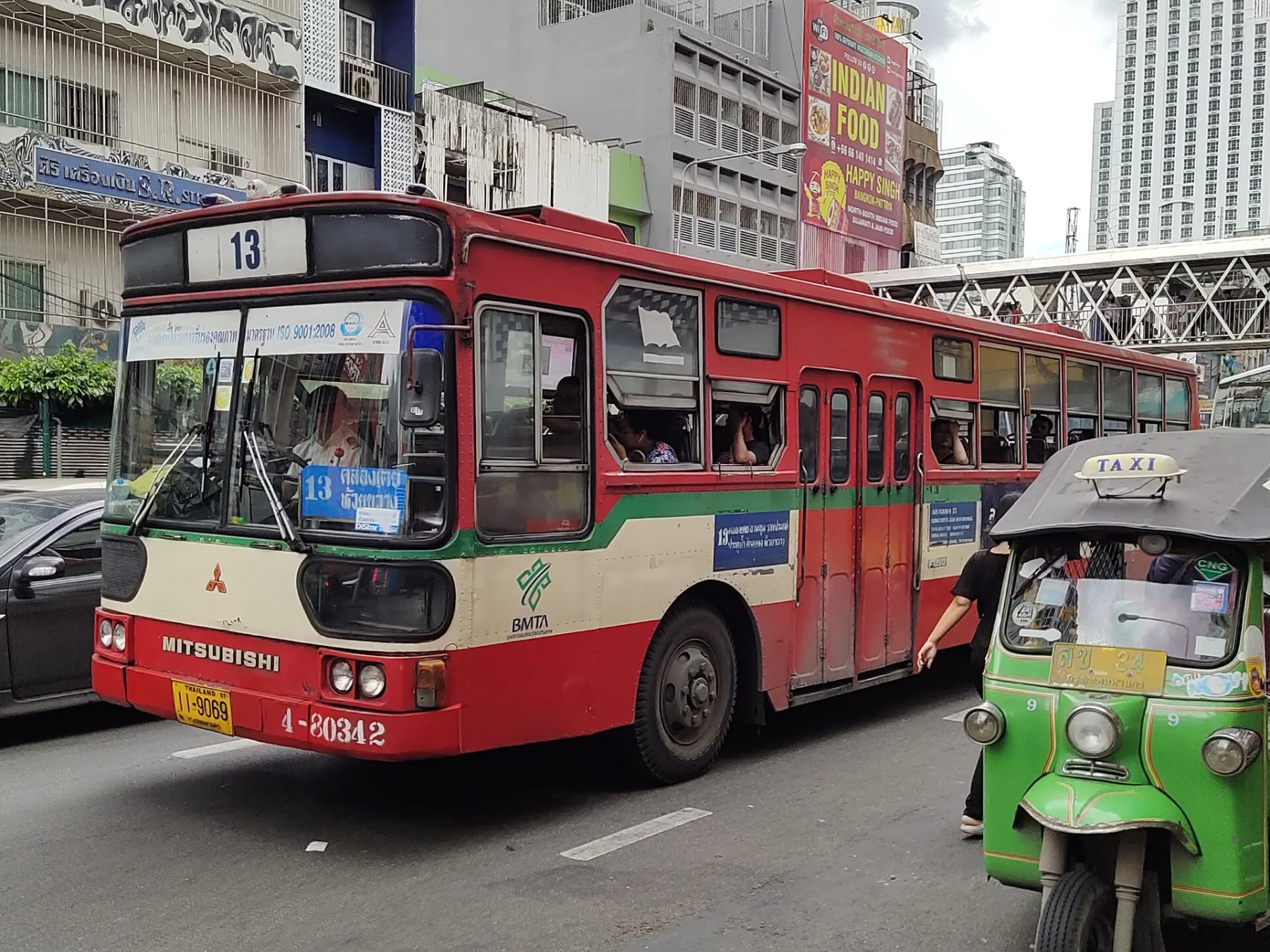
Fare depends on the operator, vehicle, route, and service class. Bangkok now has a mix of traditional BMTA buses, air-conditioned services, privately operated routes, and electric buses. A single universal “Bangkok bus fare” would be misleading.
Use the current BMTA route-and-fare search for BMTA services and a live transit app such as ViaBus to confirm the stop, direction, and approaching vehicle. Pay attention to route variants. Two buses displaying a familiar number may not serve the identical path or endpoint.
Bus life works best when:
- the route travels directly where you need to go;
- the stop is on the correct side of a difficult road;
- arrival time is flexible;
- you can recognize the destination or follow live mapping;
- standing, steps, heat, and crowded boarding are manageable.
Carry small cash until you have verified the payment method on the specific service. Some newer operators support electronic payment, but Bangkok’s bus system is not uniform enough to treat one method as guaranteed everywhere.
Boats: cheap transport when the river or canal matches the route
The Chao Phraya Express Boat carries commuters as well as visitors. Its published schedule effective March 30, 2026 lists:
- Orange Line: 18-baht flat fare;
- Yellow Line: 23-baht flat fare;
- Green-Yellow Line: 16 baht for Pak Kret–Nonthaburi, 23 baht for Nonthaburi–Sathorn, or 35 baht for the complete Pak Kret–Sathorn trip;
- Red Line: 32-baht flat fare.
Services and operating days differ by flag, and piers can close temporarily. Check the official timetable before choosing a riverside home around a commute that only works on paper.
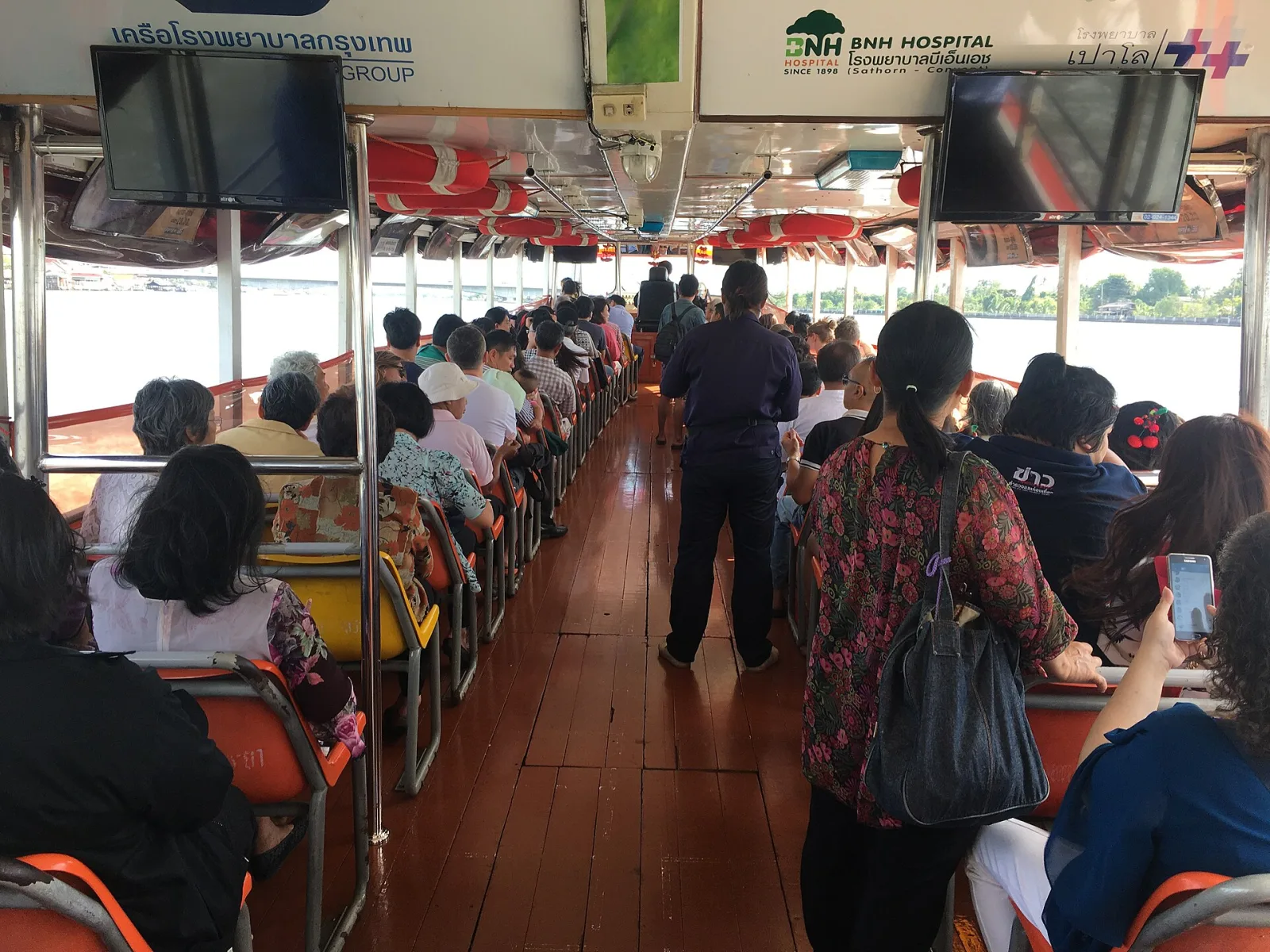
Tourist boats, hotel shuttles, cross-river ferries, and commuter express boats are different products. Look at the flag, route, and posted fare.
The Saen Saep canal boat can be fast along its east-west corridor, connecting areas such as Bang Kapi, Ramkhamhaeng, Asok, Pratunam, and the Old Town side of the route. Fares depend on distance and current operator rules. Confirm the posted fare and service information at the pier.
Boats demand physical confidence. Boarding can be fast, the step can move, spray is possible, and large luggage is awkward. Accessibility varies sharply by pier.
Airport transport: include the final connection
Suvarnabhumi has the Airport Rail Link, metered taxis, app services, buses, and private transfers. The Airport Rail Link’s long-standing distance fare runs from 15 to 45 baht, with Phaya Thai connecting to BTS and Makkasan connecting toward MRT Phetchaburi.
The cheap train can still create an expensive journey if:
- the final condominium is far from Phaya Thai or Makkasan;
- luggage makes the transfer difficult;
- arrival is after rail service;
- the traveling party needs two taxis after reaching central Bangkok;
- elevators or station access do not match the luggage load.
Don Mueang connects to the Red Line at Don Mueang Station, in addition to taxis, buses, app rides, and other services. Verify the current station path and operating schedule before travel.
For a taxi from either airport, budget the meter, the 50-baht official-queue surcharge, and any tolls. For an app or private transfer, read what the quote includes.
The cheapest airport choice for one person with a carry-on may be the worst choice for three people with six bags.
Build a monthly transport budget from behavior
Do not begin with a generic “Bangkok transportation allowance.” Begin with a week.
Step 1: Price the fixed commute
Use the official fare calculator for every rail segment. Add the real last-mile fare at both ends.
Monthly commute estimate:
Complete one-way cost × 2 × commuting days
If the return pattern changes at night, calculate each direction separately.
Step 2: Add routine non-work trips
Count realistic weekly trips for groceries, gym, hospital visits, social plans, religious community, school, and errands. Delivery can replace some rides, though the delivery fee then belongs elsewhere in the budget.
Step 3: Add weather and fatigue
Decide how many trips will switch from walking, bus, or train to a taxi or app car during heavy rain, extreme heat, illness, poor air quality, or late nights.
Step 4: Add airport and regional travel
Frequent travelers should include trips to Suvarnabhumi, Don Mueang, Krung Thep Aphiwat, Ekkamai Bus Terminal, Mo Chit, or the relevant departure point.
Step 5: Keep a transport buffer
Traffic, missed trains, canceled app rides, tolls, and unexpected journeys are normal urban costs. Include a margin for them.
What changes the cost most
Distance from the station
An address 300 meters from BTS and one 1.8 kilometers down the same soi may share a neighborhood name and have completely different transport budgets.
The direction of the commute
Crossing the river, changing rail operators, or traveling against a difficult road pattern can matter more than straight-line distance.
Rain
Demand rises, roads slow, walking becomes harder, and motorcycle availability changes. Test the route during wet weather before committing long term.
Household size
Rail costs multiply per person. A metered taxi or app car may become competitive for two, three, or four passengers, particularly for a direct trip.
Mobility and luggage
Station stairs, long interchanges, broken pavements, moving boats, and standing buses can eliminate the theoretical cheapest option.
Nightlife and late hours
Once the last train has gone, the choice narrows. People who socialize late should price the ride home, not merely the ride out.
The decision before the lease
Spend one week traveling from the proposed building as though you already live there.
Take the weekday rush-hour trip. Return after dark. Try the grocery run with weight. Travel in rain. Reach the preferred hospital. Go to the airport with luggage. Compare a taxi meter, Grab, Bolt, bus, motorcycle, and rail where each is appropriate.
Then total the money and the friction.
Bangkok transport can be inexpensive on some routes, while repeated last-mile rides add materially to the monthly cost. Track a scouting week before selecting housing.
Official fare and service tools
- BTS fare calculator and route map
- BTS ticket and payment information
- BEM MRT fare calculator
- BEM payment-card transition information
- Bangkok Mass Transit Authority route and fare search
- Chao Phraya Express Boat schedules and fares
- Suvarnabhumi official taxi information
- Thailand government taxi-fare explanation
- Department of Land Transport
- Department of Land Transport taxi-fare estimator