Bangkok daily life · Shopping and errands
Bangkok Neighborhoods for Malls, Groceries, and Daily Errands
Compare exact access to groceries, pharmacies, banking, repairs, restaurants, delivery, and rail.
Reviewed July 31, 2026 · Later factual updates are dated within the guide
In this guide
In Bangkok, a mall or mixed-use complex can provide groceries, pharmacies, banks, phone services, restaurants, and indoor access during heat or rain.
Practical residential areas combine:
- a supermarket that matches the household budget;
- a fresh market or affordable local food;
- pharmacies, banks, phone shops, and basic services;
- a practical route home in heat and rain;
- delivery coverage for heavy or awkward purchases;
- access that still works after office hours and on weekends.
The appropriate area depends on budget and routine. Chit Lom has a large central shopping network. Phrom Phong has international products and mall-connected services. Asok concentrates errands around two rail systems. On Nut has more lower-cost everyday options. Ari provides smaller-scale services near the station. Thong Lo has higher-cost services spread across a wider area.
This guide compares the neighborhood systems behind the storefronts.
Quick comparison
| Area | Main everyday advantage | Grocery profile | Main compromise |
|---|---|---|---|
| Chit Lom and Ratchaprasong | Huge indoor and skywalk-connected errand network | Premium food halls plus Big C Ratchadamri and smaller supermarkets | High housing cost, tourists, event crowds |
| Phrom Phong | EM District, Japanese and international products, services near BTS | Gourmet Market and specialist shops | Premium pricing; the useful radius changes by soi |
| Asok | Supermarket, pharmacies, banks, food, BTS, and MRT in one node | Gourmet Market plus smaller stores and Khlong Toei access | Crowds, traffic, and intense evening activity |
| On Nut | Hypermarkets, household goods, local food, and BTS at better value | Lotus’s, Big C, markets, convenience stores | Peak crowding and poor walking routes from deeper sois |
| Thong Lo | Premium and Japanese groceries, restaurants, late hours | DON DON DONKI and specialist supermarkets | Errands are scattered; motorcycle or car use rises quickly |
| Ekkamai | Station-side basics with calmer residential pockets | Supermarket and Japanese-oriented options around Gateway and nearby sois | Less concentrated than Phrom Phong or Asok |
| Ari | Compact station-area routine with local food and cafés | Small mall supermarket, market shopping, convenience stores | Serious household shopping may require delivery or another district |
| Silom and Sathorn | Strong services around Sala Daeng and major office clusters | Mall supermarket, local markets, specialty shops | Convenience falls sharply on the wrong side of a major road or deep soi |
| Chinatown and Old Town | Markets, hardware, food, and specialist local commerce | Good traditional-market access; fewer polished one-stop options | Heat, loading traffic, limited parking, uneven delivery access |
Chit Lom: broad central shopping and services
Chit Lom and Ratchaprasong contain extensive daily services within a relatively compact area. CentralWorld’s current official directory spans food, fashion, lifestyle, technology, beauty, and family services. Central Chidlom, Central Embassy, Gaysorn, Big C Ratchadamri, Mercury Ville, and the surrounding commercial buildings add more options.
The elevated Ratchaprasong walkway changes how the district works. A resident in the correct building can reach BTS, multiple malls, restaurants, groceries, clinics, salons, banks, and offices while avoiding several street-level crossings. That advantage becomes more valuable in heavy rain and midday heat.
The area supports several shopping styles:
- premium food halls for imported products, prepared meals, and specialty ingredients;
- Big C for broader household and grocery shopping;
- convenience stores and smaller supermarkets for quick purchases;
- mall restaurants and food courts across a wide range of budgets;
- department stores for bedding, cookware, electronics, and home basics.
The trade is predictable. Housing is expensive. The district absorbs tourists, office workers, major events, holiday displays, and weekend shoppers. A home south of the BTS toward Langsuan may feel calmer and gain access to Lumphini Park, while an address near the main commercial spine maximizes covered convenience.
Test the complete walk from the building lobby to the supermarket you would actually use. “Near CentralWorld” can still involve an exposed crossing, a long indoor route, or a frustrating return with heavy bags.
Phrom Phong: premium and international services
The official EM District groups Emporium, EmQuartier, and EmSphere around Phrom Phong BTS and Benjasiri Park. The complex brings supermarkets, restaurants, retail, entertainment, fitness, and services into one station area.
For many foreign residents, the deeper advantage is product availability. Phrom Phong and the adjoining parts of Thong Lo have long served Japanese, international, and affluent Thai households. Imported groceries, Japanese ingredients, specialty bakeries, wine, household products, clinics, salons, pet services, and English-friendly businesses are easier to find here than in most Bangkok neighborhoods.
That convenience has a price. Premium supermarkets can make an ordinary basket surprisingly expensive. The district also changes block by block. Soi 24 is heavily developed and carries restaurants and nightlife. Soi 22 has hotels, bars, massage businesses, and heavy evening traffic. Soi 33 and parts of the north side mix residential life with late-night venues.
Visit any proposed home after dark. A beautiful building can sit beside noise, taxi queues, tour groups, or a street environment that feels completely different from the daytime property tour.
Phrom Phong works best for people who value:
- international and Japanese product access;
- a park, BTS station, and large retail district in the same routine;
- high-end fitness, healthcare, dining, and personal services;
- the ability to solve many errands indoors;
- a central location more residential than the Asok intersection.
Asok: the most compressed errand-and-transit machine
Terminal 21 sits at the BTS Asok and MRT Sukhumvit interchange. Its current official directory places Gourmet Market beside pharmacies, banks, personal services, restaurants, and other everyday shops. This allows several errands to be completed in one rail-connected location.
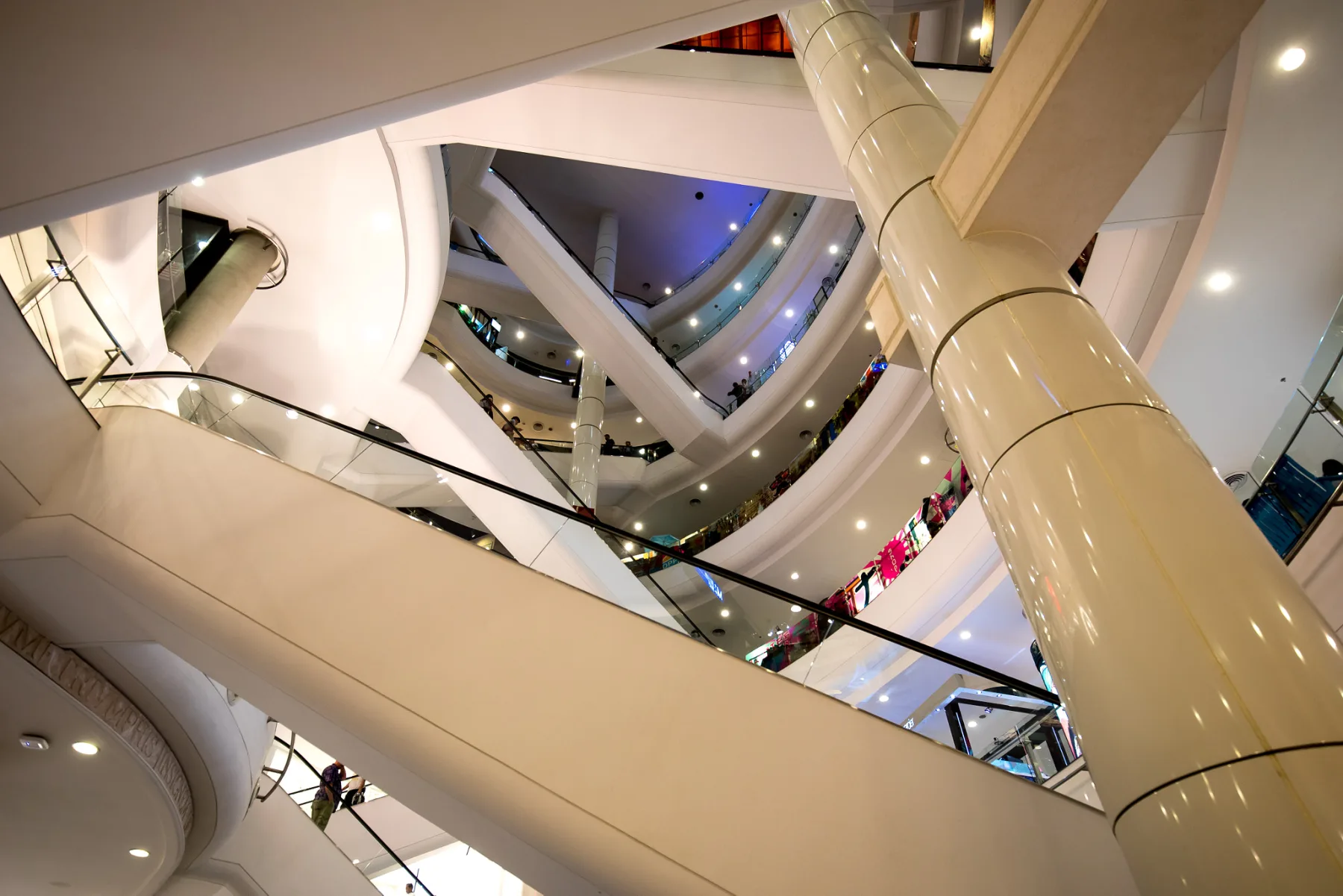
Asok residents can also reach offices, clinics, hotels, restaurants, nightlife, Benjakitti Park, and multiple transport systems without traveling across the city. Larger fresh-food shopping is available toward Khlong Toei, although the trip and shopping environment are entirely different from entering a mall supermarket.
This efficiency comes wrapped in chaos. The intersection is crowded. Sukhumvit Road and Asok Montri carry heavy traffic. Soi Cowboy occupies one part of the area, while the Nana and Soi 11 nightlife districts sit farther west. Buildings only a few hundred meters apart can produce radically different evenings.
Asok earns its value when the home provides a quiet retreat from the district. Inspect street noise, club bass, ambulance routes, construction, taxi activity, and the walk from both BTS and MRT. The best Asok address gives you the interchange without forcing you to sleep inside it.
On Nut: the practical-value champion
On Nut is one of Bangkok’s clearest examples of a neighborhood built around repeatable errands. Lotus’s near BTS, Big C Extra farther along the road, Century The Movie Plaza, convenience stores, local markets, food stalls, services, and delivery options cover most ordinary needs.
The distinction from central Sukhumvit is economic as well as geographic. Residents can buy groceries, cleaning supplies, appliances, storage items, basic clothing, and household goods without defaulting to premium retail. Condominiums also tend to offer more space for the money than Phrom Phong, Asok, or Chit Lom.
The difficulty begins when a listing uses “On Nut” to describe a building deep inside a soi. A shuttle may stop early. Motorcycle taxis may become part of every train trip. A supermarket that looks close on the map may sit across hostile traffic or require a long, hot walk.
On Nut deserves serious consideration when the weekly goal is competence at a reasonable cost:
- large grocery and household runs;
- affordable prepared food;
- BTS access;
- gyms, pharmacies, salons, and daily services;
- delivery from major retailers;
- housing that does not consume the entire convenience premium.
Inspect the route during evening rush hour and during rain. The station area is exceptionally useful, though nobody would call it peaceful.
Thong Lo and Ekkamai: good selection spread over a large area
Thong Lo and Ekkamai have almost every service a well-funded household could want. The problem is that they are distributed across long sois, side streets, community malls, and separate commercial clusters.
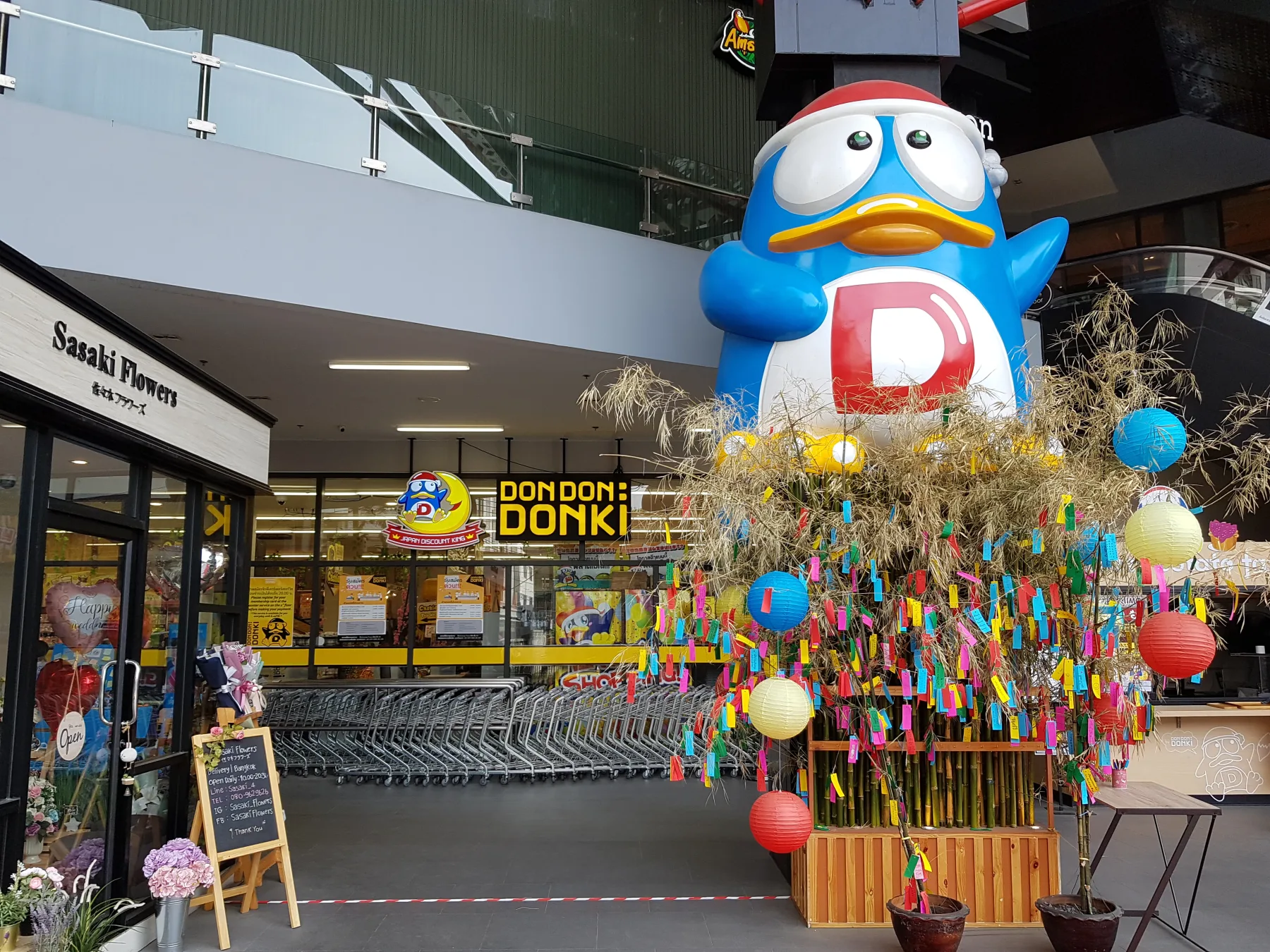
DON DON DONKI’s official store information lists the Thonglor location as a 24-hour operation, and its current mall directory shows a broader collection of shops and restaurants. Japanese supermarkets, premium grocers, bakeries, wine shops, pet services, clinics, design stores, and restaurants extend through the surrounding area.
Ekkamai adds Gateway beside BTS and more supermarkets, restaurants, cafés, and neighborhood businesses along Sukhumvit 63. It can feel more practical than Thong Lo at a similar distance from the main road, though traffic and final-kilometer transport still matter.
These districts suit residents who:
- want premium, Japanese, and specialist products;
- order delivery frequently;
- are comfortable using motorcycle taxis, ride-hailing, or a car;
- choose a building near a useful cluster instead of assuming the whole district is walkable;
- accept that convenience and affordability rarely arrive together here.
Walk from the proposed condominium to three destinations: the station, the usual supermarket, and the nearest affordable dinner. If all three routes are irritating, the address will not improve after the lease is signed.
Ari: a compact daily routine with limits
Ari provides a smaller-scale service cluster. Near BTS, residents have La Villa, a supermarket, pharmacies, cafés, restaurants, market food, convenience stores, and everyday services within a compact area. Side streets add local businesses and delivery coverage.
The neighborhood works well for smaller households and people who shop frequently rather than buying a week’s worth of heavy groceries at once. It also provides an appealing mix of Thai office life, government institutions, established residential streets, and an international community.
Ari becomes less effortless when the home sits far from Phahonyothin Road, the preferred gym or supermarket is outside the immediate cluster, or the household needs large imported-product selections. At that point, delivery or occasional trips to larger retail centers fill the gap.
The station radius matters more than the neighborhood label. Ari near BTS feels compact. Ari deep in a quiet side street can be more residential and less convenient.
Silom and Sathorn: choose the subarea with surgical precision
Silom around Sala Daeng has a dense urban service cluster outside Sukhumvit. Silom Complex, supermarkets, pharmacies, clinics, banks, restaurants, local food, BTS, MRT, and Lumphini Park sit inside a compact circuit.
Sathorn is harder to summarize. A home near Sala Daeng, Chong Nonsi, Saint Louis, or a useful section of Rama IV may have good services. A beautiful apartment deeper inside the district may require motorcycle taxis or a car for ordinary errands.
Office districts also have a weekly rhythm. Some food and service options thrive at lunch and thin out on weekends. Other pockets are strongly residential. One Bangkok and the Rama IV corridor are changing the eastern edge of the district, so construction and opening phases should be checked in person.
The deciding question is simple: can you complete groceries, pharmacy, dinner, transport, and exercise without crossing three major roads or arranging five separate rides?
Chinatown and the Old Town: exceptional local commerce, weaker one-stop convenience
Yaowarat, Song Wat, Talat Noi, Sam Yot, Wang Burapha, and surrounding districts contain food markets, hardware shops, pharmacies, gold shops, household suppliers, fabric districts, repair businesses, and specialist commerce.
Residents who learn where things are can solve problems that defeat a generic mall. The experience is more fragmented. Hours vary. Loading activity, heat, rain, crowds, and narrow pavements affect the trip. Large supermarkets and polished one-stop service clusters are less evenly distributed.
Delivery can cover some gaps, but old buildings, narrow lanes, parking restrictions, and confusing entrances create practical friction. A driver may call from the wrong street while the map insists the destination is ten meters away.
Choose the Old Town for its urban texture, food, culture, and local commerce. Then verify the boring infrastructure: drinking water, pharmacy, supermarket, parcel delivery, laundry, parking, waste, and late-evening transport.
Fresh markets change the equation
Mall districts should not define all Bangkok shopping. Fresh markets can offer produce, herbs, meat, seafood, prepared food, flowers, and household basics at prices and quantities that make sense for local cooking.
Khlong Toei Market is a major example. It serves households and food businesses on a scale that feels worlds away from a premium food hall.
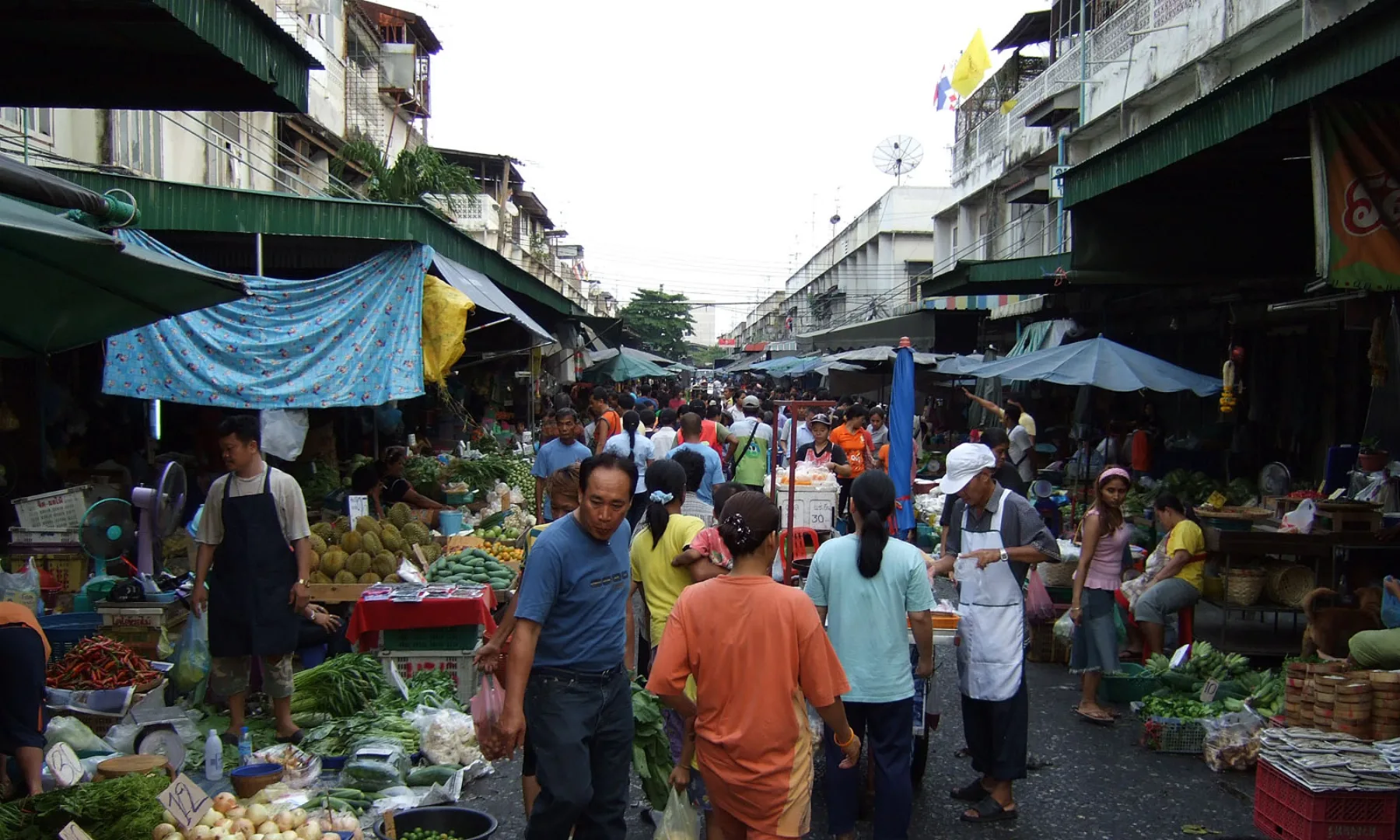
Markets also require different skills. Learn useful Thai words, carry appropriate payment, understand when the best produce arrives, and decide what level of heat, crowding, wet floors, and raw-food handling feels comfortable. People with mobility limitations should inspect access carefully.
The right neighborhood may combine a supermarket for packaged goods, a market for fresh ingredients, and delivery for bulk items. There is no prize for forcing every purchase through one channel.
Delivery makes weak neighborhoods better, within limits
Bangkok’s grocery and courier services can rescue a distant building. Major retailers operate online ordering, while delivery platforms connect supermarkets, convenience stores, restaurants, pharmacies, and individual shops.
Delivery is particularly useful for:
- drinking water and other heavy items;
- bulk cleaning and paper products;
- imported ingredients found across town;
- repeat orders;
- rainy evenings;
- residents with limited mobility.
It does not erase geography. Delivery ranges, inventory, fees, minimums, substitutions, address accuracy, lobby rules, and driver access vary. Fresh-food quality also depends on the store and fulfillment process.
Before committing to a home, place several real orders to that building. Test the pin, instructions, security desk, elevators, and handoff. A condominium that treats every delivery as a hostage negotiation will wear you down.
The seven-day errand test
A property tour shows the kitchen countertop. This test shows the life around it.
Map the weekly basket
List what you actually buy: Thai produce, imported dairy, pet food, prescriptions, wine, specialty dietary items, cleaning supplies, office equipment, or children’s products.
Walk with weight
Carry ten kilograms from the supermarket to the lobby. Add heat, broken pavement, station stairs, and one unexpected downpour in your imagination.
Visit after work
Some districts are elegant at 2 p.m. and exhausting at 7 p.m. Check queues, traffic, mall exits, food availability, and the route home.
Test a cheap week
Use local food, a market, and a lower-cost supermarket. A routine dependent on high-cost retail can materially increase the monthly budget.
Test a sick day
Find the nearest pharmacy, clinic, basic grocery delivery, and easy meal. Convenience matters most when energy disappears.
Check the awkward errands
Locate shoe repair, key cutting, alterations, dry cleaning, electronics repair, parcel shipping, printing, and hardware. These are the errands that expose a neighborhood’s real depth.
Choose the system, then the condominium
Chit Lom provides the broadest polished central network.
Phrom Phong excels for international products, services, and park-connected mall life.
Asok compresses groceries, transport, pharmacies, banking, and food into a powerful but crowded node.
On Nut offers the best combination of large-store practicality, local food, transit, and housing value.
Thong Lo and Ekkamai deliver exceptional selection when the household accepts scattered destinations and higher transport use.
Ari supports a compact, enjoyable routine near BTS. Silom and Sathorn can be superb when the address fits the service cluster. Chinatown rewards local knowledge more than one-stop expectations.
Bangkok can make daily life absurdly convenient. It can also make a one-kilometer errand feel like an expedition. Choose the exact route that will carry your groceries home, especially when the weather is bad and your patience is worse.