Bangkok neighborhoods · Asok
Living in Asok, Bangkok
Asok gives you two rail systems, a major park, offices, food, shopping, and nightlife in one crowded piece of Bangkok. The intersection is the selling point. The exact street is the decision.
Reviewed July 31, 2026 · Later factual updates are dated within the guide
In this guide
Asok provides a BTS–MRT interchange, Terminal 21, offices, restaurants, services, and access south toward Benjakitti Park. The area also has heavy pedestrian volumes, road congestion, noise, and nightlife that includes Soi Cowboy.
Residential conditions can change within a short distance. Inspect the exact building, street, station entrance, and nighttime route.
For the wider city comparison, read Where Should You Live in Bangkok? and Where to Live in Central Sukhumvit. For the mechanics of moving around, use How to Get Around Bangkok.
Quick assessment
Asok may suit:
- professionals whose work and social lives span several parts of Bangkok;
- residents who value a direct BTS and MRT interchange;
- newcomers who want food, shopping, healthcare, fitness, and services close at hand;
- people who will use Benjakitti Park regularly;
- households that prefer a smaller, more central home over extra space farther out;
- anyone who travels frequently to offices around Sukhumvit, Ratchadaphisek, Rama IX, Silom, or central Bangkok.
It is weaker for:
- people who need peace immediately outside the lobby;
- drivers who expect predictable road journeys;
- families whose school commute depends on crossing central Bangkok by car;
- residents who dislike tourist traffic or visible nightlife;
- anyone choosing a unit from a map without walking the route after dark and during rain.
Asok is a transport district before it is a neighborhood
Asok BTS is station E4 on the Sukhumvit Line. Sukhumvit MRT station sits below the intersection on the Blue Line. Together they provide one of Bangkok’s most useful interchanges.
The BTS handles the east-west routine along Sukhumvit and toward Siam. The MRT opens a different city: Rama IX, Ratchadaphisek, Chatuchak, Sam Yan, Silom, Chinatown, and the rail connections beyond them. That second axis is why Asok can work for couples whose commutes go in different directions.
The interchange is busy. Platforms, escalators, ticket areas, and the elevated walkways can become crowded at peak times. The practical question is not whether Asok has good transit. It does. The question is whether your building entrance turns that advantage into a simple daily trip.
Test the full route:
- lobby to platform, not map pin to station;
- morning and evening peak periods;
- the crossing you will use in heavy rain;
- lifts and escalators if mobility is a concern;
- the last trip home after rail service ends;
- taxi and ride-hailing pickup points;
- the nearest motorcycle-taxi stand;
- the walk while carrying groceries.
The intersection: maximum convenience, maximum intensity
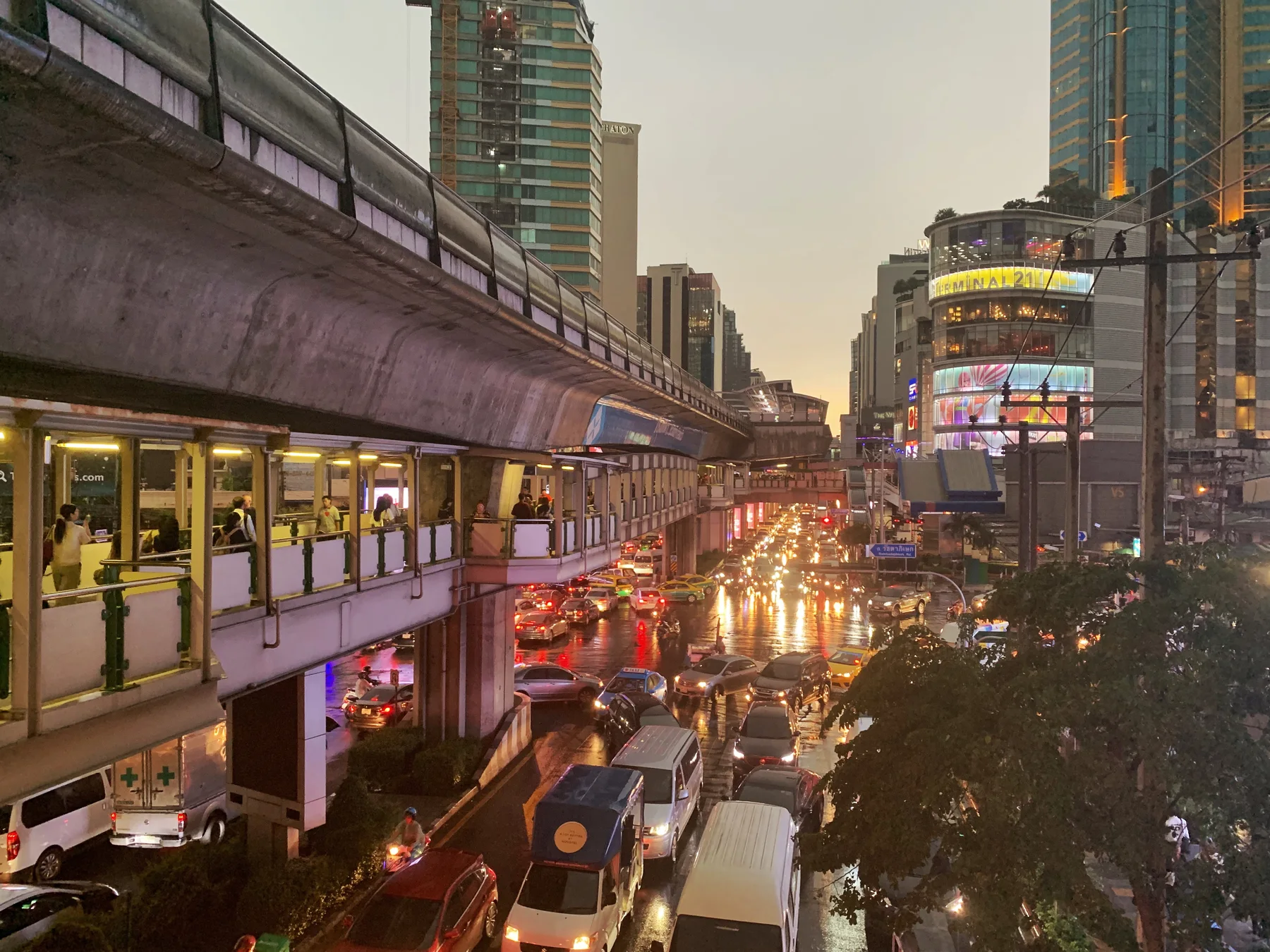
The blocks around Terminal 21, Exchange Tower, Interchange 21, and the BTS-MRT connection are built for movement. Offices, hotels, restaurants, banks, clinics, phone shops, gyms, cinemas, supermarkets, cafés, and convenience stores sit within a small radius.
Crowds and traffic are normal. Street noise travels upward. Ride-hailing pickups can be awkward. A central unit may face brake lights, horns, advertising screens, or late-night foot traffic after dark.
Living directly at the intersection suits someone who wants the city outside the door. A few hundred meters in the right direction can produce a calmer home without sacrificing the interchange.
Soi 19: convenient, busy near Sukhumvit, quieter in pockets
Soi 19 begins beside Terminal 21 and moves north through hotels, restaurants, apartments, condominiums, offices, and smaller lanes. The first section receives mall traffic, hotel vehicles, deliveries, tourists, and commuters.
Farther in, some buildings feel more residential. The trade is a narrower walking environment and a longer approach to the station. Side lanes can be calm while the route that serves them remains active.
Check:
- hotel and restaurant loading hours;
- vehicle queues near the Sukhumvit entrance;
- sidewalk continuity;
- construction beside or behind the building;
- whether the unit faces Soi 19 or an interior lane;
- the evening walk from BTS;
- access from the Phetchaburi side if relevant.
Asok Montri and Soi 21: offices, education, traffic, and a northern connection
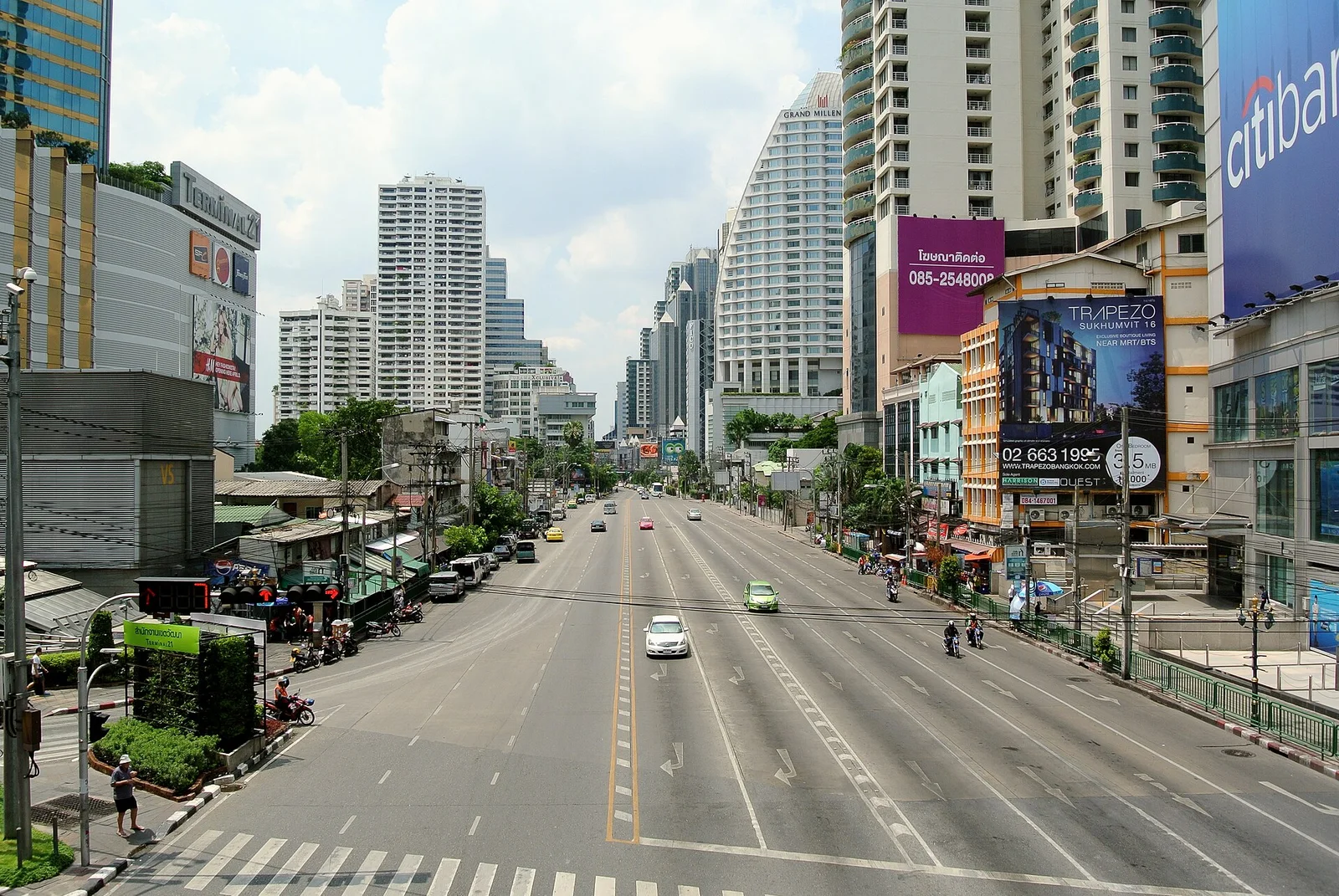
Asok Montri Road, also known as Sukhumvit Soi 21, runs north from the intersection toward Phetchaburi Road. It is a major office and education corridor, not a quiet residential soi.
The road serves office towers, university activity, hotels, restaurants, residences, clinics, and routes toward Makkasan and the Saen Saep canal. A northern Asok address can be useful for someone working around Phetchaburi, Rama IX, or the Airport Rail Link area. It may be less convenient for someone whose entire routine sits south of Sukhumvit.
Traffic is the central fact. Cars, buses, motorcycles, taxis, deliveries, and pedestrians compete for limited space. A building set back from the road can perform very differently from one facing it.
Soi 23: residential choices beside a concentrated nightlife zone
Soi 23 contains condominiums, apartments, offices, restaurants, schools, hotels, and residential side streets. It also begins beside Soi Cowboy, one of Bangkok’s best-known adult nightlife streets.
That venue cluster is geographically concentrated. Homes deeper on Soi 23 can feel different, although the first block and some walking routes still change after dark.
There are appealing residential buildings deeper in the soi. Some sit on calm lanes with established local life. Others inherit traffic, music, late-night vehicles, or pass-through crowds.
Walk from the proposed building to BTS after 10 p.m. on both a weekday and a weekend. Decide whether the route suits you, your partner, children, visiting family, and the life you actually plan to live. Property marketing often photographs the quiet lane and omits the walk required to reach it.
Sukhumvit 16 and 18: the south side can feel more residential
Soi 16 and Soi 18 sit south of Sukhumvit and offer hotels, condominiums, apartments, restaurants, offices, and residential lanes. They can place a resident between Asok station and Benjakitti Park while avoiding some of the nightlife immediately north and east of the intersection.
The calm is highly specific. One lane may be pleasant to walk; another may have weak sidewalks, construction, service entrances, or heavy vehicle movement. Soi 16 stretches far enough that the station becomes inconvenient from its deeper end, even as park and Queen Sirikit National Convention Centre access improves.
These streets deserve inspection by foot. A straight line on a map does not show gates, dead ends, narrow pavement, heat, or the entrance you will use at night.
Benjakitti Park adds nearby outdoor space
Benjakitti gives central Bangkok something it badly needs: room.
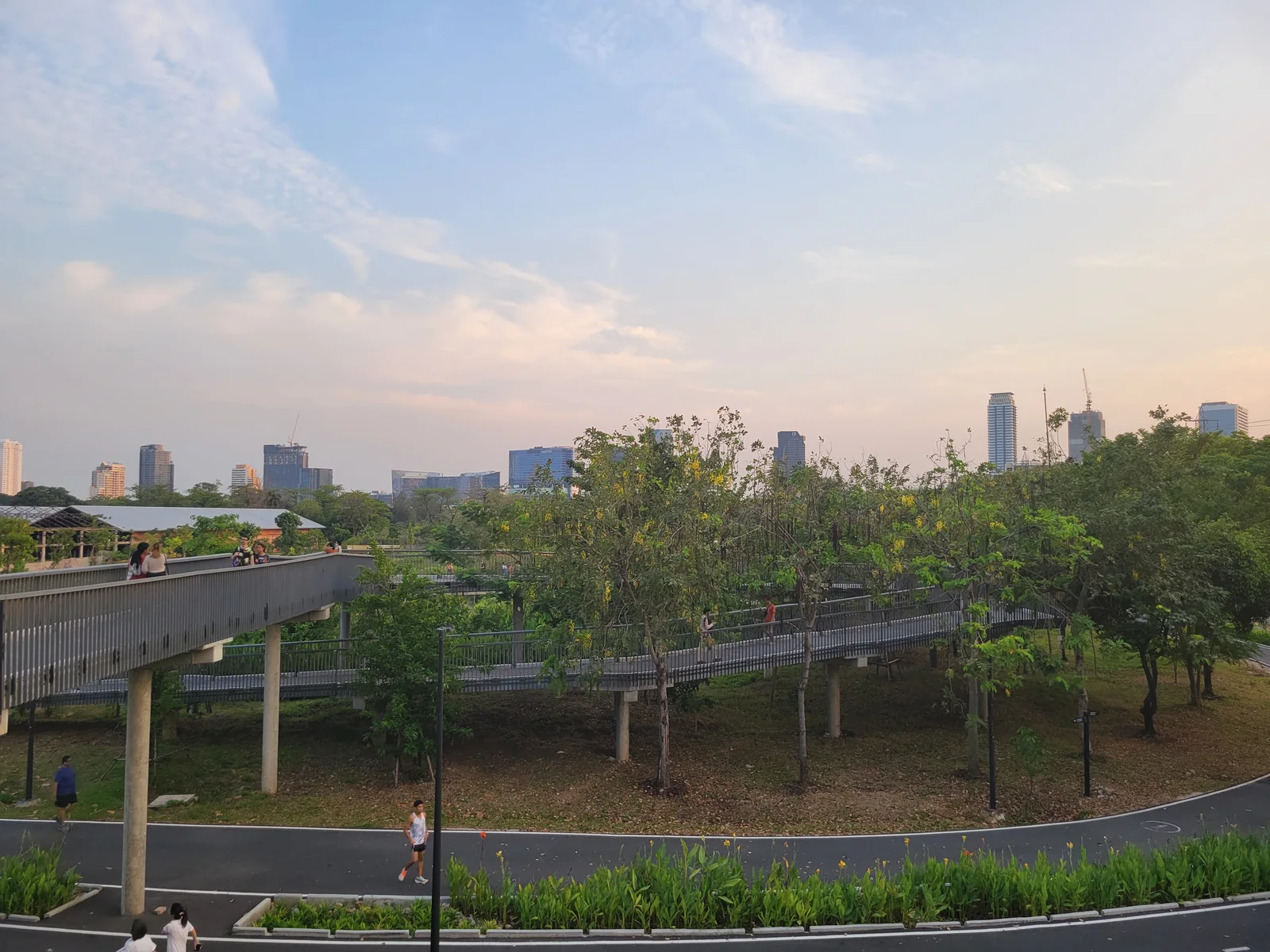
The expanded park includes wetlands, elevated paths, running and walking routes, cycling areas, open lawns, water, recreation, and links toward the wider green network. Bangkok’s official Greener Bangkok site maintains current park information.
The distance from “Asok” varies. A home south of Sukhumvit or near the lower end of Asok Montri can make the park part of an ordinary morning. A northern address near Phetchaburi may turn it into a trip.
Visit at the hour you expect to exercise. Confirm:
- the nearest practical entrance;
- the walk home after dark;
- current opening hours and activity rules;
- shade and heat at your preferred time;
- access for children, older adults, and anyone with limited mobility;
- dog-area rules if you have a pet;
- the route during rain.
Terminal 21 makes routine errands unusually easy
Terminal 21 connects directly to Asok BTS and sits beside the MRT interchange. Its official directory includes food, cinema, fitness, telecoms, services, and retail. The mall and surrounding commercial buildings make everyday tasks unusually easy during heat and rain.
The practical value is larger than shopping. You can combine groceries, banking, a phone issue, a pharmacy stop, lunch, exercise, and a movie without reorganizing the day.
The surrounding area also has local restaurants, street food, supermarkets, convenience stores, markets, cafés, pharmacies, laundries, clinics, and delivery coverage. Prices vary dramatically. Asok supports an affordable daily routine and a very expensive one, often on the same block.
Convenience has a behavioral cost. It becomes easy to eat out, order delivery, take short rides, and spend inside climate-controlled commercial spaces. Build a monthly budget around your likely habits, not the cheapest meal you found during a scouting trip.
Nightlife: inspect the route home after dark
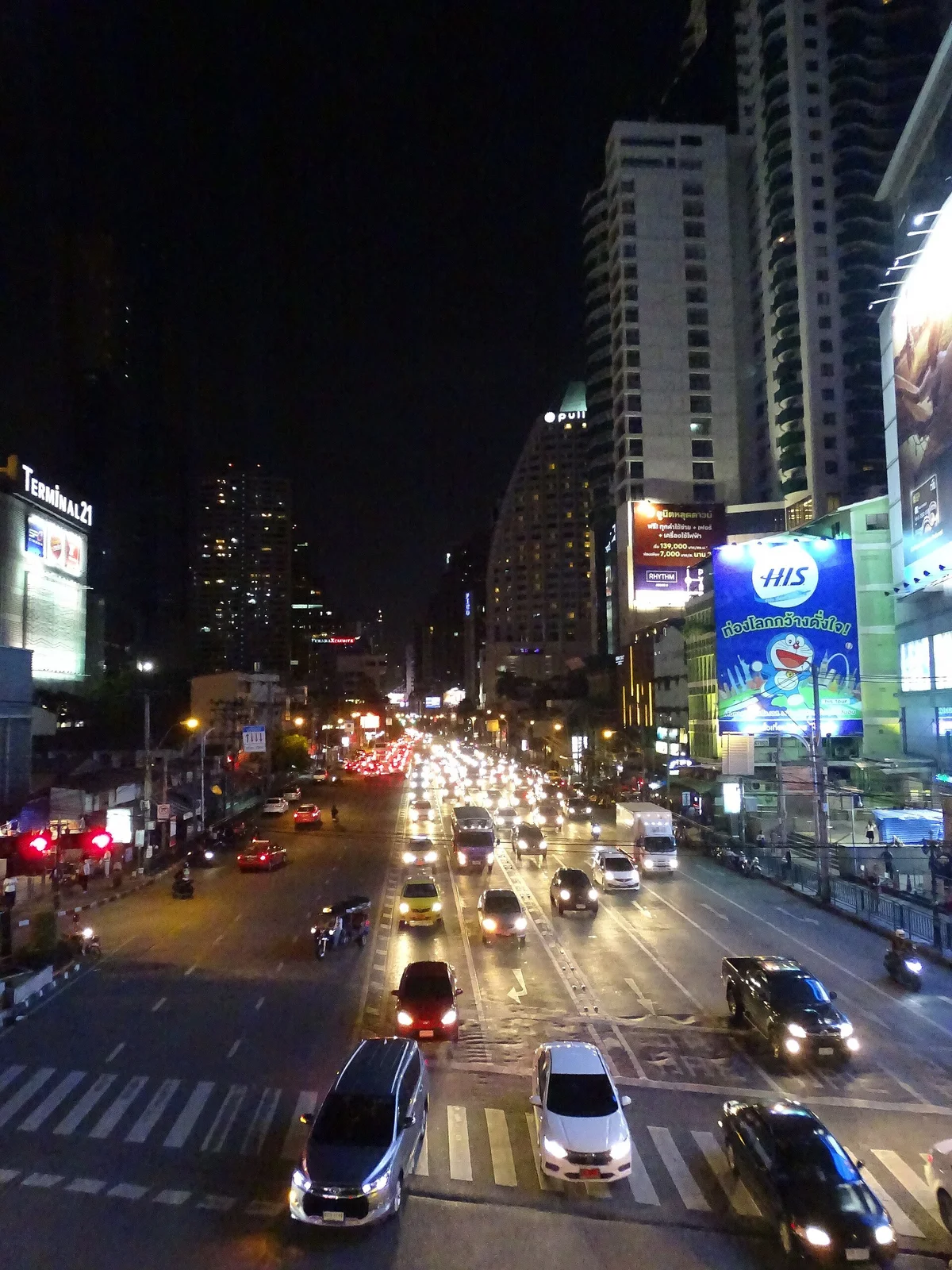
Asok has hotel bars, restaurants, pubs, clubs, live music, tourist nightlife, and adult-oriented venues. Soi Cowboy is the most visible concentration, while nearby central Sukhumvit adds further nightlife toward Nana, Soi 11, Soi 22, Soi 33, and Phrom Phong.
This can be a benefit for someone who wants an active social life. It can be irrelevant if the home, commute, and routine sit away from those streets. It can also become exhausting when a supposedly quiet building shares its access route with late-night venues.
Ask:
- What is open beside the building at midnight?
- Does the bedroom face a venue, hotel entrance, road, or empty development parcel?
- Where do taxis and motorcycle taxis wait?
- Does music carry into the unit?
- Is the lobby route comfortable for everyone in the household?
- What changes on Friday and Saturday nights?
Do the inspection in person. Online arguments about whether Asok is “good” or “bad” cannot answer a building-level question.
Housing: pay for access, then verify that you received it
Asok offers compact modern condominiums, older larger units, serviced apartments, hotels with long-stay arrangements, and residential buildings deeper in the sois.
Newer does not automatically mean quieter, better managed, or easier to reach. Older does not automatically mean worn out. Construction quality, window sealing, unit direction, management, lift capacity, and the entrance road matter more than the lobby’s design theme.
Inspect:
- noise with the air conditioner turned off;
- afternoon heat and unit direction;
- window seals and space for an air purifier;
- water pressure and drainage smells;
- internet providers and mobile signal;
- fire exits, alarms, and evacuation routes;
- backup power for common systems;
- lift waiting times during peak hours;
- delivery and visitor procedures;
- parking and vehicle access;
- flood history at the entrance and basement;
- nearby construction and undeveloped plots;
- the real walk to BTS and MRT.
Transportation after the trains
Asok’s rail access reduces the need for a car. It does not eliminate last-kilometer problems.
Taxis, Grab, motorcycle taxis, buses, and nearby canal-boat access can fill the gaps. Road congestion changes their usefulness by time and direction. A taxi can be available immediately and still take twenty minutes to clear the intersection.
Motorcycle taxis are fast for short local trips but require an honest safety decision. Tuk-tuks operate in central Bangkok but usually make more sense as an occasional negotiated ride than a dependable daily system.
Someone who drives should test the garage exit during rush hour, the building’s access from both directions, legal turns, guest parking, and the route after heavy rain. A central address can reduce distance while increasing time behind the wheel.
Healthcare, schools, and family life
Asok has clinics, dentists, pharmacies, and specialist services, with major private hospitals reachable across central Bangkok. Access is strong, but emergency travel still depends on road conditions and the facility entrance.
Verify the needed specialist, insurance process, direct billing, language support, records procedure, after-hours care, and the route during weekday traffic.
Families benefit from rail, services, the park, restaurants, and access to schools across central Sukhumvit. The difficult part is the school journey. Confirm the exact campus, morning and afternoon travel, school-bus route, pickup rules, and rainy-season backup.
A family can live beside one of Bangkok’s best interchanges and still build a miserable week around a school van crossing the city.
Air quality, heat, rain, and drainage
Asok shares Bangkok’s seasonal PM2.5 problem. Roadside exposure can be intense around the intersection and Asok Montri. Use Bangkok’s official AirBKK readings, check window sealing, and confirm that the unit can support effective filtration.
Heat and rain reshape walking. Direct station or mall connections are valuable. So are shade, drainage, safe crossings, and a pickup point that does not require standing beside moving traffic.
Bangkok’s drainage planning includes the Sukhumvit area, but conditions remain building- and street-specific. Ask management for recent history rather than relying on a general claim that the neighborhood “does not flood.”
Inspect during or after heavy rain if possible. Look at:
- water at the lobby and garage ramp;
- the lowest basement level;
- the route to rail;
- ponding at crossings;
- taxi and delivery access;
- building pumps and barriers;
- traffic recovery after a storm.
The seven-day Asok test
Day 1: use both rail systems
Complete the real commute by BTS and MRT during peak hours.
Day 2: walk every route
Travel from the proposed home to the station, park, grocery store, pharmacy, and nearest useful pickup point.
Day 3: live through the evening
Return after 10 p.m. Walk the exact route and listen inside the unit.
Day 4: use Benjakitti
Enter through the gate you would actually use and complete your normal exercise routine.
Day 5: buy an ordinary day
Pay for regular meals, groceries, coffee, laundry, transport, and one convenience purchase. Record the total.
Day 6: test road travel
Take the school, office, hospital, or airport route at the relevant hour.
Day 7: stay home
Work, cook, receive a delivery, use the building, and learn whether the unit remains comfortable when the neighborhood is no longer entertaining you.
The final decision
Asok works when movement matters more than serenity.
Its rail interchange can simplify an entire Bangkok life. Benjakitti adds breathing room. Terminal 21 and the surrounding services make daily errands easy. The area’s restaurants, offices, and nightlife keep it useful well beyond working hours.
The same concentration produces crowds, road noise, tourist traffic, expensive habits, and sharp differences between adjacent streets.
Choose the building only after you understand the route to it. In Asok, a few hundred meters can separate a brilliantly connected home from an exhausting one.