Places · Bangkok neighborhoods
Living in Thong Lo, Bangkok
Thong Lo offers restaurants, international services, private healthcare, and premium housing. Check rent, traffic, noise, and station access.
Reviewed July 31, 2026 · Later factual updates are dated within the guide

In this guide
Thong Lo has premium housing, Thai and international restaurants, Japanese services, private healthcare, salons, fitness studios, cafés, bars, and extensive delivery options.
Many addresses are far from the BTS and depend on motorcycles, taxis, cars, or building shuttles. Nightlife, construction, and traffic vary by side street. The higher housing and daily costs are most relevant to residents who regularly use the nearby services.
Compare the wider city in Where Should You Live in Bangkok?, or compare the neighboring alternative in Living in Ekkamai.
Thong Lo in one minute
| Decision | What Thong Lo does well | What to check |
|---|---|---|
| Rail | Direct BTS Sukhumvit Line service | Much of the neighborhood sits far from the station |
| Housing | Strong supply of premium condominiums and serviced residences | Rent, unit size, construction, and road noise |
| Food | Exceptional Thai, Japanese, and international range | Frequent dining out can reshape the budget |
| Groceries | Premium supermarkets, Japanese products, delivery, and local shops | The nearest useful store may not be walkable |
| Healthcare | Strong access to private hospitals, clinics, dentists, and specialists | Hospital traffic and insurance arrangements |
| Parks | Benchasiri and Benjakitti are reachable | No major public park inside central Thong Lo |
| Car-free life | Good near BTS and workable with feeder transport | Deep sois rely on motorcycles, taxis, or shuttles |
| Social life | Restaurants, cocktail bars, clubs, cafés, and international networks | Late-night noise and traffic vary block by block |
First, understand the shape of the neighborhood
Thong Lo usually refers to Sukhumvit Soi 55 and the web of side streets around it. The road runs north from Sukhumvit toward Phetchaburi Road. BTS Thong Lo sits at the southern end, not in the middle.
That geography explains most mistakes.
The BTS end
Buildings near Sukhumvit Road provide the most direct rail access. Residents can walk to BTS Thong Lo, reach Phrom Phong or Ekkamai in one stop, and use central Sukhumvit without a feeder ride.
The tradeoffs include smaller units, higher prices, train and road noise, active construction, and fewer of the destination restaurants people associate with mid-Thong Lo.
Lower Thong Lo
The first section north of Sukhumvit mixes condominiums, restaurants, clinics, shops, offices, and side streets leading toward Phrom Phong and Ekkamai.
This area may balance BTS access and neighborhood services. Walk the route in typical heat rather than relying on the travel time in a listing.
Mid-Thong Lo
Around the larger restaurant and community-mall clusters, the neighborhood’s lifestyle promise becomes more visible. J Avenue, The Commons, Marché Thonglor, Eight Thonglor, restaurants, bars, supermarkets, and specialist services create an unusually deep daily radius.
The BTS becomes less convenient. Motorcycle taxis, red songthaews, taxis, ride-hailing, building shuttles, and private cars become more important.
Upper Thong Lo and the Phetchaburi side
Farther north, residents gain access toward Phetchaburi Road, hospitals, schools, offices, and road connections beyond Sukhumvit. Some properties offer more space or quieter surroundings.
This is not the station-centered version of Thong Lo. For many routines, the northbound road connection matters more than BTS Thong Lo.
The Ekkamai edge
Thong Lo and Ekkamai bleed into each other through connecting sois. DONKI Mall Thonglor, despite the name, is on Sukhumvit 63 on the Ekkamai side. Some buildings offer easy access to both roads while being inconvenient to both BTS stations.
Choose the transport route, not the branding.
BTS access is good until the final kilometer
BTS Thong Lo is station E6 on the Sukhumvit Line. It provides direct service west toward Phrom Phong, Asok, Phloen Chit, Chit Lom, Siam, and northern Bangkok, and east toward Ekkamai, Phra Khanong, On Nut, Bang Na, and Samut Prakan.
Near the station, living without a private vehicle is straightforward.
Farther north, the final trip changes the equation. A twenty-minute walk in mild weather can become a motorcycle ride in heat, a slow taxi in rain, or a long wait when nightlife traffic fills the road.
Before renting, test:
- the building-to-BTS trip during your real morning;
- the return after dinner or late at night;
- pickup time for Grab or a taxi during rain;
- the route to Phetchaburi Road if you commute north;
- the same trip with groceries or luggage;
- the cost of making the feeder trip twice a day.
The neighborhood is connected. Your building may not be.
Motorcycle taxis and local feeder transport
Motorcycle taxis are part of normal Thong Lo life. They make short work of distance that becomes tedious on foot, particularly along Soi 55 and its branches.
Red songthaews also operate along the corridor, although routes, stops, hours, and convenience should be confirmed on the ground. Taxis and ride-hailing are widely available, but traffic can erase the advantage.
If you plan to ride a motorcycle yourself, treat that as a separate legal and safety choice. You need the correct motorcycle entitlement, lawful documentation, insurance, equipment, and skill. An International Driving Permit does not add a motorcycle class missing from your home license.
Food and daily services are the reason to pay the premium
Thong Lo’s main advantage is its density of choice, from healthcare and groceries to dining, fitness, and nightlife.
Japanese restaurants and supermarkets reflect the area’s long-standing Japanese community. Thai restaurants range from simple local meals to high-end dining. International options, bakeries, cafés, wine shops, cocktail bars, salons, dental offices, pet services, fitness studios, and delivery are abundant.
Community malls break errands into smaller clusters:
- Marché Thonglor includes restaurants, retail, and a Tops Food Hall;
- J Avenue combines dining, services, and grocery shopping;
- The Commons centers on food, cafés, events, fitness, and shared space;
- Eight Thonglor provides restaurants and services in the main corridor;
- DONKI Mall sits on the Ekkamai side and focuses heavily on Japanese food and retail.
Tenants and hours change. Confirm the current branch before choosing a building around it.
Dining, coffee, alcohol, delivery, and transport can add materially to the housing premium. Track a realistic week before setting the budget.
Housing: premium prices still require a noise check
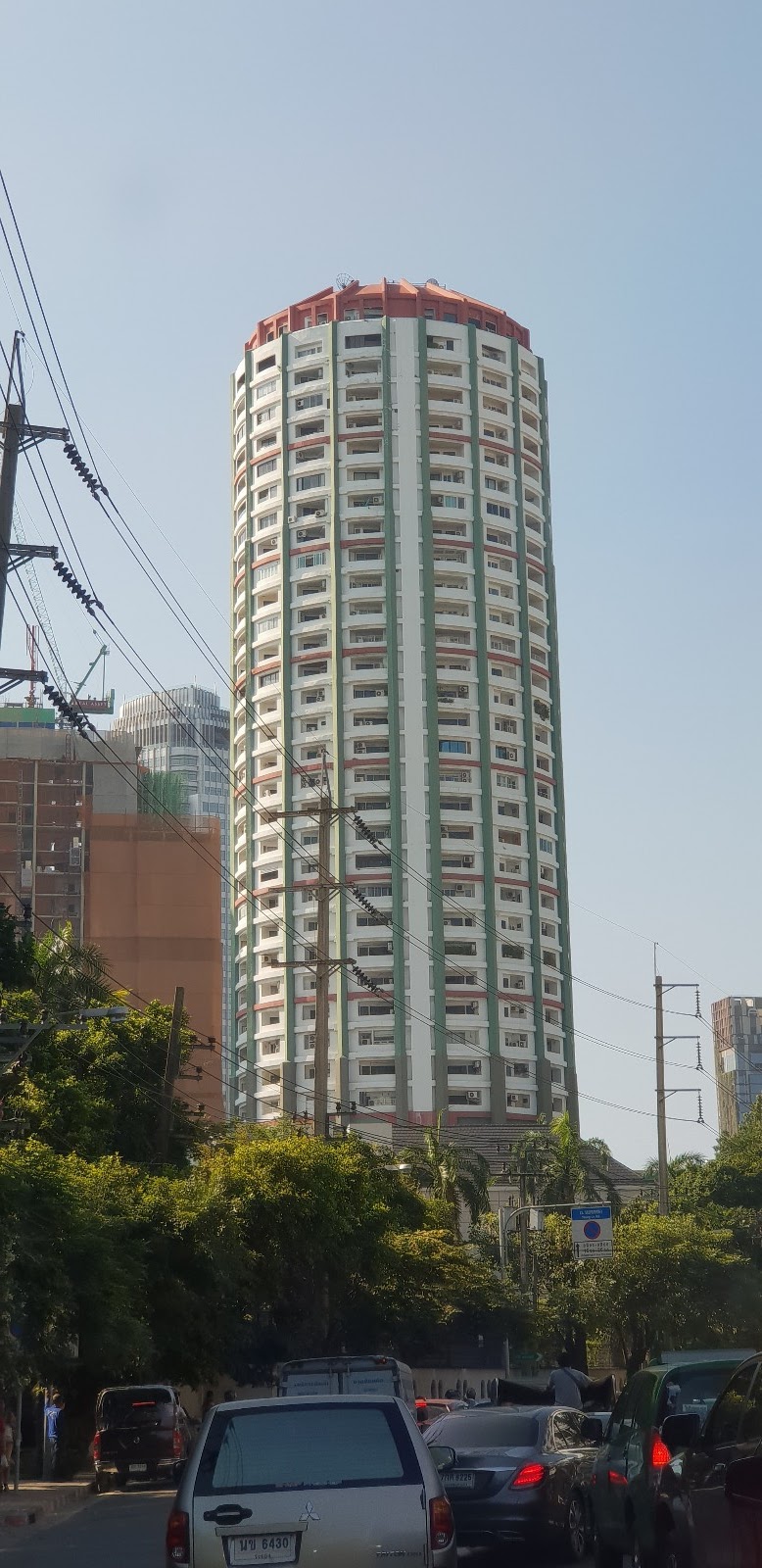
Thong Lo contains luxury towers, older condominiums with larger layouts, low-rise residences, serviced apartments, and houses hidden inside quieter sois.
Newer does not automatically mean better. Older buildings may offer more space, thicker walls, established management, and a location that cannot be reproduced. New projects may provide stronger facilities, modern systems, and better energy performance while charging heavily for smaller units.
Inspect:
- noise from traffic, trains, bars, schools, and construction;
- window sealing and afternoon heat;
- water pressure and air-conditioning condition;
- cooking ventilation;
- cellular signal and internet options;
- lift capacity and parking;
- building management and maintenance;
- pet, guest, renovation, and rental rules;
- the route from the lobby to the street in heavy rain.
Visit on a weekday evening. A peaceful Sunday viewing can conceal the actual neighborhood.
Healthcare access
Thong Lo and the surrounding Sukhumvit corridor have strong access to private hospitals, specialist clinics, dental care, pharmacies, laboratories, and wellness services. Samitivej Sukhumvit Hospital is within the broader Thong Lo area, while other major private hospitals are reachable along Sukhumvit and nearby corridors.
That access can be valuable for families, older residents, and anyone with recurring specialist care.
Do not choose a hospital only because it is nearby. Confirm the relevant physician, department, emergency capability, insurance arrangement, and expected payment process.
Test the road trip from the exact building. A hospital can be close in distance and slow in traffic.
Parks and exercise: facilities are easier than public green space
Thong Lo does not contain a major public park comparable to Benchasiri, Benjakitti, or Lumphini.
Benchasiri Park is one BTS stop west at Phrom Phong. Benjakitti is accessible farther toward Asok and the Queen Sirikit National Convention Centre area. Both are useful, but neither is outside your Thong Lo lobby.
Many condominiums provide pools and gyms. Commercial fitness studios, yoga, Pilates, Muay Thai, and personal training are easy to find. This makes structured exercise convenient while leaving daily park access dependent on travel.
If outdoor running or dog walking is central to your life, test the route rather than treating a green condominium courtyard as a park.
Families, schools, pets, and household help
Thong Lo is popular with affluent Thai and international families because it combines housing, private healthcare, restaurants, children’s activities, household services, and access toward international schools.
The school commute can still dominate the day. A school bus route or a trip across Sukhumvit may matter more than the neighborhood’s reputation.
Pet owners should check building rules, nearby walking conditions, veterinary access, and heat exposure. Pet-friendly cafés do not make every pavement dog-friendly.
Cleaning, laundry, delivery, drivers, babysitting, and household services are widely available at different price levels. Confirm what requires Thai-language coordination, a local phone number, or payment outside an international credit card.
Nightlife: busy, expensive, and aimed at more than tourists
Thong Lo has cocktail bars, wine bars, restaurants, live music, clubs, hotel venues, and Japanese nightlife spread through the main road and side sois. Much of the scene caters to affluent Thai residents and established international communities rather than the visitor concentration found around Nana.
That distinction does not make it quiet. Mid and upper Thong Lo can produce club traffic, valet queues, ride-hailing congestion, music, and late departures. Lower residential sois may be calm while a parallel street remains active after midnight.
Visit the exact block on Thursday and Friday between 10 p.m. and 1 a.m. Check the bedroom orientation, balcony doors, pickup point, and the route from the main road. A building shuttle does not solve late-night traffic or noise beside the unit.
Noise, traffic, rain, flooding, and air quality
Thong Lo’s narrow side streets feed into a busy main road. Restaurants, schools, nightlife, deliveries, valets, construction, and ride-hailing create pressure at different hours.
One soi can be quiet while the next remains active past midnight.
For rain and flooding, inspect the building entrance, basement parking, side streets, drains, and pickup area. Ask staff and neighboring businesses what happens during heavy rain. Do not rely on a district-wide answer.
For air quality, use official Bangkok monitoring and evaluate road exposure, window sealing, ventilation, and room for filtration. Premium rent does not purchase different outdoor air.
Who Thong Lo fits
Thong Lo is a strong candidate for:
- professionals who work along central or eastern Sukhumvit;
- Japanese residents or households that value Japanese services and food;
- families prioritizing private healthcare and international services;
- people who dine out frequently and will use the neighborhood’s depth;
- residents willing to pay for a polished condominium and convenient service network;
- someone comfortable combining BTS with motorcycles, taxis, or a driver.
Who may be happier elsewhere
Look beyond Thong Lo if:
- you want maximum living space for the rent;
- your work, school, or friends are across the river, in Sathorn, or far north;
- you need a large public park beside home;
- nightlife noise or valet traffic will bother you;
- you expect every Thong Lo address to be walkable to BTS;
- you rarely use premium restaurants, international services, or Japanese retail;
- you want a quieter local neighborhood at a lower daily cost.
The seven-day Thong Lo test
Spend one ordinary week in the section you are considering.
Day 1: commute
Make the complete morning and evening trip, including the feeder ride.
Day 2: errands
Buy groceries, visit a pharmacy, do laundry, and carry everything home.
Day 3: healthcare
Test the route to your likely clinic, dentist, hospital, and pharmacy.
Day 4: budget
Record every meal, coffee, delivery, motorcycle, taxi, and drink.
Day 5: evening noise
Stay near the building from dinner through late night.
Day 6: parks and exercise
Complete the workout or park trip you claim you will do regularly.
Day 7: stay home
Work, cook, receive deliveries, and listen to the building with the air conditioner off.
Thong Lo is good at entertaining visitors. The seventh day reveals whether it is good at housing you.
The verdict
Thong Lo earns its premium when its restaurants, medical care, groceries, nightlife, pet services, and international community remove friction from the week you actually live.
It loses the argument when the building is deep in the neighborhood, every rail trip begins on a motorcycle, late-night traffic reaches the bedroom, and the places justifying the rent remain occasional treats.
Price the complete routine. If Thong Lo saves time, supports your social life, and keeps important services close, the expense may be rational. If the address mainly improves the answer to “Where do you live?”, keep looking.
Sources and verification
Official and primary sources: