Places · Bangkok neighborhoods
Living in Ekkamai, Bangkok
Ekkamai can feel calmer and more residential than Thong Lo while keeping many of the same services. Its value depends on which end of a very long road you choose.
Reviewed July 31, 2026 · Later factual updates are dated within the guide

In this guide
The southern end of Ekkamai provides BTS access, Gateway, the eastern bus terminal, condominiums, and nearby hospitals. Farther north are restaurants, schools, studios, nightlife, houses, and residential lanes.
The long shape of Sukhumvit 63 makes the exact location important. Upper Ekkamai may offer more space or a quieter setting while requiring road transport to reach the BTS and other routine destinations.
Compare the wider city in Where Should You Live in Bangkok?, or examine the neighboring premium district in Living in Thong Lo.
Ekkamai in one minute
| Decision | What Ekkamai does well | What to check |
|---|---|---|
| Rail | Direct BTS Sukhumvit Line service | Only the southern end is genuinely station-oriented |
| Regional travel | Eastern bus terminal beside the BTS | Routes and operators should be confirmed before travel |
| Housing | Condominiums, apartments, houses, and quieter sois | Distance, noise, construction, and feeder transport |
| Food | Thai, Japanese, Korean, international dining, cafés, and delivery | Premium options can raise the ordinary-week budget |
| Shopping | Gateway Ekkamai, local shops, supermarkets, and access to nearby malls | Upper Ekkamai may require road transport for errands |
| Healthcare | Strong access to private hospitals, clinics, dentists, and pharmacies | Choose the relevant hospital and test the traffic |
| Parks | Reachable parks along the BTS corridor | No major public park inside central Ekkamai |
| Social life | Bars, restaurants, live music, creative businesses, and international residents | Noise and traffic vary sharply by soi |
Decide which Ekkamai you mean
Ekkamai Road is Sukhumvit Soi 63. It runs north from Sukhumvit Road toward Phetchaburi Road. BTS Ekkamai sits at the southern end.
Property listings often treat the entire corridor as if the station were nearby. It is not.
Beside BTS Ekkamai
The station area is the most practical part of Ekkamai for car-free living. Gateway Ekkamai connects directly to the BTS. The eastern bus terminal, Major Cineplex Sukhumvit, restaurants, shops, pharmacies, and services sit within a compact radius.
The area is busy. Expect buses, taxis, passengers, elevated rail, Sukhumvit traffic, construction, and active commercial buildings. A unit facing the wrong direction may hear more of this than the agent mentions.
Lower Ekkamai
The first section north of Sukhumvit includes condominiums, restaurants, cafés, schools, offices, nightlife, and connections toward Thong Lo.
This can be the best compromise between BTS access and a more residential environment. The word “walkable” still requires inspection. Pavement, shade, crossings, and side-street depth matter.
Mid-Ekkamai
Farther north, the road becomes increasingly dependent on feeder transport. This is where much of Ekkamai’s dining, nightlife, studios, houses, and lower-rise residential character appears.
Motorcycle taxis, red songthaews, taxis, ride-hailing, and private cars become normal. Traffic can make a short map distance feel much longer.
Upper Ekkamai
Near Phetchaburi Road, the neighborhood connects more naturally to northern road corridors, hospitals, schools, Ramkhamhaeng, and Airport Rail Link access by road.
This can suit someone whose life is not centered on BTS. Calling it “near Ekkamai station” would be creative writing.
The Thong Lo border
Side streets connect Ekkamai and Thong Lo. DONKI Mall Thonglor is actually on Sukhumvit 63. Residents can use the services of both neighborhoods without paying for the most fashionable Thong Lo address.
The tradeoff is that cross-soi routes may be narrow, congested, or uncomfortable on foot.
BTS access and the eastern bus terminal
BTS Ekkamai is station E7 on the Sukhumvit Line. It provides direct service west toward Thong Lo, Phrom Phong, Asok, Phloen Chit, Chit Lom, and Siam, and east toward Phra Khanong, On Nut, Bang Na, and Samut Prakan.
That direct line makes lower Ekkamai highly practical.
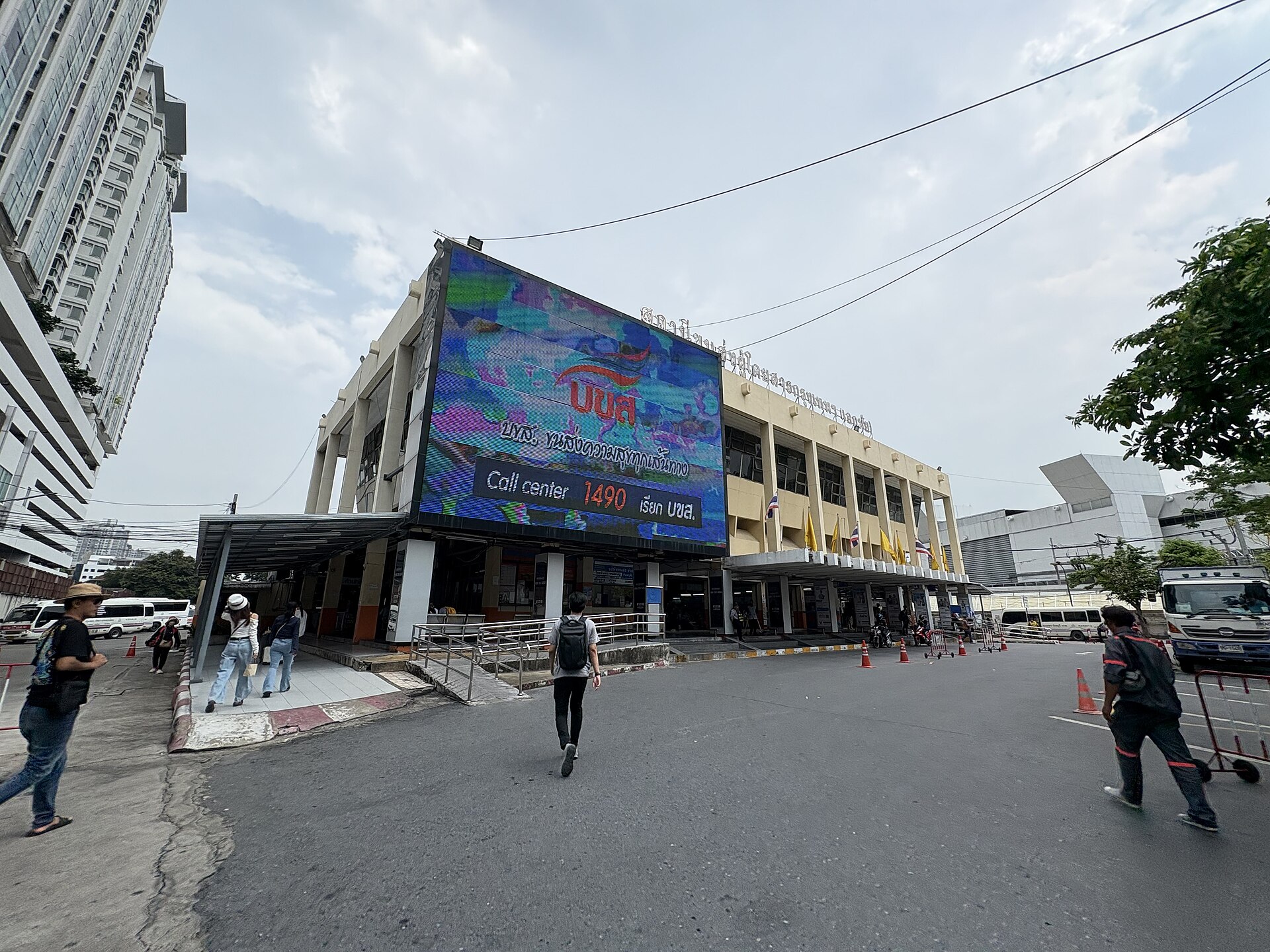
The Bangkok Bus Terminal at Ekkamai adds regional convenience. It serves eastern routes, but operators, schedules, vehicle types, and departure arrangements change. Buy from an authorized counter and verify the exact destination. “Pattaya” or “Rayong” can still mean different stops and services.
The terminal is useful for frequent travel east. It also brings passenger movement, buses, taxis, and noise into the station area.
The final kilometer decides whether Ekkamai works
Deep inside Sukhumvit 63, the BTS can be technically available and practically annoying.
Motorcycle taxis are the fastest common feeder. Red songthaews operate along parts of the road. Taxis and ride-hailing are widely used. Buildings may provide shuttles.
Test all of them during your actual commute.
Ask:
- Is there a recognized motorcycle stand near the building?
- What does the feeder trip cost each way?
- Does the building shuttle run when you leave and return?
- How long does a car take during school and dinner traffic?
- What happens during heavy rain?
- Can you make the trip comfortably with groceries, luggage, or a child?
If every BTS journey requires another vehicle, compare the building against areas where the train is genuinely walkable.
Driving your own motorcycle requires the correct license class, lawful documentation, insurance, equipment, and skill. An International Driving Permit does not convert a car-only license into motorcycle authorization.
Shopping, food, and daily errands
Lower Ekkamai is good for daily convenience.
Gateway Ekkamai provides direct BTS access, restaurants, shops, supermarket options, children’s activities, and services. Major Cineplex adds a cinema and commercial cluster nearby. Local shops, convenience stores, pharmacies, markets, salons, laundries, cafés, and delivery fill the surrounding streets.
The dining scene overlaps with Thong Lo but has its own character. Japanese food is prominent. Thai restaurants, Korean food, bakeries, brunch, specialty coffee, cocktail bars, live music, and smaller creative businesses are spread through the sois.
Upper Ekkamai can be more fragmented. A house may offer space and quiet while making groceries, pharmacy visits, and train access vehicle-dependent.
Before renting, map:
- the supermarket you will actually use;
- affordable everyday meals;
- a pharmacy and clinic;
- laundry and household repairs;
- late-night food;
- delivery access and rider pickup;
- the walking route after dark.
A neighborhood with good restaurants can still be inconvenient for buying detergent.
Housing: often better value than Thong Lo
Ekkamai offers premium towers, older condominiums, low-rise apartments, serviced residences, houses, and townhouses.
Compared with the most desirable parts of Thong Lo, it may provide more space or a calmer setting at the same budget. Near BTS Ekkamai, strong buildings can still command central-Sukhumvit prices.
Compare the total arrangement:
| Housing choice | Main advantage | Main tradeoff |
|---|---|---|
| Beside BTS | Rail, mall, cinema, terminal, and easy errands | Noise, traffic, smaller units, higher price |
| Lower-soi condominium | Balance of services and residential life | Walking quality and construction vary |
| Mid-soi residence | Dining, nightlife, houses, and quieter pockets | Feeder transport becomes routine |
| Upper Ekkamai home | More space and road access north | Weak BTS convenience |
| Older apartment | Larger layouts and potential value | Variable maintenance, systems, and facilities |
Inspect at different hours. Check road exposure, neighboring construction, bar noise, school traffic, water pressure, air conditioners, window sealing, internet choices, parking, fire exits, lifts, and management.
Do not assume a quiet lobby means a quiet bedroom.
Healthcare and dental care
Ekkamai has clinics, dental offices, pharmacies, laboratories, and access to major private hospitals in the surrounding Sukhumvit and Phetchaburi corridors.
Residents can reach Samitivej Sukhumvit and other hospitals by road, while planned appointments elsewhere along Sukhumvit may work by BTS.
Choose care based on the physician, department, emergency capability, insurance arrangement, language needs, and route from the exact building. Test the road trip during traffic.
For recurring treatment, fifteen minutes saved each way can matter more than a larger pool.
Schools, families, and pets
Ekkamai is popular with Thai and international families because it offers larger residences, international services, healthcare, children’s activities, and access toward several school corridors.
School traffic is a serious location factor. A short trip can become slow at opening and dismissal. Confirm school-bus coverage and test the route at the correct hour.
Pet owners should check building rules, pavement, shade, nearby veterinary care, and realistic walking space. A pet-friendly restaurant does not solve a hostile daily walking route.
Household help, cleaning, laundry, delivery, drivers, and child-related services are widely available. Some require Thai-language coordination or local payment methods.
Parks and exercise
Ekkamai does not have a major destination park beside the BTS.
Benchasiri Park is two stops west at Phrom Phong. Benjakitti is accessible farther toward Asok and the Queen Sirikit National Convention Centre area. These are reasonable options, not neighborhood parks.
Many condominiums include pools and gyms. Commercial fitness, Pilates, yoga, Muay Thai, and personal training are common.
If outdoor exercise is essential, make the full park trip before renting. The phrase “only two BTS stops” excludes the walks at both ends.
Nightlife and social life
Ekkamai has bars, music venues, restaurants, cafés, clubs, and creative businesses. It can feel active without the same luxury branding as Thong Lo or the tourist concentration of lower Sukhumvit.
That makes it attractive to young professionals, international residents, and people who want evenings nearby.
The nightlife is scattered through Ekkamai Road and the connecting sois rather than contained in one obvious strip. Restaurant clusters, live-music venues, bars, clubs, and event spaces create different peaks from the school and office traffic.
It also creates noise, parking pressure, ride-hailing queues, and late-night traffic. Inspect the exact soi on Thursday, Friday, or Saturday night. One block can be residential while the next is built around people leaving at 1 a.m. A quiet daytime viewing proves very little.
Traffic, rain, flooding, and air quality
Ekkamai Road is a busy north-south corridor. Narrow side streets feed into it. Schools, restaurants, nightlife, buses, delivery vehicles, and commuters create different traffic peaks.
For rain and flooding, inspect the building entrance, basement, side streets, drains, and route to the main road. Ask nearby staff and businesses what happens during a heavy storm.
For air quality, use official Bangkok monitoring and compare road exposure, window sealing, ventilation, and space for filtration. A higher rent does not alter citywide PM2.5.
Anyone with respiratory or cardiovascular concerns should include indoor-air control and access to care in the housing decision.
Who Ekkamai fits
Ekkamai is a strong candidate for:
- someone working along central or eastern Sukhumvit;
- a resident who wants Japanese and international services without choosing central Thong Lo;
- frequent travelers to eastern Thailand;
- families needing healthcare, schools, and larger housing options;
- a remote worker who values cafés, food, and a residential setting;
- someone comfortable mixing BTS with motorcycles, taxis, shuttles, or a car.
Who may be happier elsewhere
Look beyond Ekkamai if:
- your daily life is in Sathorn, Silom, the old town, or across the river;
- you need a major public park outside your door;
- you refuse feeder transport but are considering upper Ekkamai;
- you want the lowest possible housing and food costs;
- nightlife traffic will disturb you;
- you expect every Ekkamai address to be close to BTS;
- regional travel east is irrelevant to your life.
The seven-day Ekkamai test
Spend a week in the exact section you are considering.
Day 1: commute
Make the full peak-hour trip, including the feeder ride.
Day 2: errands
Buy groceries, visit a pharmacy, do laundry, and carry everything home.
Day 3: healthcare
Travel to the hospital, clinic, dentist, and pharmacy you expect to use.
Day 4: evening
Eat locally, return after dark, and assess traffic, lighting, and noise.
Day 5: rain plan
Inspect drainage, shelter, pickup points, and shuttle arrangements.
Day 6: leave the neighborhood
Visit the person or destination elsewhere in Bangkok that you will see regularly.
Day 7: stay home
Work, cook, exercise, receive deliveries, and listen to the building.
Ekkamai’s restaurants are easy to enjoy. Your home still has to survive Tuesday.
The verdict
Ekkamai works best when you choose its geography deliberately. Station-side living favors rail and regional travel. Mid-road living favors restaurants, schools, and services. Upper Ekkamai may offer space and road connections while making BTS access a recurring negotiation.
Walk the proposed route, time the feeder trip, return after dinner, and try the journey during rain. Those results matter more than whether the listing sits inside a fashionable postcode.
The appeal is balance. The risk is assuming every part of the corridor provides the same one.
Sources and verification
Official and primary sources: