Places · Bangkok neighborhoods
Living in On Nut, Bangkok
On Nut can give you more Bangkok for your housing budget. It can also give you a long walk, a crowded train, and a motorcycle ride you forgot to count.
Reviewed July 31, 2026 · Later factual updates are dated within the guide
In this guide
On Nut offers direct BTS access, large supermarkets, local food, pharmacies, gyms, services, and a broad supply of condominiums. It is generally less central than prime Sukhumvit and the station can be crowded at peak times.
The neighborhood covers different living conditions. A condominium beside BTS On Nut, a unit inside the T77 development, and a house farther along On Nut Road have different transport, noise, shopping, and walking requirements.
Compare the exact building and complete daily route, not the neighborhood label alone.
For a citywide comparison, start with Where Should You Live in Bangkok?. If your decision is primarily about transport, also read Can You Live in Thailand Without a Car or Motorcycle?.
On Nut in one minute
| Decision | What On Nut does well | What to check |
|---|---|---|
| Rail | Direct BTS Sukhumvit Line access | Peak crowding and total door-to-door commute |
| Housing | Broad condominium supply and more space than prime Sukhumvit at many price levels | Soi depth, construction, road exposure, building quality, and actual walking route |
| Groceries | Lotus’s, Big C Extra, fresh markets, convenience stores, and delivery | Whether groceries are walkable from the exact building |
| Food | Strong mix of local food, inexpensive restaurants, cafés, and delivery | Your preferred options may be clustered away from the station |
| Parks | Small local spaces and private-development landscaping | No major destination park beside BTS On Nut |
| Healthcare | Clinics, pharmacies, dental offices, and access west toward larger hospitals | Emergency route and specialist hospital should be chosen in advance |
| Car-free life | Strong near the station and along easy feeder routes | Deep sois can turn “car-free” into “motorcycle-dependent” |
| Social life | Enough restaurants and bars for a neighborhood routine | Less depth than Thong Lo, Ari, or central Bangkok |
First, decide which On Nut you mean
“On Nut” is used loosely.
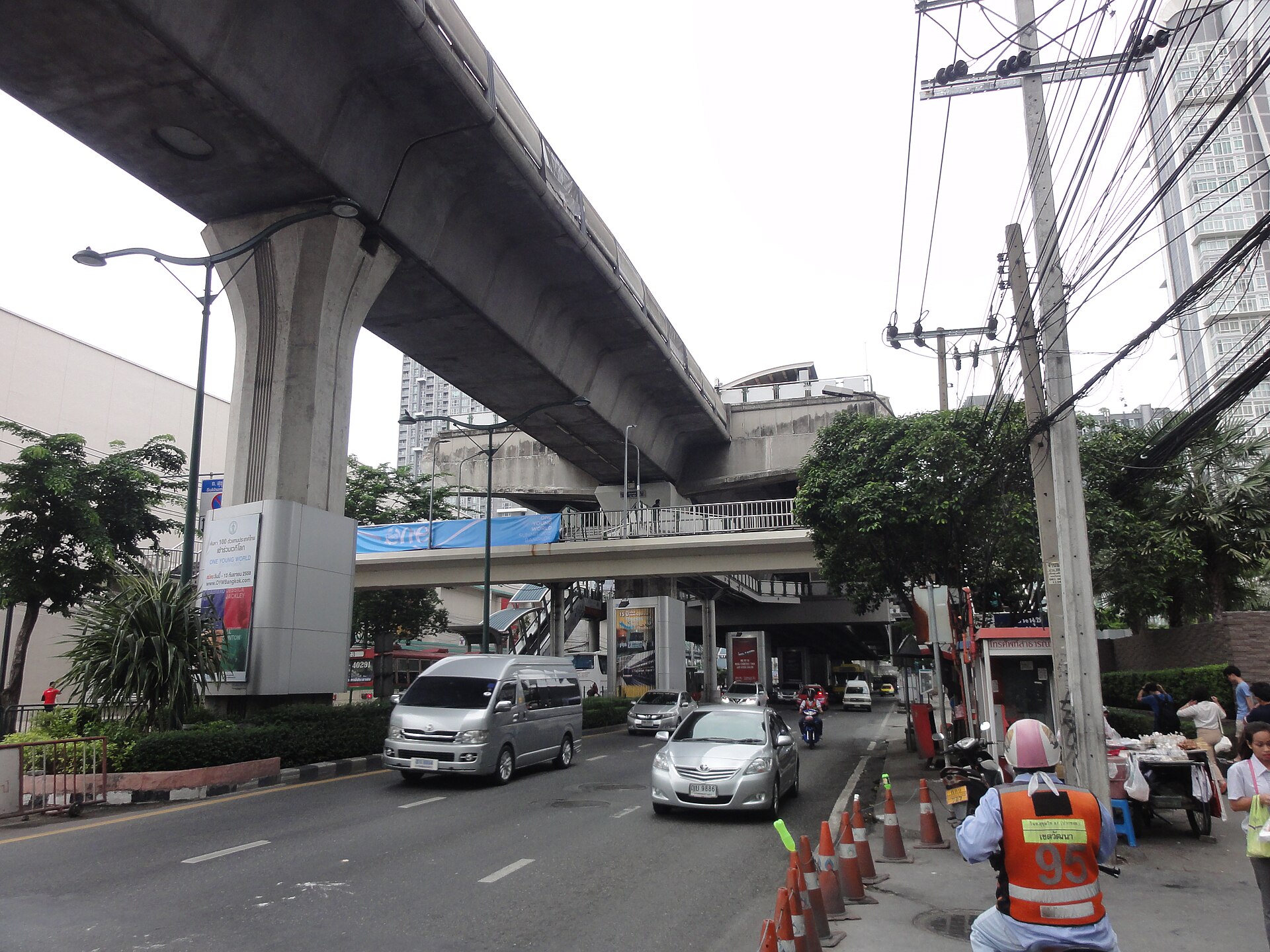
The BTS station sits on Sukhumvit Road. On Nut Road, also called Sukhumvit 77, runs east for many kilometers. Property listings may use the On Nut name for buildings close to the station, projects deeper along Soi 77, or homes much farther toward Srinagarindra and Prawet.
Those addresses do not share one transport plan.
The station ring
The most convenient part of On Nut for rail and errands sits around BTS On Nut, Lotus’s, Century The Movie Plaza, the beginning of Sukhumvit 77, and nearby streets on both sides of Sukhumvit Road.
This area is practical for someone who wants to live without a private vehicle. Groceries, food, pharmacies, banks, trains, taxis, and motorcycle taxis are readily available.
It is also busier, noisier, and often more expensive per square meter than older descriptions of the neighborhood suggest.
Sukhumvit 50
Sukhumvit 50 runs south from the station side toward the expressway and the river-facing side of the district. It includes condominiums, apartments, low-rise homes, businesses, and large roads.
Some buildings provide shuttles. Others require a long walk or motorcycle ride. Expressway access can be useful for drivers, while the road environment can be less pleasant for pedestrians.
Lower Sukhumvit 77
The first section of On Nut Road contains Big C Extra, markets, apartments, condominiums, restaurants, and heavy local movement.
This can be a useful compromise between station access and a more local daily environment. It can also be loud, congested, and awkward on foot. The side of the road matters because crossing is not always graceful.
T77 and Habito
The T77 development and Habito area provide a more managed residential environment with landscaping, food, retail, and shuttle connections associated with individual projects.
It can feel calmer than the main road. The tradeoff is dependence on a shuttle, motorcycle, taxi, or a longer walk when the timing does not cooperate.
Private landscaping is not the same as a public park, and a development shuttle is not the same as living beside the BTS. Both can still be valuable. Just name the thing you are buying correctly.
Deeper On Nut Road
Farther east, housing can become larger or less expensive. Yellow Line stations around Srinagarindra serve a different transport corridor from BTS On Nut.
Do not assume an address deep along On Nut Road gives you easy access to BTS On Nut merely because the road eventually reaches it. Test the trip during the hours you will make it.
The BTS is the reason the neighborhood works
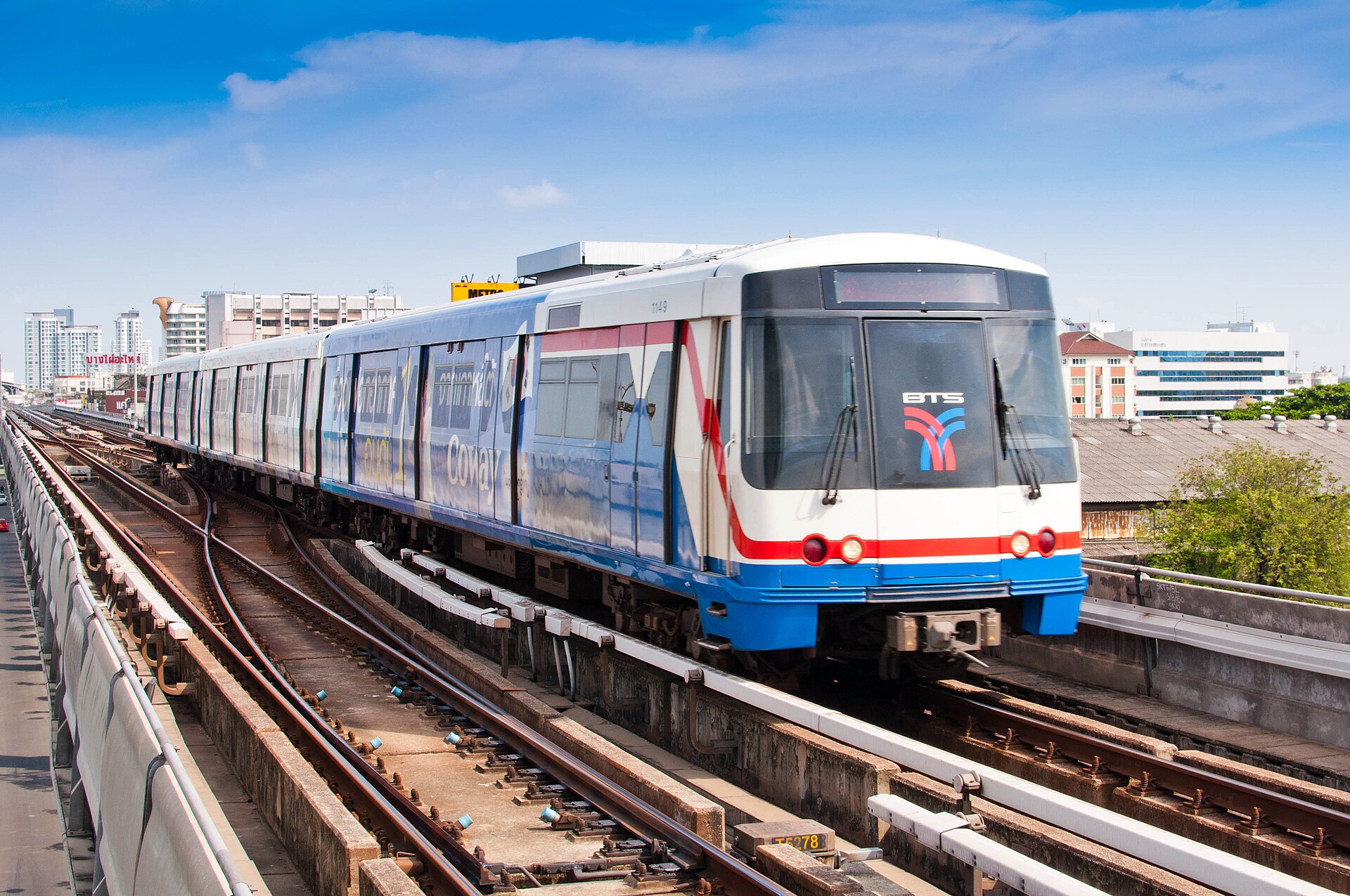
BTS On Nut is station E9 on the Sukhumvit Line. It gives direct rail access west toward Phra Khanong, Ekkamai, Thong Lo, Phrom Phong, Asok, Chit Lom, and Siam, and east toward Bang Chak, Punnawithi, Udom Suk, Bang Na, and Samut Prakan.
That direct line is useful. It is not teleportation.
Peak trains can be crowded. A commute to central Bangkok still takes time. If your destination requires an interchange, a feeder ride at both ends, or a long walk from the station, the attractive line on the map can become a tiring daily sequence.
Before renting, test:
- the walk or feeder ride from the building to BTS On Nut;
- the platform and train at your actual departure time;
- the full commute to the office, school, hospital, or regular destination;
- the return trip after dark;
- the same route during rain.
Do not accept the agent’s station estimate. Agents travel through Bangkok using optimism.
Motorcycle taxis solve the distance and create another decision
Orange-vest motorcycle taxi drivers are part of daily transport around On Nut. They make deep sois and hot walks manageable, especially for short trips between a condominium and the BTS.
That convenience can hide a structural problem.
If every departure and return requires a motorcycle ride, your home is not truly walkable to the train. That may be fine. Price it, test it, and decide whether you are comfortable with the risk and weather exposure.
Ask:
- Is there a recognized motorcycle stand near the building?
- What is the usual fare to the BTS?
- Is service available early and late?
- What happens during heavy rain?
- Will you ride with groceries, luggage, or work equipment?
- Are suitable helmets realistically available?
- Would a taxi or building shuttle work when you will not take a motorcycle?
A rental scooter is not the automatic upgrade. Driving requires the correct license class, lawful documentation, insurance, skill, and tolerance for Bangkok traffic. An International Driving Permit does not turn a car-only license into motorcycle authorization.
Read Can You Live in Thailand Without a Car or Motorcycle? before deciding that buying a scooter is the obvious solution.
Groceries and malls are a practical advantage
On Nut is good at errands.
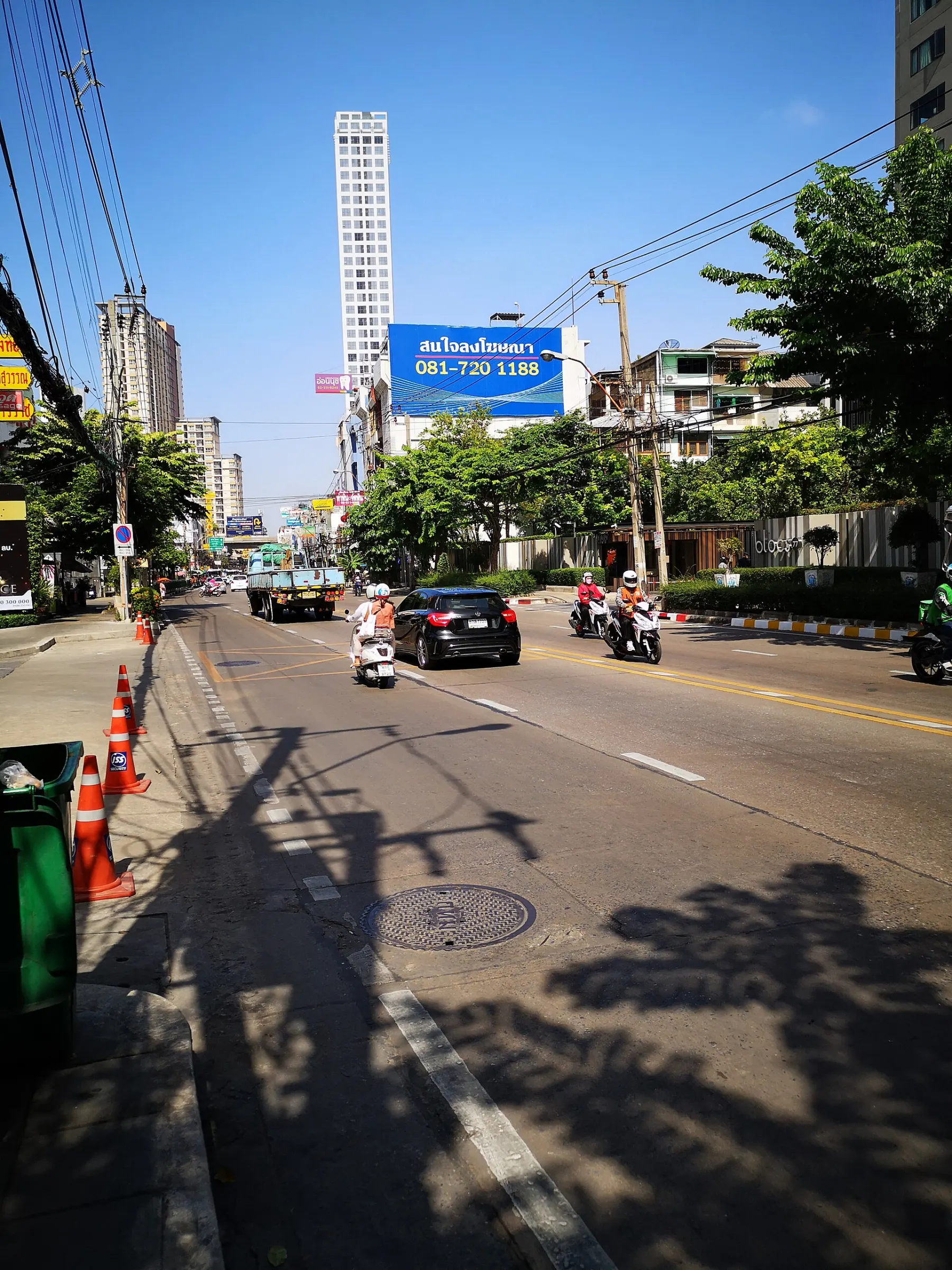
Lotus’s Sukhumvit 50 connects to the station side. Century The Movie Plaza sits beside BTS access and includes food, services, retail, and a cinema. Big C Extra On Nut is farther along Sukhumvit 77. Fresh markets, convenience stores, pharmacies, laundries, salons, repair shops, and small businesses fill the surrounding streets.
Deeper in the neighborhood, People Park and Habito provide additional food and service clusters.
This matters more than it sounds.
A supermarket you can reach on the way home changes how often you cook, how much food you waste, and whether grocery shopping becomes a delivery order. A cinema beside the train is useful during rainy season. A bank branch and pharmacy inside an air-conditioned building can rescue an afternoon that otherwise involves several miserable crossings.
On Nut does not have the luxury retail depth of Phrom Phong or Chit Lom. That is part of why many people choose it.
Parks and exercise: the weak point people soften in listings
There is no major destination park beside BTS On Nut.
Some condominiums have gardens, pools, tracks, gyms, or landscaped common areas. T77 provides a greener private-development environment. Smaller local spaces exist. None should be marketed as equivalent to living beside Benchasiri, Benjakitti, Lumphini, or the Chatuchak park network.
If a large public park is central to your routine, test the actual trip to one.
Benchasiri is reachable by BTS at Phrom Phong. Benjakitti requires travel toward Asok or Queen Sirikit National Convention Centre. Farther east, larger parks may be more practical by car than by rail.
For everyday exercise, many residents rely on:
- condominium gyms and pools;
- commercial gyms;
- Muay Thai or fitness studios;
- walking inside malls;
- running on local routes where pavement and traffic permit;
- traveling to a major park on selected days.
Do not describe yourself as a daily park runner and then rent somewhere that turns the park into a weekend expedition.
Healthcare: convenient local care and the limits beyond it
The station area has pharmacies, dental offices, clinics, laboratories, and routine-care options. Larger hospitals are accessible along Sukhumvit and elsewhere in Bangkok.
The neighborhood should still be tested against your specific care.
Someone who needs frequent appointments at a hospital near Ekkamai, Thong Lo, Rama IV, or central Bangkok may find the BTS corridor workable. Someone whose specialist is across the city may save more by living closer to care than by saving on rent.
Before choosing a building:
- identify the hospital you would use for routine specialist care;
- identify the emergency department you would use at night;
- test both routes by car, not only by rail;
- ask whether the ambulance can reach the building entrance easily;
- confirm where prescribed medication is available;
- decide whether traffic makes another neighborhood safer for your needs.
The building pool will not compensate for the wrong hospital radius.
Housing: strong value with a wide price range
On Nut usually offers stronger space-for-money potential than prime central Sukhumvit. The spread is wide.
Price changes with:
- walking distance to BTS;
- building age and maintenance;
- unit size and layout;
- road or rail exposure;
- view and future construction risk;
- depth inside the soi;
- shuttle service;
- furnishings and appliance condition;
- lease length;
- management quality;
- whether the building is inside a managed development.
A cheaper unit deep inside the neighborhood may add two motorcycle trips to every rail journey. A smaller unit beside the station may reduce daily friction. A quiet older building may outperform a photogenic new tower whose walls allow you to hear another person microwave dinner.
Compare total life cost:
| Housing choice | Rent effect | Transport effect | Daily-life effect |
|---|---|---|---|
| Beside BTS | Usually higher | Lowest feeder dependence | Fast groceries, rail, and errands |
| Short walk from BTS | Moderate | Strong car-free potential | Best value if the route is comfortable |
| Deep soi with shuttle | Often lower or more space | Depends on shuttle hours and reliability | Calm when the shuttle works; annoying when it does not |
| Deep soi without shuttle | Often lower | Motorcycle, taxi, or private vehicle may become routine | More planning for every trip |
| Farther east on On Nut Road | Potentially more space | Yellow Line, road travel, and local routes matter more | Less connected to the station-centered expat version |
Noise, construction, flooding, heat, and air
On Nut contains elevated rail, Sukhumvit Road, On Nut Road, expressway approaches, dense construction, schools, markets, motorcycles, and residential sois. The correct building can be quiet. The wrong unit can sound like Bangkok is renovating inside your bedroom.
Visit with the air conditioner off. Open the balcony door. Return after 10 p.m. and before 8 a.m.
For rain and drainage, ask the building staff and nearby businesses about the entrance, access road, parking level, and route to the BTS. A tower can remain dry while the street outside becomes the problem.
For air quality, use Bangkok’s official monitoring and compare the building’s road exposure, window sealing, ventilation, and space for filtration. Do not assume a high floor is automatically protected from regional PM2.5.
Anyone with respiratory or cardiovascular concerns should include indoor-air control and healthcare access in the housing decision from the beginning.
Social life: useful locally, broader across the city
On Nut has cafés, restaurants, local bars, live music, gyms, markets, and a mixed Thai and international population. Small bar and restaurant pockets appear around the station, Sukhumvit 50, and the early sections of Sukhumvit 77. Phra Khanong and W District expand the evening options one BTS stop west.
It is not Thong Lo’s nightlife ecosystem, Ari’s café identity, or Asok’s cross-city centrality.
That is not a defect unless you keep leaving the neighborhood to get the life you actually want.
Residents who work east of central Bangkok, use the Sukhumvit Line, and value practical errands often love On Nut. People whose friends, work, and nights out are north, west, or across the river may eventually resent the commute.
Inspect the station side and the proposed soi after 10 p.m. On Nut is generally less nightlife-intensive than central Sukhumvit, but a unit above a local bar, beside a late restaurant cluster, or on a busy motorcycle route can still be noisy.
Who On Nut fits
On Nut is a strong candidate for:
- a single person or couple who wants direct BTS access without prime-Sukhumvit rent;
- someone working along the eastern Sukhumvit corridor;
- a remote worker who values a larger home and practical errands;
- a newcomer who wants an easier first Bangkok base;
- a resident who uses local restaurants, markets, gyms, and delivery more than luxury malls;
- someone comfortable mixing BTS, walking, motorcycles, taxis, and ride-hailing.
Who may be happier elsewhere
Look harder at other areas if:
- your office, school, hospital, or social circle requires repeated cross-city trips;
- a major park is essential to your daily routine;
- you want extensive nightlife outside your door;
- you refuse motorcycle taxis but are considering a deep-soi building;
- you want a quiet low-density neighborhood while remaining beside the station;
- you need a family home organized around an international school far from the area;
- you are paying near-central rent for a new tower and no longer receiving a meaningful value advantage.
The seven-day On Nut test
Rent a short-stay unit in the part of On Nut you are actually considering. Then spend seven ordinary days doing the following:
Day 1: commute
Make the full morning and evening trip at the hours you will use it.
Day 2: groceries
Buy a normal week of food and carry it home.
Day 3: healthcare
Travel to the hospital, clinic, dentist, and pharmacy you expect to use.
Day 4: rain plan
Test the route during rain if possible. If the weather refuses to cooperate, inspect shelter, drainage, pickup points, and shuttle arrangements.
Day 5: evening
Eat locally, return after dark, and assess noise and street comfort.
Day 6: weekend
Spend the day as you normally would. If every enjoyable activity requires leaving, record the time and cost.
Day 7: stay home
Work, cook, exercise, receive a delivery, do laundry, and listen to the building.
The seventh day is often more informative than the rooftop pool.
The verdict
On Nut deserves its reputation as a practical Bangkok base. It gives many residents direct rail, useful shopping, strong food options, and better housing value than the prime Sukhumvit districts.
Its value can disappear one kilometer at a time. A low rent deep inside a soi may add two feeder trips, more rain exposure, weaker park access, and a commute you resent before breakfast.
Put the proposed building through an ordinary weekday: leave during the morning peak, carry groceries home, return after dark, and repeat the final kilometer in rain. If the housing savings still feel worthwhile afterward, On Nut has made its case.
Sources and verification
Official and primary sources: