Bangkok daily life · Fitness
What Do Gyms and Fitness Cost in Bangkok?
Bangkok offers everything from a treadmill downstairs to premium health clubs, serious Muay Thai camps, public sports centers, and dawn runs in the park. The hard part is choosing the option you will still use after the novelty wears off.
Reviewed July 31, 2026 · Later factual updates are dated within the guide
In this guide
Bangkok offers condominium gyms, independent gyms, chains, premium clubs, specialist studios, Muay Thai camps, public sports facilities, parks, pools, and courts.
Compare distance, operating hours, crowding, equipment, instruction, heat and air quality, contract terms, and total cost. A facility that fits the weekly route is more likely to be used consistently.
The practical answer
| Option | Typical cost structure | Suitable use | What to inspect |
|---|---|---|---|
| Condominium gym | Included in rent or common fees | Basic cardio, light strength work, maximum convenience | Equipment, ventilation, maintenance, hours, peak crowding |
| Local independent gym | Often lower-cost monthly or day access | Straightforward training near home | Equipment condition, air-conditioning, showers, payment terms |
| Large fitness chain | Monthly membership, commonly with a minimum term | Multiple branches, classes, longer hours, predictable facilities | Exact branch, access tier, joining fees, cancellation, peak crowding |
| Premium health club | Higher weekly or monthly cost | Pools, classes, towels, recovery facilities, social environment | Which amenities exist at your branch and what the contract includes |
| Specialist studio | Per class, package, or monthly plan | Yoga, Pilates, cycling, boxing, functional training | Instructor quality, class size, expiry dates, cancellation rules |
| Muay Thai gym | Drop-in, session package, weekly, or monthly plan | Skills, conditioning, culture, structured coaching | Training emphasis, trainer attention, equipment, heat, injury management |
| BMA or public sports facility | Registration and facility-specific booking or fees | Courts, tracks, pools, community sport, lower-cost activity | Eligibility, booking process, schedules, maintenance, travel time |
| Parks and outdoor exercise | Usually free | Running, walking, cycling, bodyweight work | Heat, rain, air quality, lighting, route access, changing facilities |
The best solution is often a combination: a convenient gym for ordinary days, a park for pleasant mornings, and one class or sport you genuinely enjoy.
Current Bangkok membership examples
The following advertised prices were checked on official operator websites on July 28, 2026. Promotions, branch tiers, commitment periods, and joining costs change. Use these figures to understand the market, then request the full written price for your exact club.
| Operator and plan example | Advertised price | Important condition |
|---|---|---|
| Jetts Fitness promotion | from ฿1,550 per month | Twelve-month membership; participating clubs and current terms apply |
| Fitness First Home Club | from ฿2,011.60 per month | Access and price depend on the selected plan and club |
| Fitness First Passport | from ฿2,551.95 per month | Broader club access; confirm the current club list and commitment |
| Fitness First FITPASS, 5 credits | ฿2,942 | Forty-five-day validity; designed for flexible visits rather than a standard contract |
| Virgin Active Once-a-Weeker | ฿385 to ฿590 per week | Twelve-week minimum; club price varies |
| Virgin Active Long Termer | ฿650 to ฿990 per week | Twelve-month minimum; club price varies |
| Virgin Active Goal Getter | ฿910 to ฿1,390 per week | Twelve-week minimum; club price varies |
That is a wide range before adding personal training, specialist classes, sports clubs, or equipment.
Local independent gyms can cost less than the large chains. Some sell day passes or uncomplicated monthly access. Others are basic rooms built for serious lifting rather than polished service. Because many smaller operators publish prices inconsistently, inspect the facility and get the current total in writing.
Your condominium gym may be enough
A usable gym inside the building is one of Bangkok’s most valuable conveniences. It removes the walk through heat or rain, the motorcycle ride down a deep soi, and the internal negotiation about whether today really needs to be a workout day.
It may be enough if you mainly need:
- treadmills, bikes, or elliptical machines;
- light to moderate dumbbells;
- a bench and basic cable machine;
- open floor space for mobility or bodyweight work;
- a pool for casual laps;
- short sessions that fit around work or family life.
It may not be enough if you need:
- heavy free weights and proper racks;
- specialist machines;
- reliable lap-swimming conditions;
- coached classes;
- rehabilitation equipment;
- space that remains usable during the building’s busiest hour.
Do not judge a condominium gym from the property listing. Visit it. Test the machines. Check the dumbbell range. Look for torn cables, improvised repairs, missing pins, wet floors, and air-conditioning that exists mainly as an idea.
Ask the juristic office about hours, guest rules, repairs, pool closures, and whether trainers may enter the building. Return at the time you expect to exercise. A compact gym that works beautifully at 2 p.m. can become a waiting room at 7 p.m.
Large chains sell consistency, but branches still differ
Bangkok’s major fitness chains can offer long hours, modern equipment, group classes, showers, lockers, and access to more than one branch. Some locations operate around the clock, although staffed hours may be shorter than member-access hours.
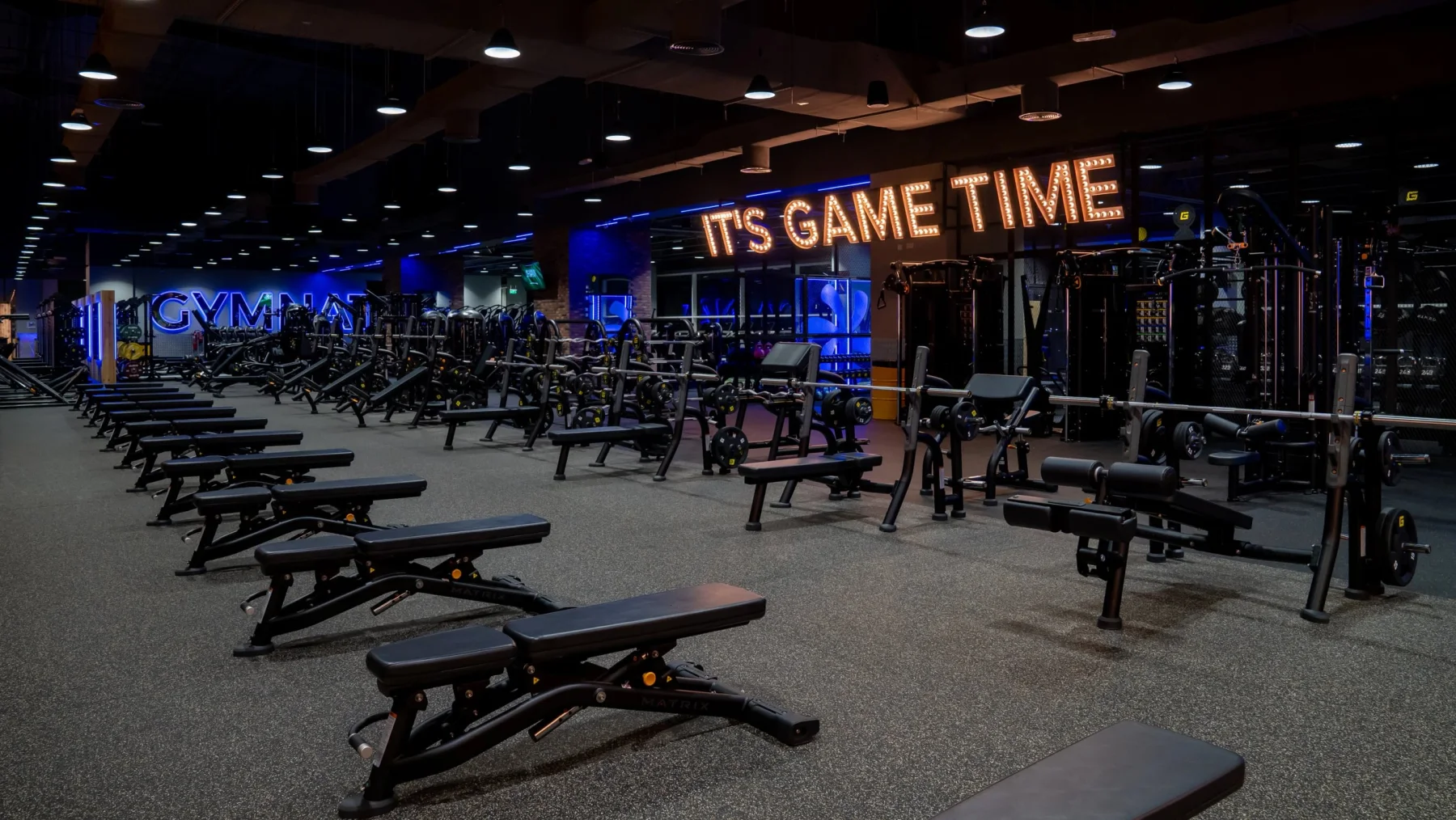
The logo does not guarantee the same experience everywhere.
One branch may have a generous free-weight floor and another may be designed around cardio and classes. A premium club may include a pool at one location but not another. A 24-hour branch may have limited assistance overnight. Equipment quantity, ceiling height, shower condition, ventilation, and the number of squat racks can change from club to club.
Before joining, visit your intended branch during your intended workout time and check:
- Can you reach it without creating a miserable commute?
- Is the equipment you use available in enough quantity?
- How long do people wait during the evening peak?
- Are group classes included, and do their times fit your schedule?
- Does your plan cover only one club or multiple branches?
- Are access, joining, card, locker, towel, or assessment fees separate?
- What is the minimum term?
- How do cancellation, freezing, relocation, and medical suspension work?
- Does the contract renew automatically?
- What happens if the branch closes or changes tier?
Get the answer in the agreement, not only in a sales conversation.
The cheapest gym is the one close enough to use
A gym four BTS stations away is not nearby just because both buildings appear beside the same green line on a map.
Count the entire trip:
- walking from the condominium to the station;
- waiting and riding;
- changing lines if required;
- walking through a mall or office complex;
- showering, changing, and carrying clothes;
- getting home in rain or late-evening traffic.
In a deep soi, a gym two kilometers away may require a motorcycle taxi, shuttle, or car. Near a connected mall, a club farther away on paper may be easier because the entire route is covered.
Test the route with a gym bag. Do it once at rush hour and once in heavy rain. Bangkok has a talent for turning an optimistic twelve-minute map estimate into a routine you quietly abandon.
Premium clubs can be worth it when you use the premium
Higher-priced clubs are not automatically a waste. They can make sense for people who consistently use:
- lap pools;
- frequent group classes;
- sauna, steam, or recovery areas;
- quality showers and changing rooms;
- towel or workout-clothing service;
- multiple central branches;
- lounge or work areas;
- supervised programs and personal training.
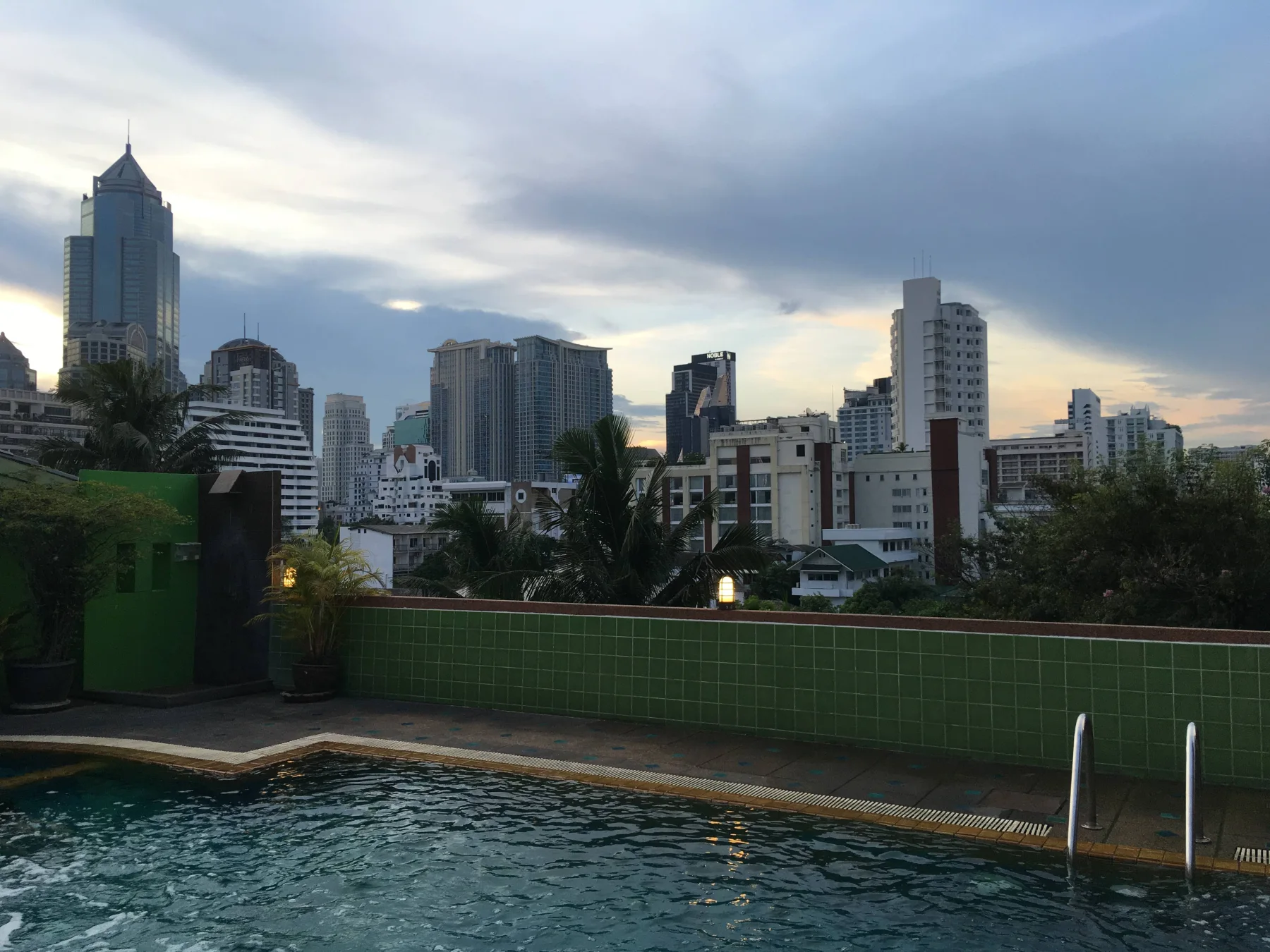
A pool used several times each week may justify the higher fee. Compare the amenities you will use with the complete membership cost.
Compare the annual total, not the weekly number. Add compulsory fees, travel, personal training, and the value of any services you would otherwise buy separately.
Public sports centers deserve a serious look
Bangkok Metropolitan Administration operates sports and recreation facilities, and its current digital services include BKK Active for participating bookings and memberships. Availability varies by center and activity.
Public facilities may include:
- swimming pools;
- running tracks;
- fitness rooms;
- badminton, basketball, futsal, tennis, or pickleball courts;
- table tennis;
- group activities;
- youth, senior, or community programs.
The city’s published information for Benjakitti Sports Center currently lists daily opening from 4:30 a.m. to 10 p.m. and facilities including basketball, badminton, futsal, table tennis, pickleball, cycling, and other activities. Schedules, booking rules, and temporary closures should be checked through the current BMA channel before traveling.
Public centers can be tremendous value. They can also require more patience with registration, booking, language, schedules, and facility variation than a commercial chain. Visit first. Ask what identification is needed, how reservations work, whether equipment is supplied, and which hours are busiest.
Sports Authority of Thailand facilities around Hua Mak are another option for people living in that part of the city. The value depends completely on the sport and the commute.
Bangkok’s parks can carry a large part of the routine
The city’s better parks are active social spaces in the early morning and evening. Runners, walkers, cyclists, tai chi groups, dance groups, and informal exercise communities make them feel less like landscaped decoration and more like shared civic infrastructure.
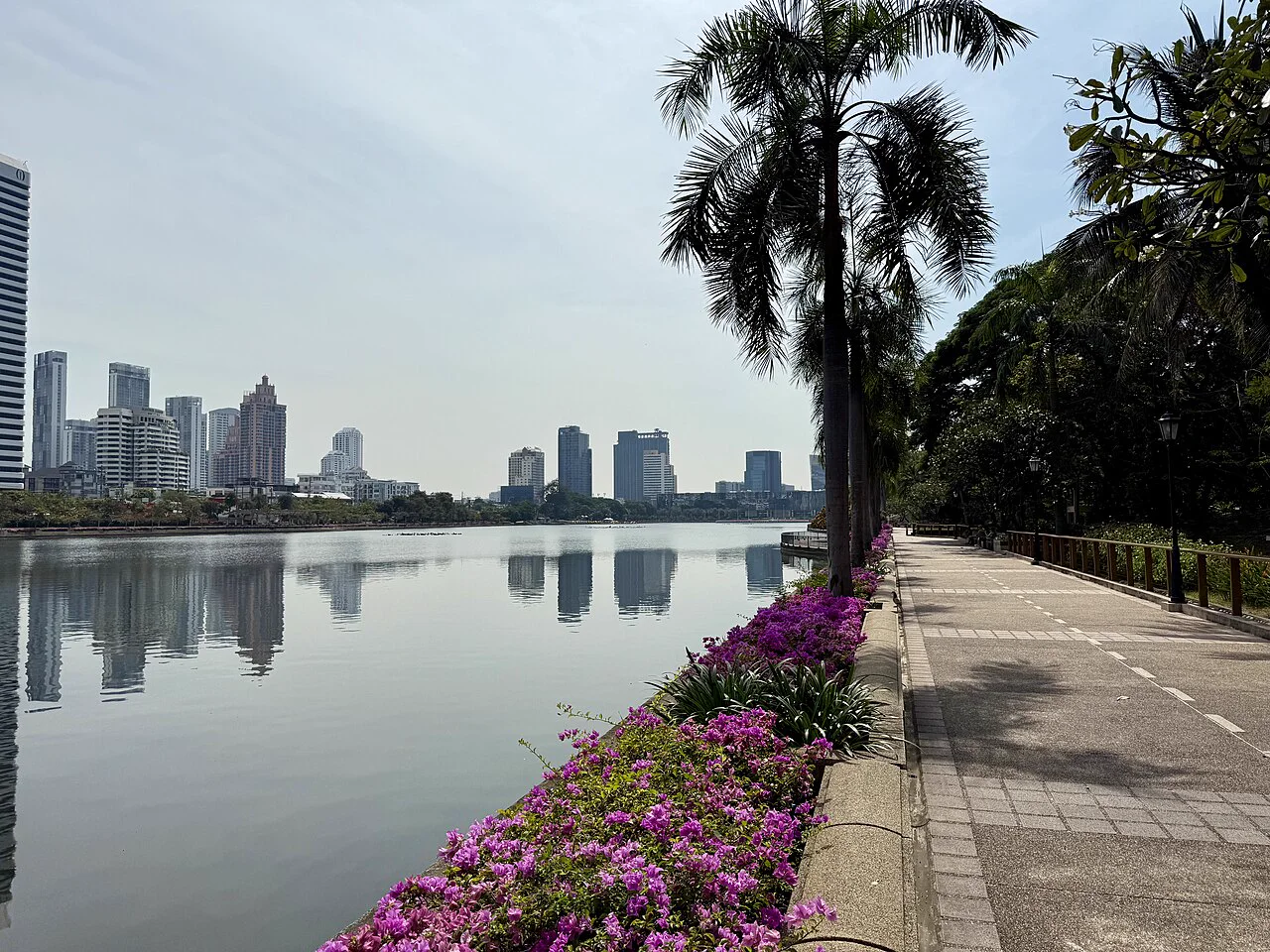
Lumphini and Benjakitti support central-city running and walking. The connected Chatuchak, Queen Sirikit, and Wachirabenchathat park area offers a much larger northern green network. Suan Luang Rama IX and Nong Bon Water Sports Center give eastern Bangkok residents room that central neighborhoods cannot easily reproduce.
Outdoor exercise still needs a backup plan. Heat and humidity can be punishing. Rain can arrive hard and quickly. Air quality can make an otherwise pleasant morning a poor day for prolonged outdoor exertion.
Build two versions of the week:
- the good-weather plan; and
- the hot, wet, or polluted-air plan.
That may mean park runs before breakfast, then a condominium treadmill, mall walking, home workout, or commercial gym when conditions are poor. Check current air-quality information and pay attention to health guidance, especially if you have asthma, cardiovascular disease, or another condition affected by pollution.
Muay Thai can be exercise, craft, and a doorway into Thailand
Muay Thai is a living sport with its own discipline, etiquette, technique, gyms, trainers, and community. Treating it as themed cardio misses most of what makes the practice valuable.
Bangkok offers:
- traditional fight gyms;
- modern facilities welcoming beginners;
- one-to-one training;
- small-group technical sessions;
- conditioning-heavy tourist classes;
- boxing and kickboxing hybrids;
- serious fighter programs with twice-daily training.
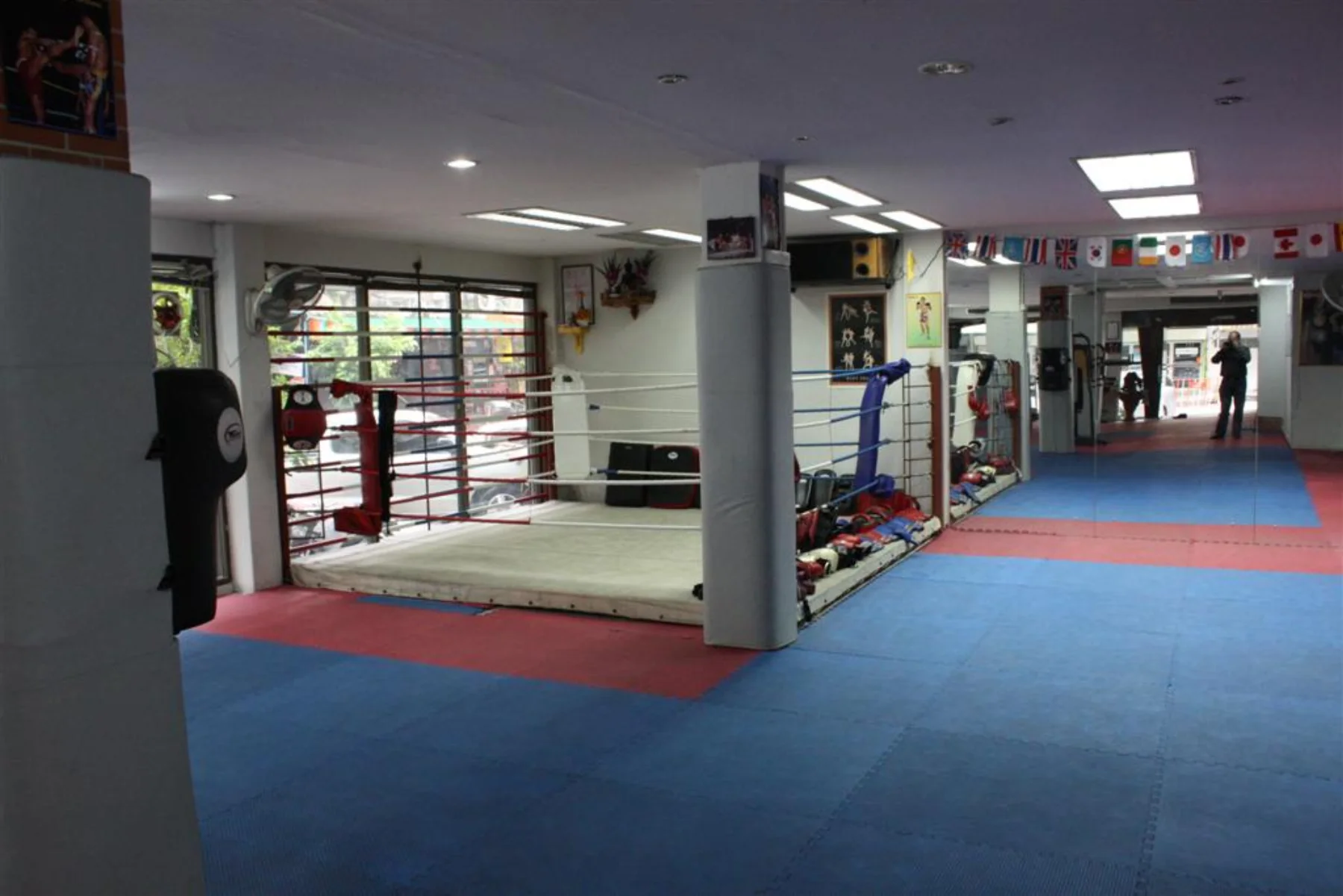
Visit before buying a long package. Watch how trainers work with beginners, women, older students, and people who are not preparing to fight. Look at pad condition, floor cleanliness, glove storage, ventilation, class size, and whether instruction changes with ability.
Ask whether the price includes gloves or hand wraps, whether one-to-one training is expected, how package expiry works, and whether the class is primarily technique, conditioning, or both.
A good gym will not need you to pretend you are tougher or more experienced than you are. Tell the trainer about injuries. Build volume gradually. Thailand’s heat adds stress even when the technique looks manageable.
Yoga, Pilates, cycling, and specialist studios
Specialist studios can provide better instruction and a stronger community than a general gym, especially when one activity is the reason you exercise consistently.
The financial details matter:
- single-class price;
- introductory offer;
- package size;
- expiration date;
- late-cancel or no-show penalty;
- instructor or equipment surcharge;
- whether a class credit works at every branch;
- whether the schedule changes seasonally;
- whether the class is taught in Thai, English, or both.
Reformer Pilates and highly coached small-group sessions usually cost more than open gym access because capacity is limited. Yoga studios may offer drop-ins, class packs, unlimited monthly plans, or community rates. Indoor cycling and functional-training studios often sell packages that look affordable until unused credits expire.
Try the instructor, not just the brand. Teaching quality and communication can vary within the same studio.
Personal training needs due diligence
A trainer can be valuable for technique, accountability, rehabilitation-aware programming, or returning to exercise after a long break. The label “personal trainer” alone tells you very little.
Ask about:
- relevant certifications and continuing education;
- experience with your age, goals, and medical history;
- how progress is assessed;
- whether the program is written down;
- package expiration and refunds;
- what happens if the trainer leaves the club;
- whether sessions can be transferred;
- communication outside the session;
- scope of practice.
A trainer should not diagnose disease, prescribe medication, or replace a physician or licensed rehabilitation professional. For a significant injury, cardiac concern, pregnancy, or complex medical condition, obtain appropriate clinical advice and ask how the trainer will coordinate with it.
Beware of sales pressure disguised as an assessment. A dramatic body-fat number or a rushed movement screen should not frighten you into buying a large package on the spot.
Fitness costs extend beyond membership
Model the full routine:
| Cost | Questions to ask |
|---|---|
| Membership | Monthly price, minimum term, branch access, renewal |
| Joining and access | Registration, key card, wristband, assessment |
| Personal training | Price per session, package size, expiry |
| Classes | Included, credit-based, or paid separately |
| Transport | Rail, motorcycle taxi, parking, ride-hailing |
| Clothing and laundry | Towels, workout clothing, shoe requirements |
| Equipment | Gloves, wraps, mat, racket, bicycle, lock |
| Recovery | Massage, physiotherapy, sauna, sports medicine |
| Nutrition | Protein, supplements, prepared meals |
| Lost credits | Expired classes and unused prepaid sessions |
Supplements and imported sports nutrition can be expensive. Buy from reputable sellers, verify labeling, and be skeptical of miraculous claims. A routine built around ordinary food, sleep, and consistency usually survives longer than one built around a cupboard full of powders.
Older adults and people returning to exercise
Bangkok can support an active life after retirement, but heat, air quality, traffic, and personal health require planning.
Consider:
- smooth and well-lit walking routes;
- safe road crossings;
- rail-station elevators;
- handrails and pool access;
- indoor alternatives during heat and poor air quality;
- proximity to a hospital or clinic appropriate to your needs;
- instructors experienced with balance, mobility, bone health, and chronic conditions;
- toilets, seating, and changing areas;
- how quickly emergency help could reach the facility.
A glamorous gym that requires navigating broken pavement and a long pedestrian overpass may be less suitable than a simpler facility downstairs.
Start conservatively after illness, injury, or inactivity. Bangkok’s climate can make familiar exercise feel harder. Hydrate, allow time to acclimatize, and obtain professional medical guidance when your history or symptoms warrant it.
Choose the routine before choosing the membership
Write a realistic seven-day plan:
| Day | Activity | Location | Bad-weather alternative |
|---|---|---|---|
| Monday | Strength | Condominium or nearby gym | Same |
| Tuesday | Walk or run | Park | Mall walk or treadmill |
| Wednesday | Class or sport | Studio, court, or Muay Thai gym | Indoor session |
| Thursday | Recovery or mobility | Home | Same |
| Friday | Strength | Nearby gym | Same |
| Weekend | Longer social activity | Park, pool, cycling, sport | Class or indoor facility |
Now calculate the travel and annual cost of that routine.
If the schedule requires crossing Bangkok five days a week, it may be difficult to maintain. Prefer facilities near home, work, or existing routes.
Inspect a potential gym like a potential home
Spend one trial visit looking at the things promotional photos avoid:
- the queue for popular equipment;
- temperature and airflow;
- noise and music;
- shower drainage;
- locker security;
- towel supply;
- drinking-water access;
- machine maintenance;
- staff presence outside peak hours;
- class booking availability;
- cleanliness late in the day;
- the walk from the station after dark.
Talk to members if the opportunity arises. Ask what breaks, what gets crowded, and how the club handles complaints. One honest five-minute conversation can be more useful than an hour with a salesperson.
A sensible first-month approach
Do not commit to the most impressive annual plan during your first week in Bangkok.
Use the condominium gym. Buy a few day passes. Try one public facility. Visit a park at the hour you would actually exercise. Take an introductory class. Test the commute in bad weather.
After a month, you will know whether you need:
- more weight;
- better coaching;
- a pool;
- more branches;
- a social sport;
- air-conditioned reliability;
- or simply a routine close to home.
Bangkok gives you enough choice to build fitness around your life. Use that advantage. The best membership is the one that still has you moving six months later.
Official sources
- Jetts Fitness Thailand promotions and membership information
- Fitness First Thailand membership options
- Fitness First Thailand FITPASS
- Virgin Active Thailand membership information
- Bangkok Metropolitan Administration sports overview
- Bangkok Metropolitan Administration government services
- Sports Authority of Thailand
Prices, promotions, operating hours, access rules, and facilities can change. Confirm the current agreement and exact branch before paying.