Bangkok daily life · Planning
What Does an Ordinary Week in Bangkok Actually Look Like?
Map commuting, groceries, exercise, healthcare, errands, and social activity before choosing a lease.
Reviewed July 31, 2026 · Later factual updates are dated within the guide
In this guide
A housing decision should be tested against an ordinary week: work, appointments, groceries, exercise, social activity, laundry, and transport in heat or rain.
Compare total travel time and recurring cost. A central address may reduce transport, while a lower rent farther out may add time and feeder trips.
Start with your fixed commitments
Open a blank weekly calendar and enter everything that cannot move easily:
- work location and hours;
- school drop-off and pickup;
- recurring medical appointments;
- caregiving;
- religious or community commitments;
- scheduled exercise;
- language classes;
- time-zone calls;
- regular travel to an airport or intercity terminal.
Then place the supporting activities around them:
- groceries;
- meals;
- laundry;
- cleaning;
- pharmacy visits;
- haircuts and personal care;
- bill payment and administration;
- social time;
- recovery time.
The calendar should identify repeated trips and fixed commitments.
A trip you make twice a year can tolerate inconvenience. A commute you make ten times a week will eventually own your mood.
Monday: test the commute you will repeat
Imagine a Monday that begins at 7:30 a.m.
From the unit, how long does it take to reach the lobby? Is the lift crowded? Is the station genuinely walkable in heat or hard rain? Does the route require a dangerous crossing? If you work beyond the rail network, how reliable is the final connection?
Build the commute door to door:
- unit to lobby;
- lobby to station, pier, bus stop, or pickup point;
- waiting and transfer time;
- final walk or ride;
- a realistic delay allowance.
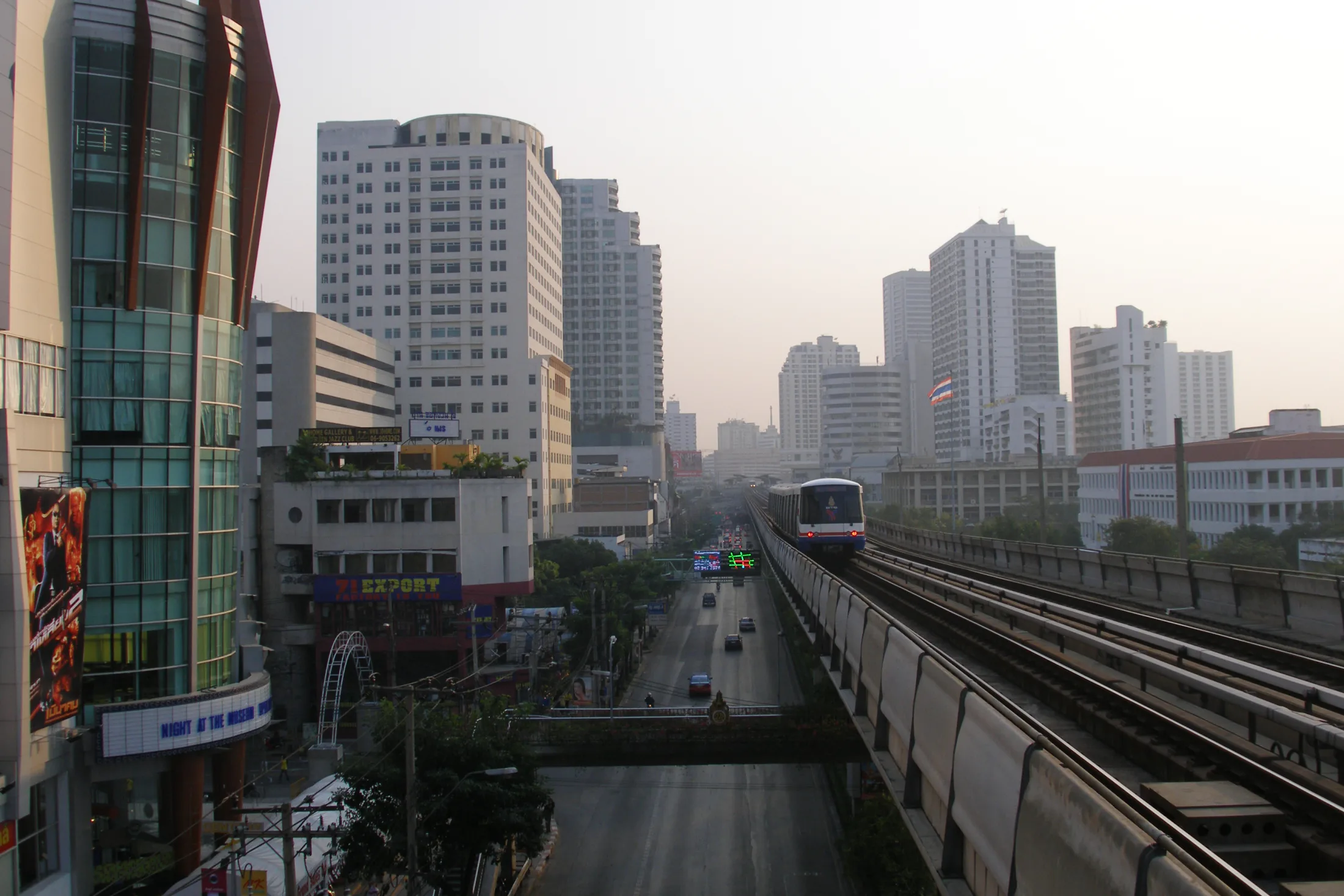
Bangkok’s BTS and MRT systems remove a great deal of uncertainty from cross-city travel. They do not remove the first and last kilometer.
A motorcycle taxi may turn a deep soi into a practical home for one resident. Another person may dislike the risk, heat, rain, or lack of a comfortable helmet. A condominium shuttle can help, but its schedule, capacity, and long-term reliability need to be verified.
Compare Bangkok transport options and licensing requirements before choosing a home around a route you have never used.
Tuesday: see where food fits
Bangkok has a wide range of local, international, market, restaurant, and delivery food options.
An ordinary Tuesday might include fruit and coffee at home, a quick Thai lunch near work, and dinner delivered after a late call. Another resident cooks most meals, shops at a fresh market, and uses a hypermarket for household staples. A family may care more about a supermarket with imported products, school snacks, and reliable delivery slots.
Map four food sources:
- the closest practical supermarket;
- a lower-cost market or hypermarket;
- reliable prepared food;
- delivery when weather or work disrupts the plan.
Imported groceries, alcohol, specialty diets, and premium supermarkets can move a Bangkok food budget sharply upward. Local produce, Thai pantry items, neighborhood markets, and simple prepared food can keep it much lower.
Use the Bangkok grocery guide to build your own basket. A generic monthly number is less useful than pricing the milk, coffee, protein, snacks, supplements, pet food, or familiar products you buy repeatedly.
Wednesday: protect health and exercise
By Wednesday, ambitious routines begin negotiating with reality.
A condominium gym downstairs has an advantage over a beautiful park that requires two trains. A park beside the office may work better than one beside the apartment. A serious runner may gladly pay more for safe early-morning access to Lumphini, Benjakitti, Benchasiri, or another useful route.
Build three exercise options:
- the preferred routine;
- an indoor option for heat, rain, and poor air;
- a short option for busy days.
Then test the details:
- opening hours;
- shower and locker access;
- equipment condition;
- class schedules;
- walking route after dark;
- air quality;
- total travel time.
The Bangkok parks and exercise guide compares the neighborhoods that make outdoor activity easier. The gym and fitness cost guide covers condominium gyms, commercial memberships, studios, Muay Thai, pools, and the costs that appear beyond the advertised monthly rate.
Thursday: deal with the invisible work of living
Homes create administration.
Laundry needs collecting. The air conditioner needs cleaning. Water, electricity, internet, and rent need paying. A package arrives while you are away. Something leaks. A cleaner needs access. Immigration or banking requires a weekday appointment.
Bangkok can make these tasks surprisingly convenient:
- condominium juristic offices receive parcels and coordinate building issues;
- laundries offer wash-and-fold service;
- cleaners can be booked directly or through service platforms;
- supermarkets and restaurants deliver;
- motorcycle couriers move documents and small items;
- many bills can be paid through Thai banking apps or other approved channels.
Convenience still depends on the building and your access to local systems.
Ask before renting:
- Does the juristic office communicate in English?
- What happens to refrigerated deliveries?
- Can guests, cleaners, and repair workers enter easily?
- Is there a laundry within a practical walk?
- Does the building mark up electricity or water?
- Which rent and bill methods does the landlord accept?
- Can you complete those payments without a Thai bank account?
Bangkok’s daily-life apps, cleaning and household help, and the guide to paying rent and bills cover those systems in detail.
Friday: plan a sustainable social routine
Bangkok offers almost every version of an evening: neighborhood restaurants, rooftop bars, live music, sports groups, art events, religious communities, professional networks, late-night clubs, language exchanges, and quiet dinner with friends.
The issue is distance after a long week.
A social circle concentrated around Thong Lo and Phrom Phong will feel different from one based around Ari, Sathorn, Chinatown, or the suburbs. Crossing Bangkok for special events is easy enough. Doing it three evenings every week can become expensive and tiring.
Map the places and people you expect to see regularly. Check:
- the trip at 6 p.m.;
- the trip home after rail service becomes less convenient;
- ride-hailing cost during rain or high demand;
- whether the area fits your preferred drinking habits;
- whether social life extends beyond expat bars.
Thai friendships, sports, volunteering, professional groups, classes, neighborhood businesses, and interest-based communities can create a far richer life than remaining inside one expatriate bubble.
The culture and community guide explains how to participate with curiosity and respect. The nightlife cost guide helps price the evening and the ride home.
Saturday: enjoy the city you moved for
A sustainable week needs room for pleasure.
Saturday might mean:
- a long breakfast;
- a park or pool;
- a market;
- a temple or museum;
- a massage;
- a neighborhood meal;
- a date;
- a day trip;
- absolutely nothing.
Do not fill every free day with relocation homework. Bangkok is a city to live in.
At the same time, notice what leisure reveals about location. Can you reach the places you enjoy without turning the outing into a project? Does your neighborhood have enough nearby life to support an unplanned day? Are you constantly taking a car to escape the area where you sleep?
The most expensive central district is unnecessary for many people. Complete isolation is rarely a bargain.
Sunday: reset the apartment and the calendar
Sunday often reveals whether the week is sustainable.
Can you shop, prepare food, exercise, handle laundry, call family, and plan the next week without spending the entire day recovering from transport?
Use the reset to monitor:
- upcoming bills;
- prescription supply;
- weather and air quality;
- household maintenance;
- work and school schedules;
- social commitments;
- travel;
- visa or reporting deadlines.
Keep copies of receipts and important documents. Refill essentials before they become urgent. Schedule maintenance before the hottest afternoon or the first leak forces the decision.
Leave unscheduled time. Convenience has little value when every saved hour is immediately sold to another obligation.
Calculate costs from the week upward
A monthly budget can hide the behavior producing it.
Price one realistic week:
| Category | Questions to price |
|---|---|
| Housing | Rent, common charges included or excluded, utilities, internet, cleaning, repairs |
| Transport | Commutes, motorcycle taxis, ride-hailing, weekend trips, rain premium, airport travel |
| Food | Groceries, lunches, delivery, coffee, alcohol, imported items |
| Health | Insurance, appointments, prescriptions, dental care, fitness |
| Personal care | Laundry, haircuts, grooming, massage |
| Social life | Meals, events, classes, memberships, transport home |
| Administration | Transfers, ATM fees, currency conversion, document and immigration costs |
Multiply recurring weekly spending, then add monthly and annual expenses separately. Include irregular costs such as flights, deposits, medical deductibles, visa fees, electronics, furniture, and trips home.
The Bangkok cost-of-living guide provides budget ranges. Your week explains which range is plausible.
Four versions of a Bangkok week
There is no representative expatriate life. These patterns show why the same city produces different location decisions.
The office-based professional
This resident benefits from a direct rail route or short commute, lunch options near work, an evening gym, and simple weekday errands. Paying more near the office may reduce enough travel to justify the rent.
The remote worker
Home internet, desk comfort, building noise, backup work locations, delivery, and daytime neighborhood life matter more. A remote worker can live farther out, but isolation and repetitive delivery can gradually shrink the week.
The retired resident
Healthcare, walkability, exercise, community, daytime activities, and reliable transport may outweigh office access. A quieter neighborhood can work beautifully when appointments and friendships remain practical.
The family
School travel can dominate the calendar. Families should test the school run in traffic, then map healthcare, groceries, activities, parks, domestic help, and each adult’s commitments around it.
Test the week before signing
During a scouting stay, live from the neighborhood rather than merely visiting it.
Complete the real tasks:
- leave during the expected commute;
- buy a normal grocery basket;
- work from the apartment or nearby workspace;
- exercise;
- make one evening social trip;
- return after dark;
- order delivery;
- collect laundry;
- visit a pharmacy or clinic;
- repeat part of the routine in heat or rain.
Track time, friction, and cost. Notice how often you reach for a taxi because the advertised walk feels unpleasant. Notice whether the station, market, and park entrances sit on the side of the road you assumed.
The weekly scorecard
Rate each neighborhood from one to five on:
- fixed-commitment travel;
- groceries and daily food;
- exercise;
- healthcare;
- errands and household services;
- social access;
- weather resilience;
- nighttime comfort;
- total weekly transport;
- recovery and quiet.
Write one sentence explaining every score. A number without evidence becomes decoration.
The winning neighborhood is the one that gives your important activities the least friction while keeping its disadvantages manageable.
Bangkok provides extensive healthcare, food, transport, services, and cultural activity. Choose housing around the destinations used each week.
Choose the week first. The address follows.
Continue planning
- Where Should You Live in Bangkok?
- What Does It Cost to Get Around Bangkok?
- Which Apps Make Daily Life Easier in Bangkok?
- How Should You Pay in Bangkok?
- What Are Bangkok’s Weather, Air Quality, and Flooding Really Like?
- How Close Should You Live to a Hospital in Bangkok?
Prices, routes, businesses, and personal needs change. Verify current information and test the exact neighborhood before making a long-term commitment.